

Portugal hero

Portugal

Where the Atlantic Meets Tradition – The Maritime Soul of Europe

Portugal flag
Summary
titleDecore bar

Portugal is one of Europe’s oldest nations and a country deeply shaped by the sea. As a pioneer of the Age of Discovery, Portugal played a major role in global exploration, trade, and cultural exchange. Today, Portugal combines historic cities, Atlantic coastlines, rich traditions, and a relaxed Mediterranean lifestyle, making it one of Europe’s most welcoming and culturally distinctive destinations.

Portugal at a Glance
titleDecore bar

Official Name

Portuguese Republic

Capital

Lisbon

Population

10500000

Area

92212 km²

Government

Semi-Presidential Republic

Divisions

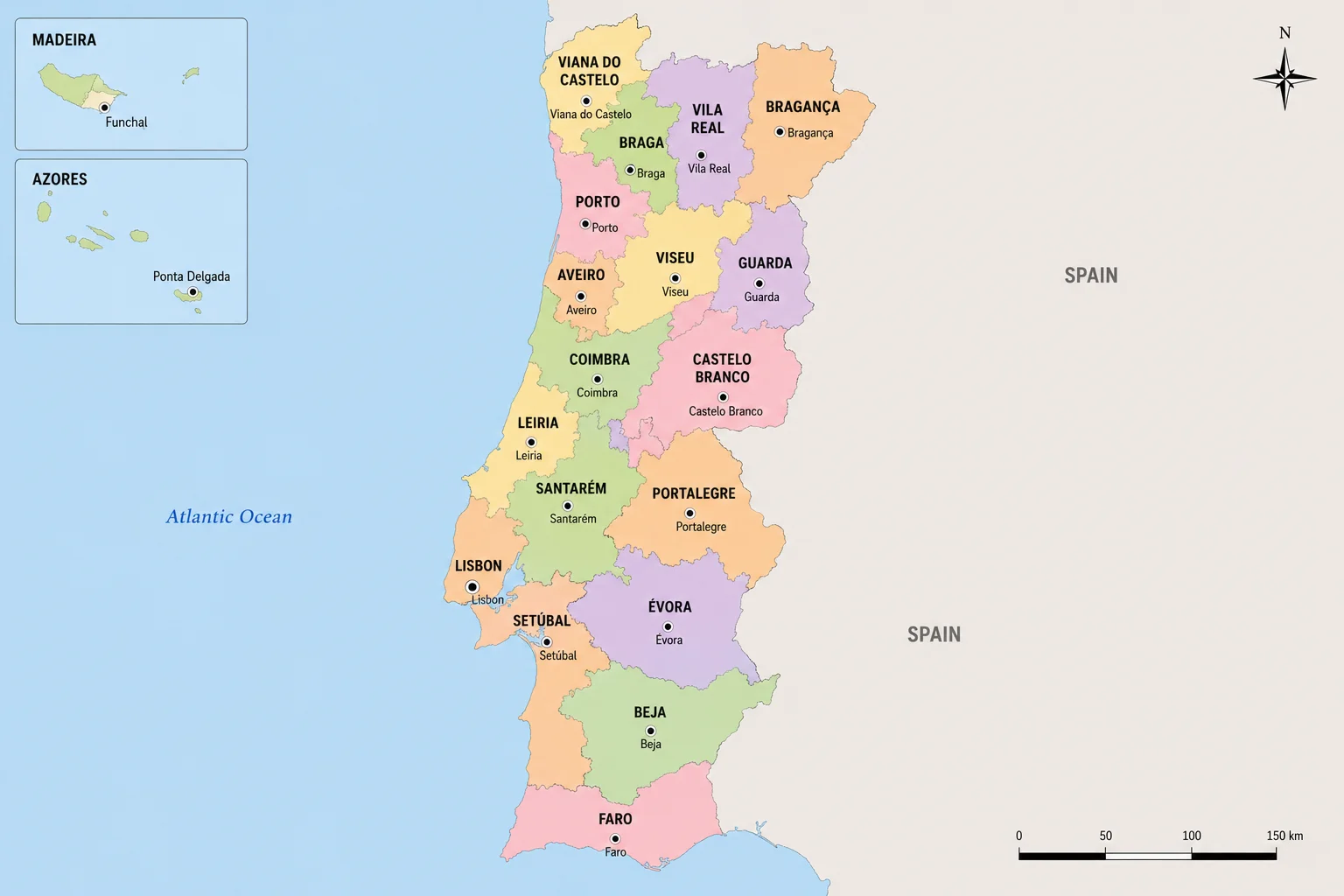
18 districts, plus Madeira and the Azores autonomous regions

Currency

Euro (€)

Languages

Portuguese

Portugal is a parliamentary republic located on the Iberian Peninsula in southwestern Europe. Home to approximately 10.5 million people, it is known for its maritime history, beautiful coastlines, cuisine, and warm hospitality.

Portugal is a semi-presidential republic. The President serves as head of state, while the Prime Minister leads the government. The Parliament is known as the Assembly of the Republic. Portugal has been a member of the European Union since 1986.

Portugal's identity is strongly connected to the sea, exploration, and cultural heritage. National symbols include the rooster of Barcelos, azulejo ceramic tiles, Fado music, and traditional sailing history.

Portugal has approximately 10.5 million inhabitants, with about 67% living in urban areas. Life expectancy is among the highest in Europe, averaging around 84 years for women and 78 years for men. The literacy rate exceeds 95%.

Daily life in Portugal emphasizes family, hospitality, and a slower pace of living. Cafés, local markets, and long meals play an important role in social life. Portuguese people are generally warm, polite, and community-oriented.

Best Time to Visit

April June

Climate

Mediterranean climate with Atlantic influences; hot summers and mild winters.

Avg. Temperature: 15–17°C (59–63°F) annual average

Location: Southwestern Europe; Atlantic coast of the Iberian Peninsula
Borders: Spain and the Atlantic Ocean

Portugal's geography is remarkably diverse:

  • North: Mountains, rivers, and vineyards

  • Central Portugal: Historic towns and rolling countryside

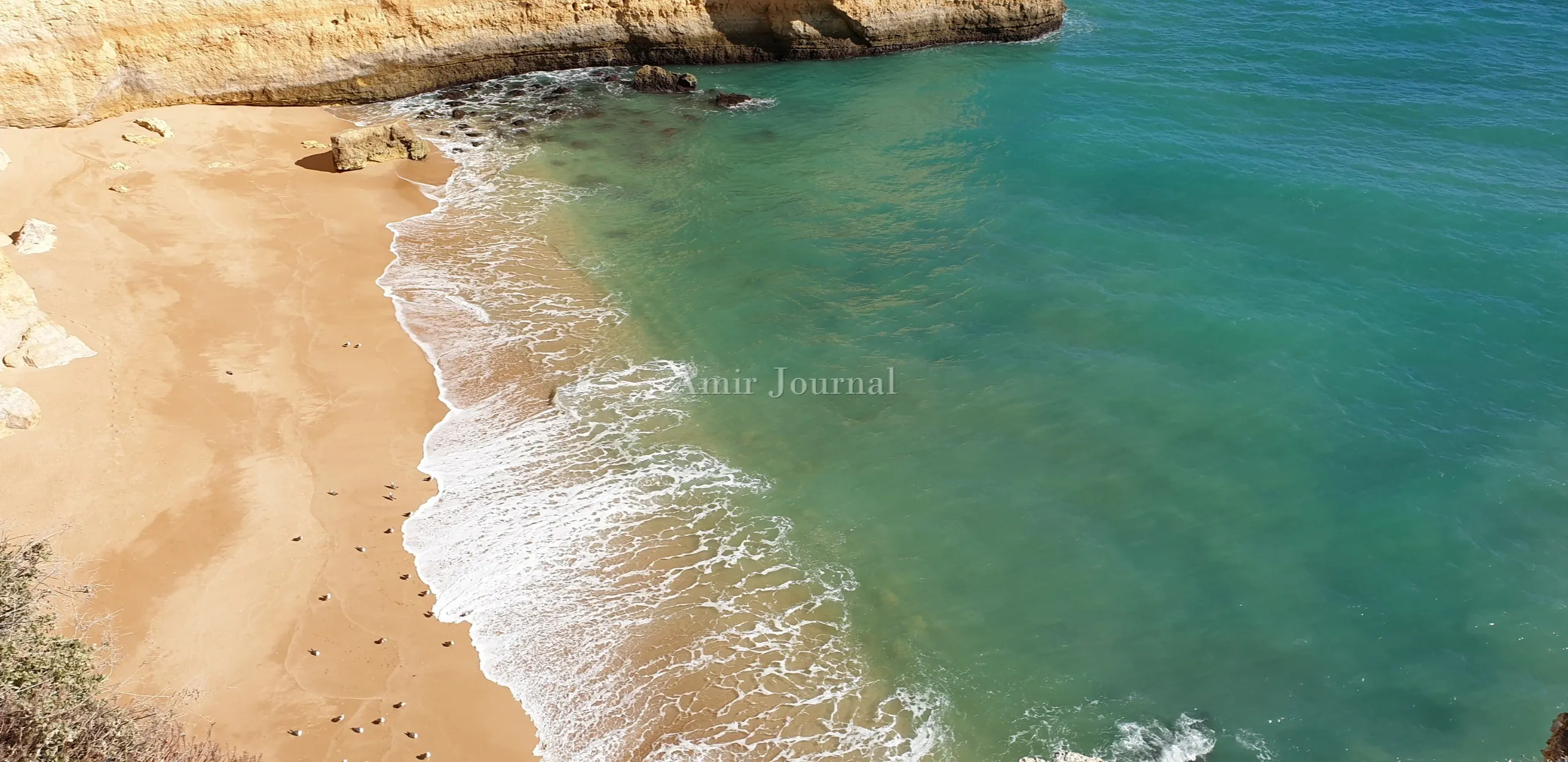
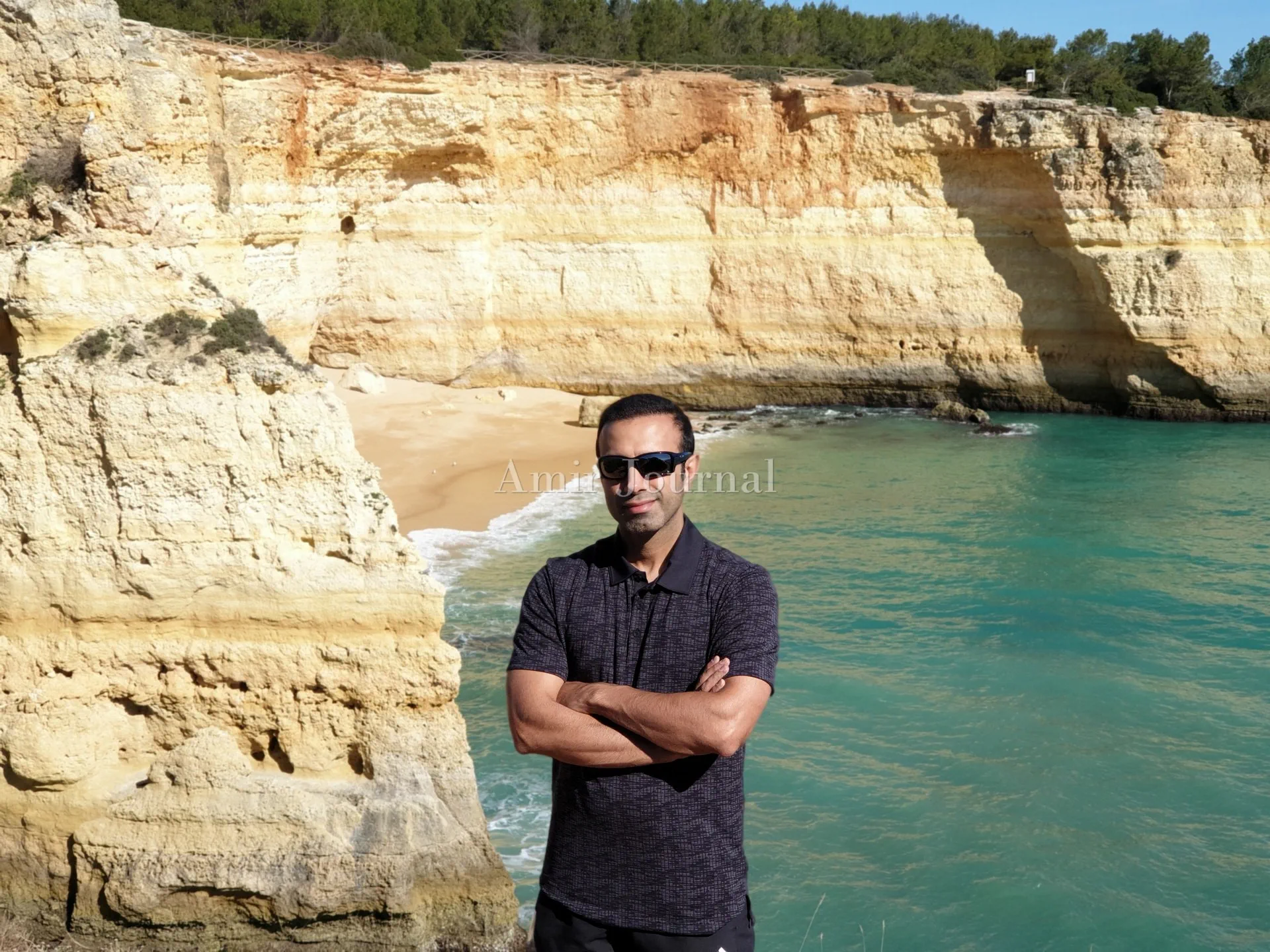
  • South (Algarve): Beaches and dramatic cliffs

  • Atlantic Islands: Madeira and the Azores

Portugal identity
Story Of Portugal - History & Identity
titleDecore bar
1143
Kingdom of Portugal Established
1249
Portugal's Borders Completed
1415
Age of Discovery Begins
1488
Cape of Good Hope Reached
1498
Sea Route to India
1500
Brazil Discovered by Portugal
1580–1640
Iberian Union
1640
Restoration of Independence
1755
Great Lisbon Earthquake
1910
Portuguese Republic Proclaimed
1933
Estado Novo Regime Begins
1974
Carnation Revolution
1986
European Community Membership
2002
Euro Adopted
2024
Portugal Today

Historical Sites & Reflections
Portugal story

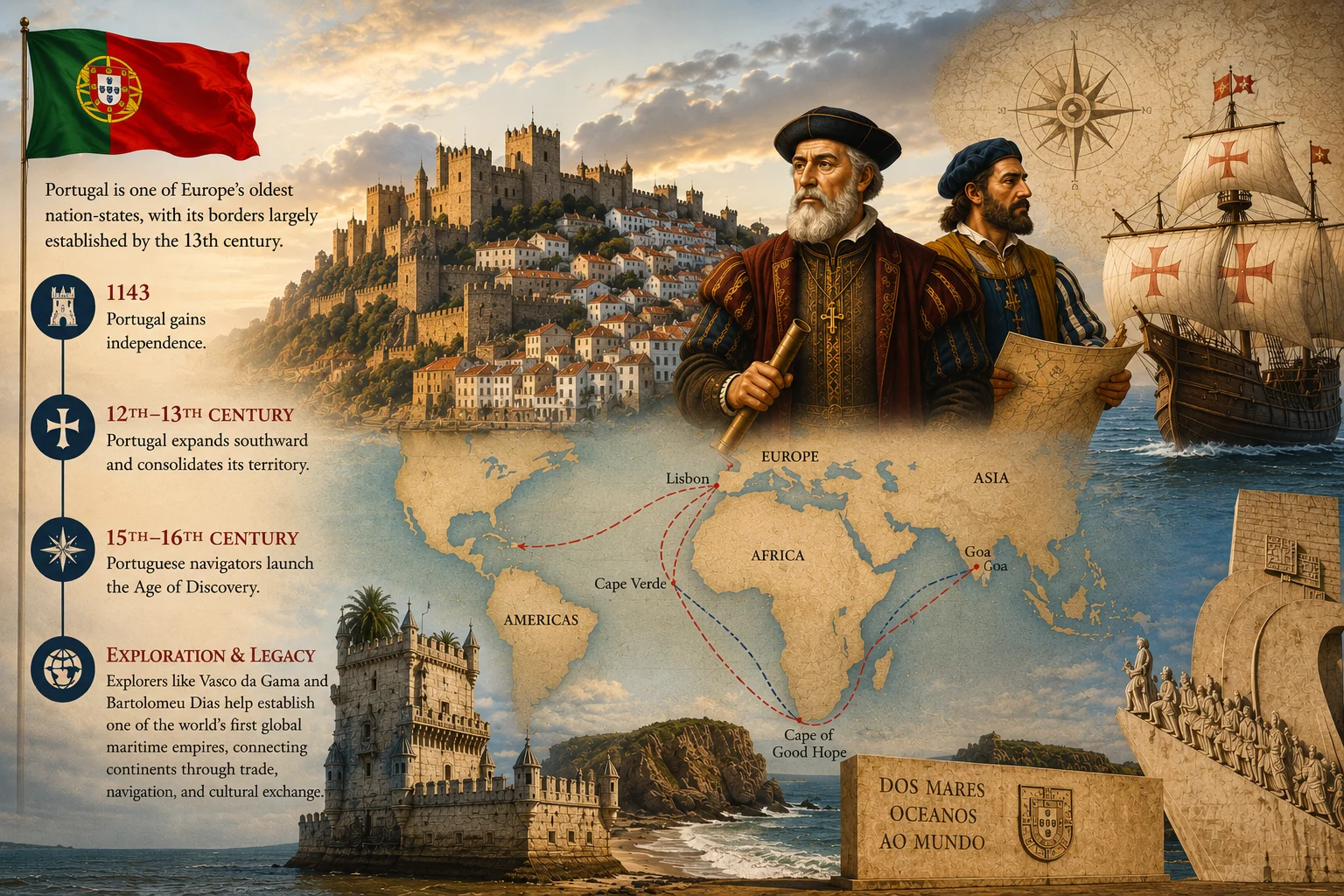
Portugal is one of Europe's oldest nation-states, with its borders largely established by the 13th century. After gaining independence in 1143, Portugal gradually expanded southward and consolidated its territory. In the 15th and 16th centuries, Portuguese navigators launched the Age of Discovery, exploring Africa, Asia, and the Americas. Explorers such as Vasco da Gama and Bartolomeu Dias helped establish one of the world's first global maritime empires, connecting continents through trade, navigation, and cultural exchange.
Portugal story

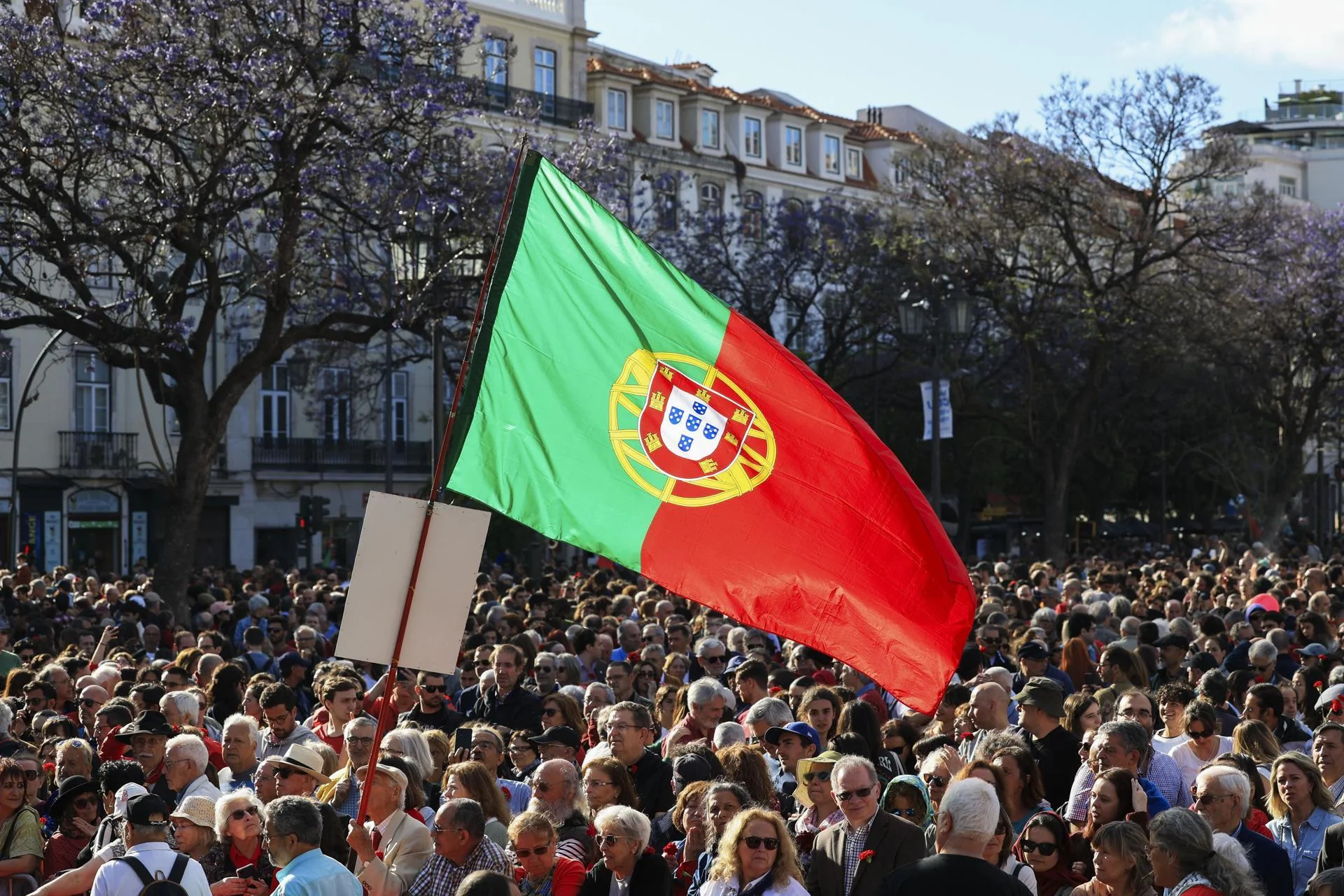
The 20th century brought significant political change. Following the fall of the monarchy in 1910, Portugal experienced periods of instability before the establishment of the Estado Novo regime under António de Oliveira Salazar in 1933. The authoritarian government lasted for decades until the peaceful Carnation Revolution of 1974, which restored democracy and initiated a new era of political freedom. Portugal later joined the European Community in 1986, accelerating modernization and economic development.
Portugal story

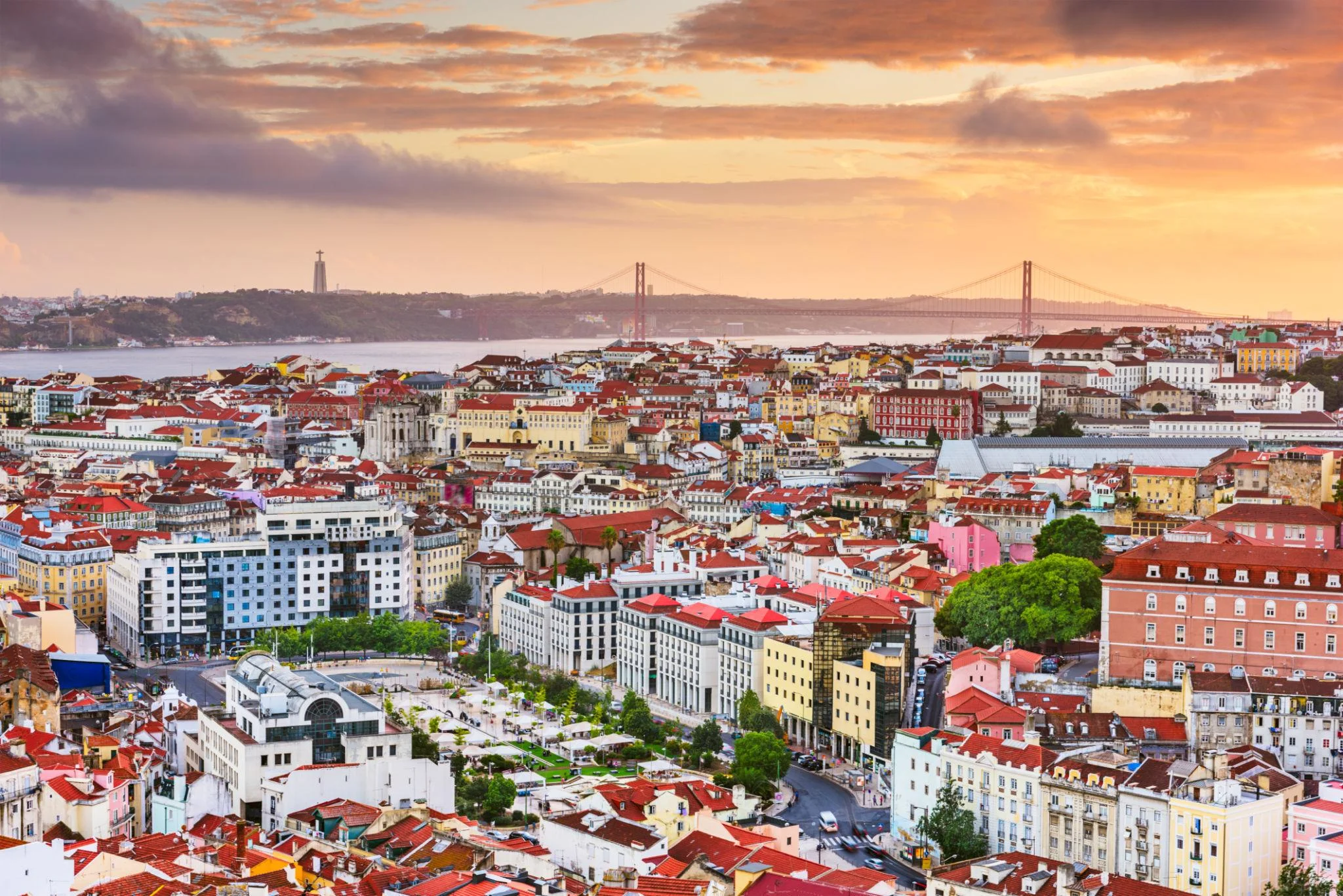
Modern Portuguese identity is deeply influenced by maritime heritage, resilience, exploration, and cultural openness. While regional traditions remain strong—from the vineyards of the Douro Valley to the islands of Madeira and the Azores—Portuguese people share pride in their history, language, and global connections. Today, Portugal is known for its high quality of life, safety, hospitality, and rich cultural heritage while maintaining a strong role within Europe and the wider Portuguese-speaking world.
Portugal story

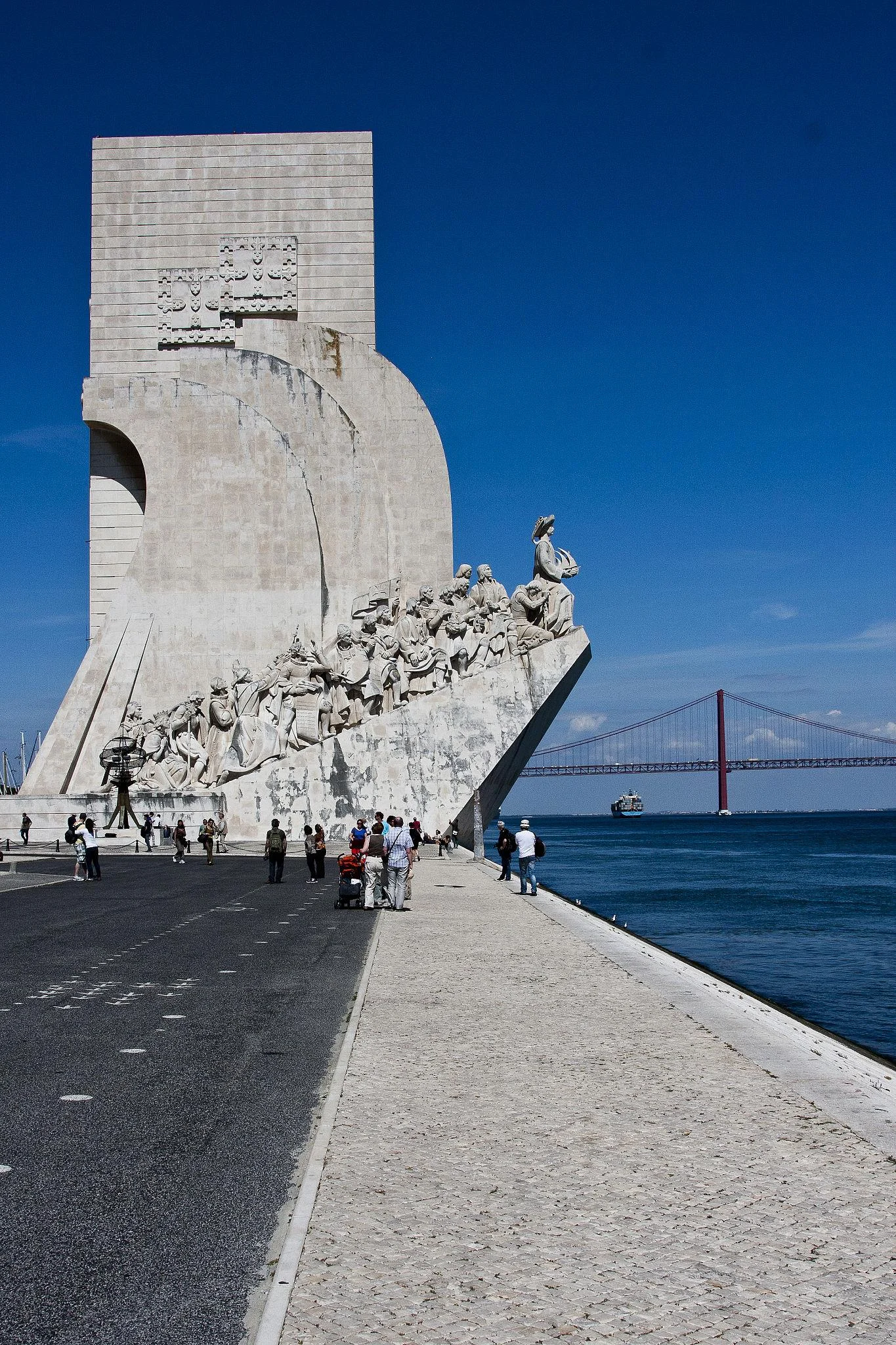
Exploration & Discovery

·        Vasco da Gama (1460–1524) — First European to reach India by sea

·        Bartolomeu Dias (1450–1500) — First European to round the Cape of Good Hope

·        Pedro Álvares Cabral (1467–1520) — Led the expedition that reached Brazil

• Literature & Culture

·        Luís de Camões (1524–1580) — Portugal's national poet and author of Os Lusíadas

·        Fernando Pessoa (1888–1935) — One of the most influential literary figures of the 20th century

·        José Saramago (1922–2010) — Nobel Prize-winning novelist

• Science & Innovation

·        António Egas Moniz (1874–1955) — Nobel Prize winner in Medicine

·        Pedro Nunes (1502–1578) — Pioneer in navigation science and mathematics

• Music & Arts

·        Amália Rodrigues (1920–1999) — The "Queen of Fado" who introduced Portuguese music to the world

• Politics & Modern Leadership

·        Mário Soares (1924–2017) — Key figure in Portugal's democratic transition

·        Marcelo Rebelo de Sousa (born 1948) — President of Portugal since 2016

Portuguese is Known For

A quick look at the core characteristics, structures, and cultural definitions that shape the Portugal reputation worldwide.

History & Maritime Heritage

Portugal pioneered the Age of Discovery and established one of history's first global maritime empires.

Exploration & Navigation

Portuguese explorers helped map sea routes connecting Europe, Africa, Asia, and the Americas.

Culture & Tradition

Portugal is known for its rich traditions, historic towns, festivals, and enduring connection to the Atlantic Ocean.

Fado Music

The country is the birthplace of Fado, a soulful musical genre recognized by UNESCO as Intangible Cultural Heritage.

Architecture & Heritage

Portugal is renowned for Manueline architecture, medieval castles, monasteries, and colorful azulejo tilework.

Wine & Gastronomy

Portugal is famous for Port wine, Douro Valley vineyards, seafood cuisine, olive oil, and traditional pastries such as Pastel de Nata.

Hospitality & Lifestyle

Portuguese culture emphasizes family, community, hospitality, and a relaxed Mediterranean-Atlantic lifestyle.

Regional Diversity

From the vineyards of northern Portugal and historic central towns to the beaches of the Algarve and the volcanic landscapes of Madeira and the Azores, each region offers a distinct identity

Renewable Energy & Innovation

Portugal has become a European leader in renewable energy, sustainability, and technological development.
The Portuguese Spirit
titleDecore bar

Understanding society, traditions, and daily life in Portugal

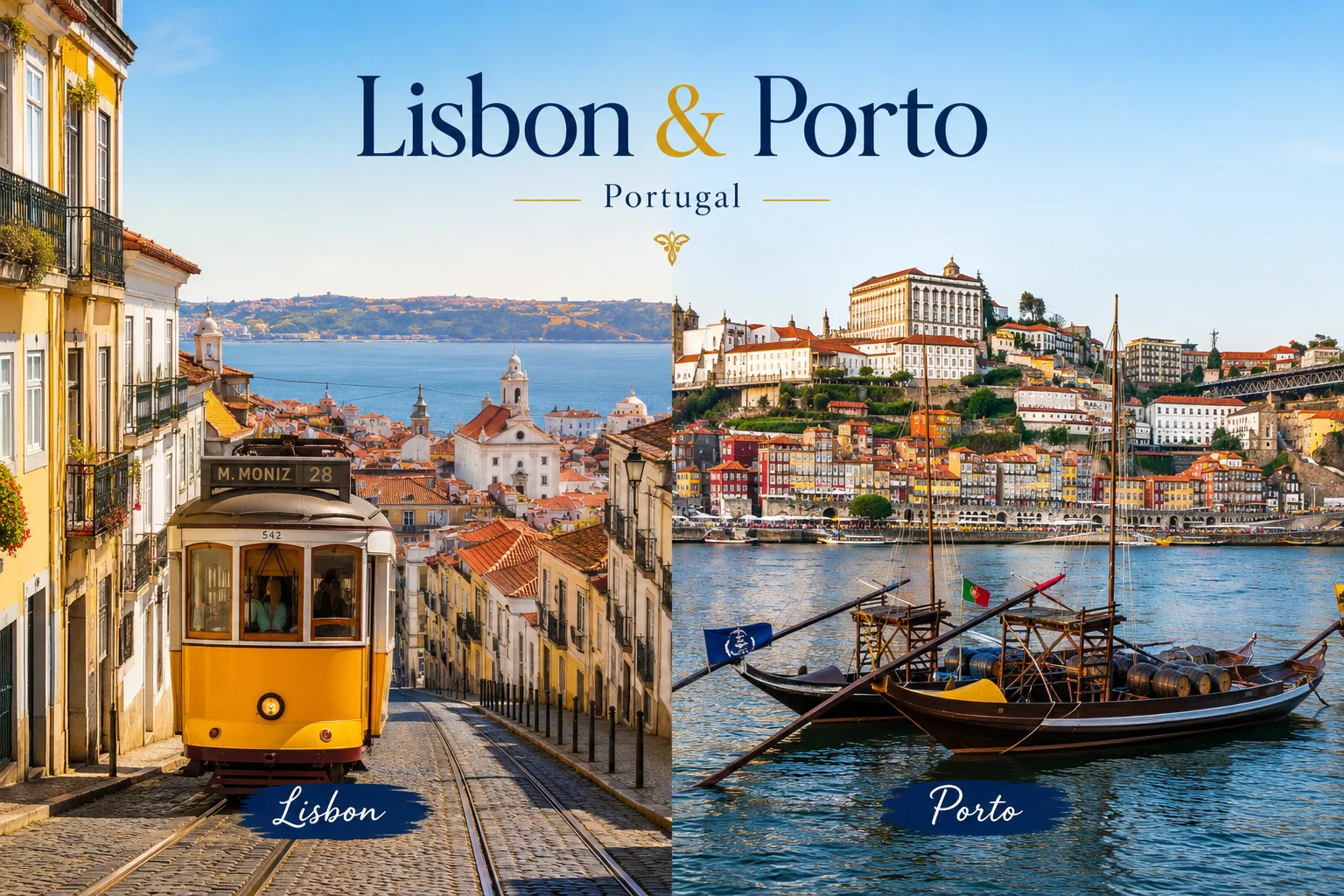
Portuguese society places strong importance on family, community, and personal relationships. People are generally friendly, polite, and welcoming, often valuing modesty and respect in social interactions. Family gatherings remain central to daily life, especially during weekends and religious celebrations. While urban areas such as Lisbon and Porto are modern and cosmopolitan, smaller towns and rural regions often preserve traditional customs and a slower pace of life.

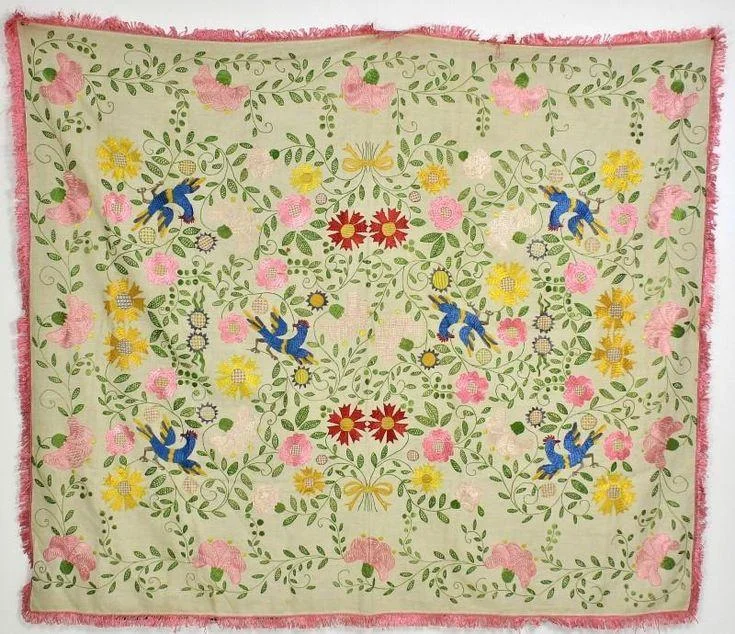
Portugal has a relaxed yet elegant approach to fashion. Everyday clothing is typically practical and comfortable, reflecting the country's mild climate and coastal lifestyle. Traditional costumes vary by region and are mainly worn during festivals, folk celebrations, and cultural events. Portuguese textiles, embroidery, and handcrafted garments remain important elements of the country's cultural heritage.

Portuguese is the official language and one of the world's most widely spoken languages. Regional accents vary across the country, particularly between the north, south, and island regions of Madeira and the Azores. English is widely spoken in tourist destinations and among younger generations, especially in major cities and coastal areas.

Music is an essential part of Portuguese culture. Portugal is best known for Fado, a traditional musical genre characterized by emotional melodies and themes of longing, love, and nostalgia. Folk music traditions remain strong in many regions, while contemporary Portuguese artists contribute to pop, rock, and international music scenes. Music festivals are popular throughout the year.

Portugal's artistic heritage reflects Roman, Moorish, Gothic, Renaissance, Baroque, and modern influences. The country is renowned for its decorative ceramic tiles known as azulejos, historic monasteries, castles, and maritime monuments. Cities such as Lisbon, Porto, and Coimbra showcase centuries of architectural and cultural development.
Roman Catholicism has historically played a major role in Portuguese society and continues to influence many traditions, holidays, and cultural celebrations. Although modern Portugal has become increasingly secular, religious festivals, pilgrimages, and historic churches remain important aspects of national identity and cultural heritage.

Portugal has become increasingly diverse through immigration, international business, and tourism.

Religious Composition
Most Portuguese people identify as Christian, predominantly Roman Catholic. There are also growing Muslim, Protestant, Orthodox Christian, Hindu, Buddhist, and non-religious communities.

Ethnic Backgrounds
The majority of residents are ethnically Portuguese. Immigration from Brazil, Portuguese-speaking African countries, other European nations, and Asia has contributed to the country's multicultural character. Major cities such as Lisbon and Porto are home to diverse international communities, reflecting Portugal's long history of global connections and maritime exploration.

Portugal Food Culture
titleDecore bar
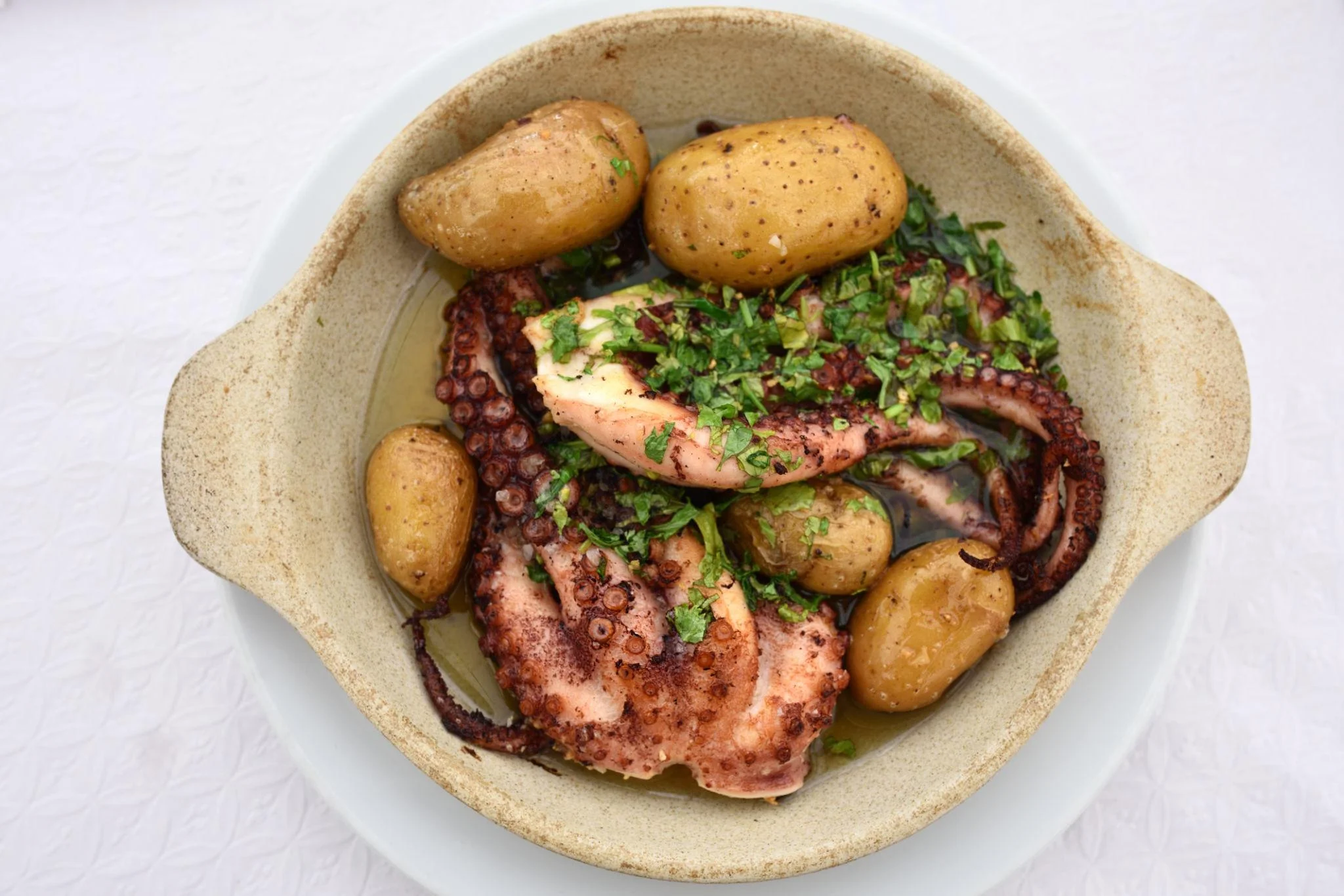
Portugal - Polvo à Lagareiro

Polvo à Lagareiro

Roasted octopus served with olive oil and potatoes

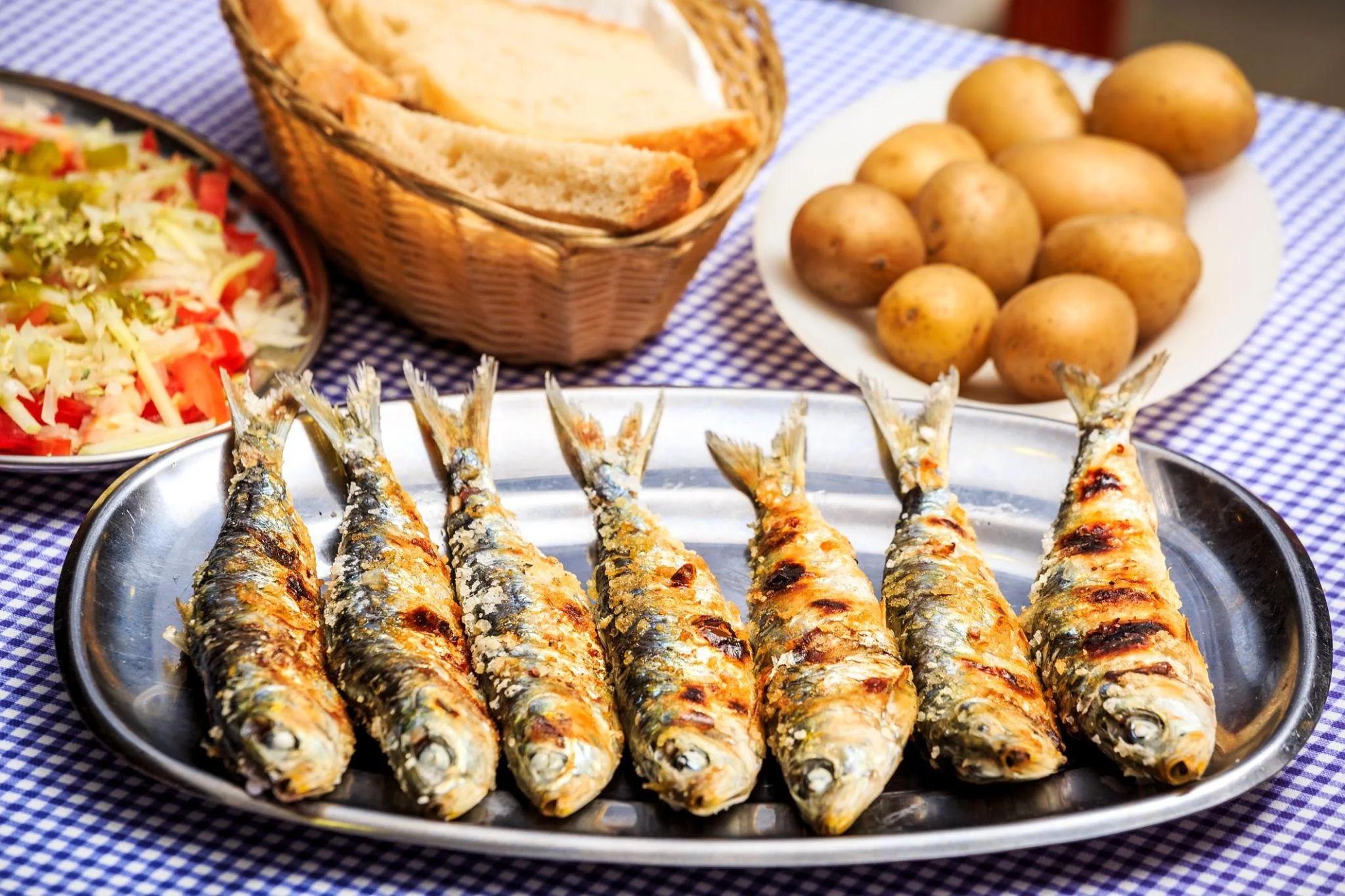
Portugal - Sardinhas Assadas

Sardinhas Assadas

Grilled sardines, especially popular during summer festivals

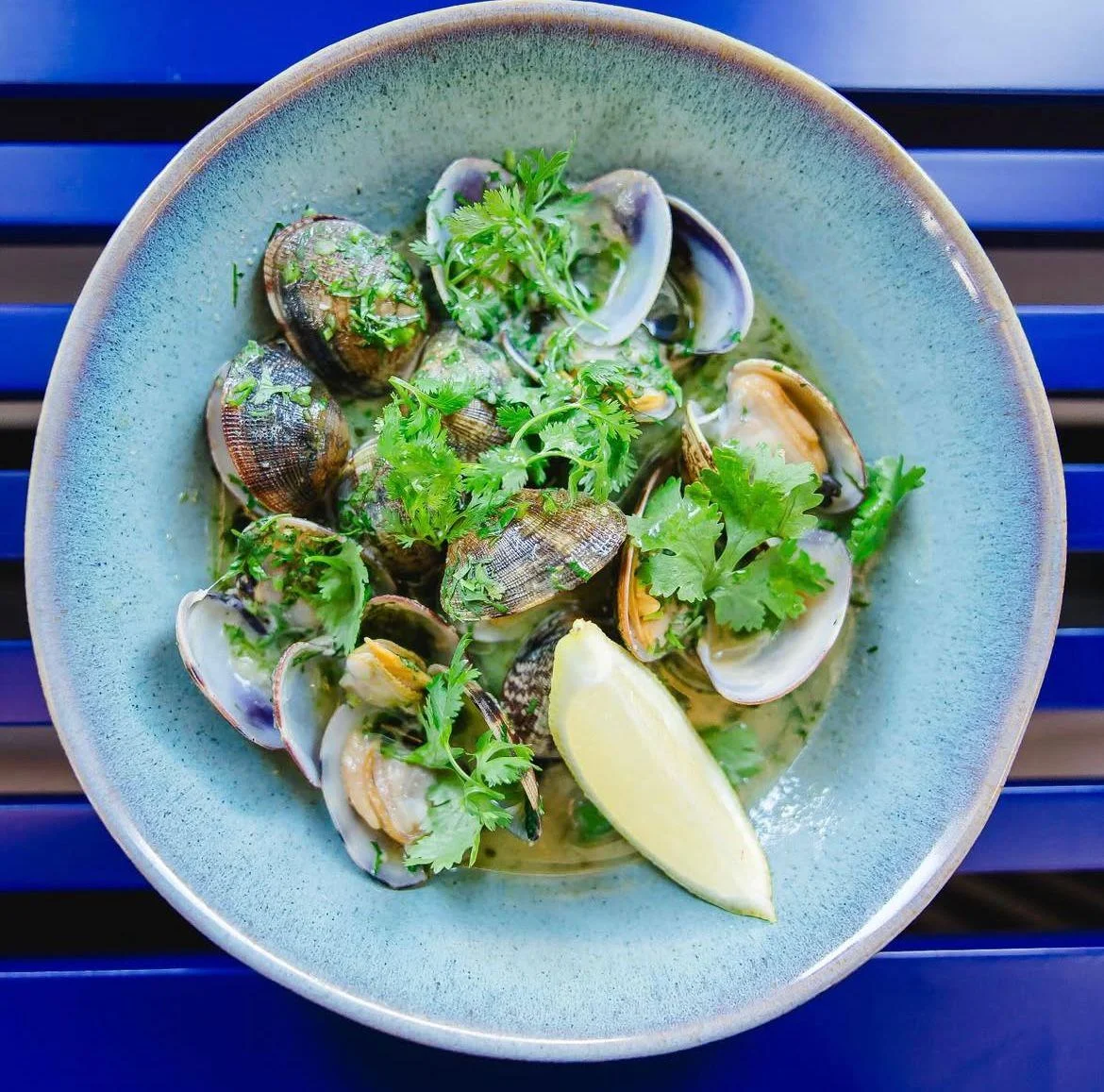
Portugal - Amêijoas à Bulhão Pato

Amêijoas à Bulhão Pato

Clams cooked with garlic, olive oil, coriander, and lemon

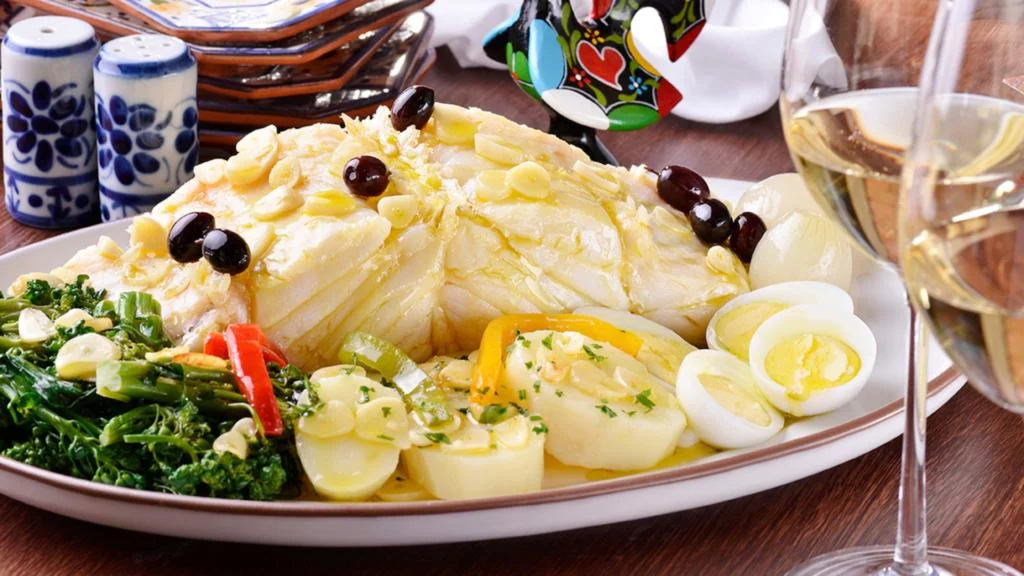
Portugal - Bacalhau (Salted Codfish)

Bacalhau (Salted Codfish)

Portugal’s most famous dish, prepared in hundreds of different ways

Polvo à Lagareiro

Roasted octopus served with olive oil and potatoes

Sardinhas Assadas

Grilled sardines, especially popular during summer festivals

Amêijoas à Bulhão Pato

Clams cooked with garlic, olive oil, coriander, and lemon

Bacalhau (Salted Codfish)

Portugal’s most famous dish, prepared in hundreds of different ways

Portugal - Polvo à Lagareiro

Polvo à Lagareiro

Portugal - Sardinhas Assadas

Sardinhas Assadas

Portugal - Amêijoas à Bulhão Pato

Amêijoas à Bulhão Pato

Portugal - Bacalhau (Salted Codfish)

Bacalhau (Salted Codfish)

Explore Portugal
titleDecore bar

Portugal is a country where history, exploration, nature, and everyday life blend together. From medieval castles and historic cities to Atlantic beaches, vineyards, and islands, Portugal offers unforgettable experiences.

Cities & Highlights

Portugal’s capital, famous for maritime history, historic architecture, viewpoints, traditional neighborhoods, and Fado music.

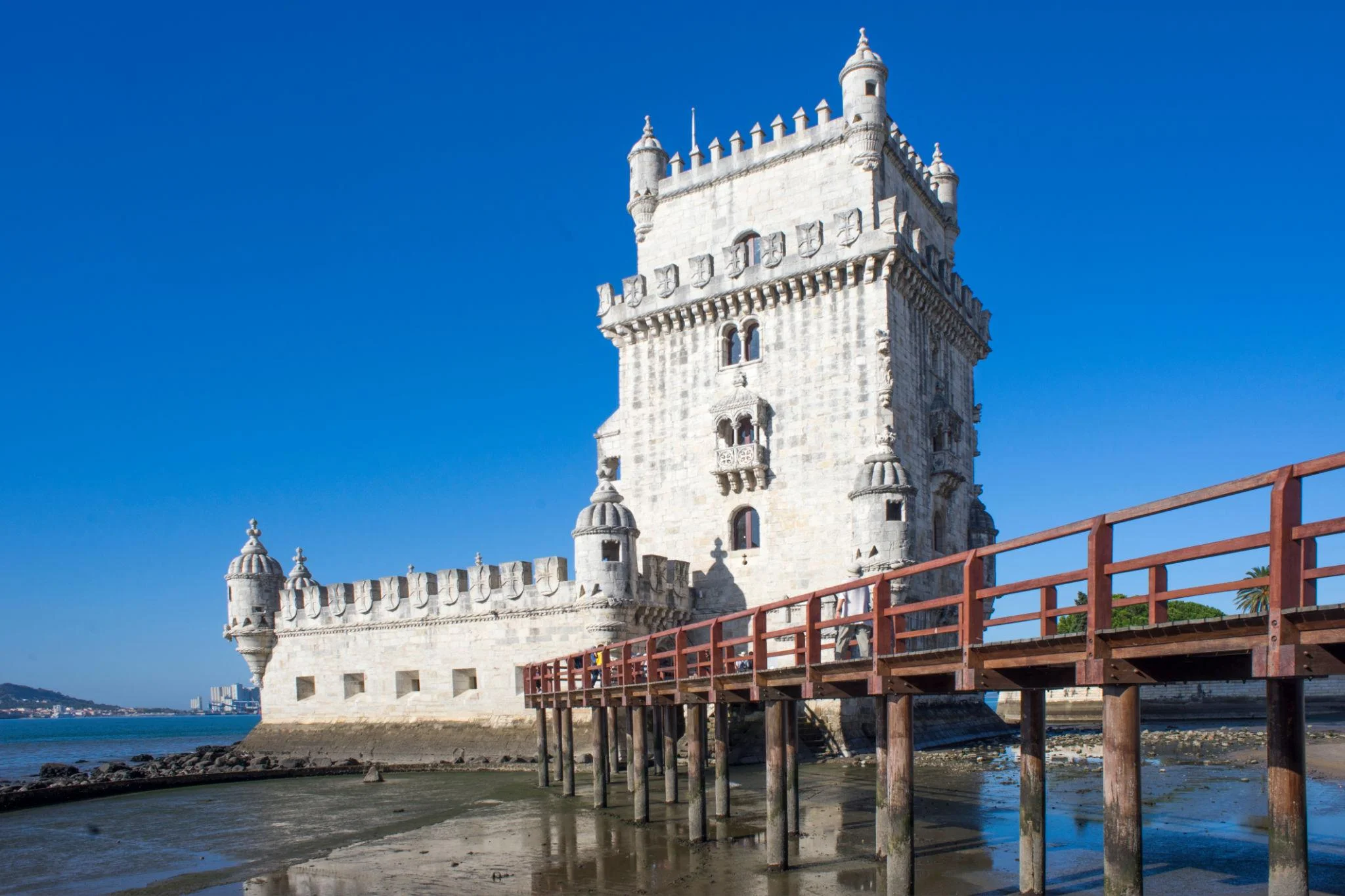
Belém Tower

Belém TowerUNESCO

A UNESCO monument built in the 16th century, symbolizing Portugal’s Age of Discoveries.

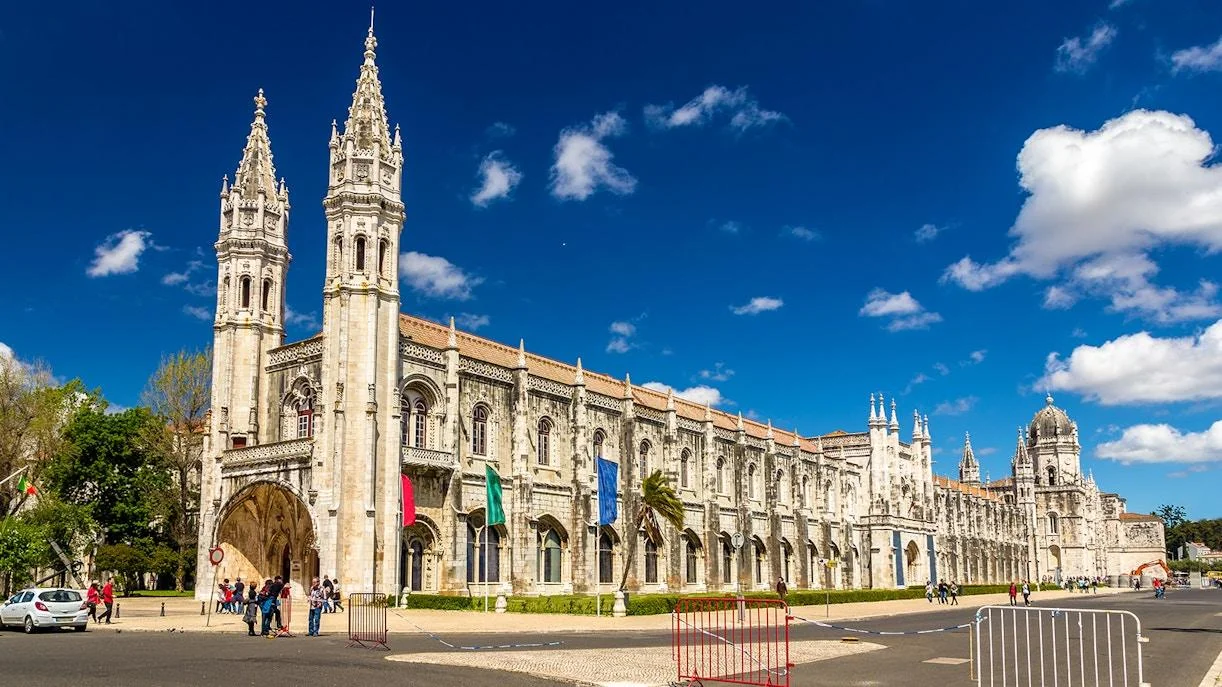
Jerónimos Monastery

Jerónimos Monastery

A masterpiece of Manueline architecture and a tribute to Portugal’s explorers.

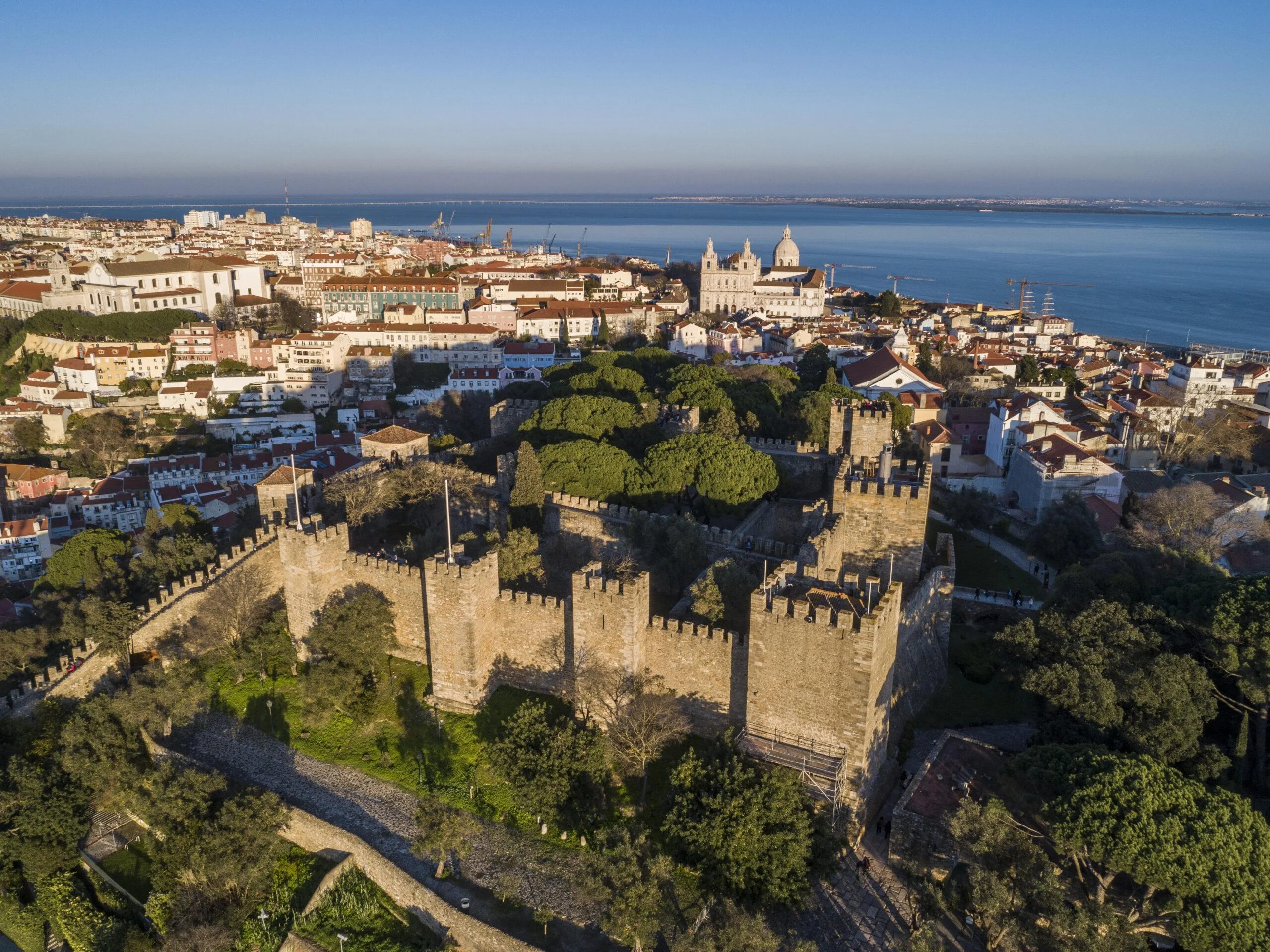
São Jorge Castle

São Jorge Castle

A masterpiece of Manueline architecture and a tribute to Portugal’s explorers.

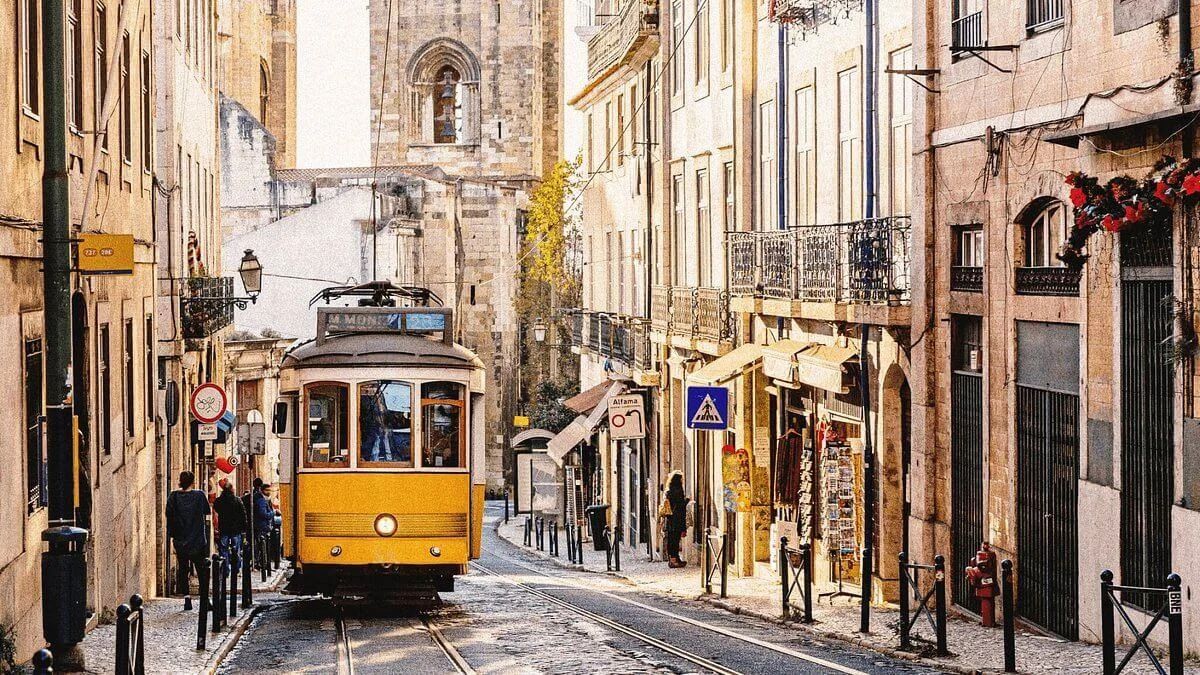
Alfama District

Alfama District

The city’s oldest neighborhood, famous for narrow streets and Fado music.

Special Experiences
titleDecore bar

Portugal offers experiences that connect history, nature, culture, and everyday life. Beyond its famous cities and monuments, travelers can discover Atlantic traditions, historic villages, wine regions, festivals, outdoor adventures, and authentic local lifestyles. From exploring medieval towns and sailing along dramatic coastlines to tasting traditional cuisine and experiencing Portuguese hospitality, Portugal provides a journey filled with discovery, relaxation, and unforgettable moments.

Portugal’s culture is deeply influenced by its maritime history, Catholic traditions, regional identities, and strong community spirit. Festivals are not only celebrations but also a way to preserve local history, music, food, and traditions. Throughout the year, Portuguese cities and villages celebrate with processions, concerts, traditional dances, street decorations, and local cuisine.

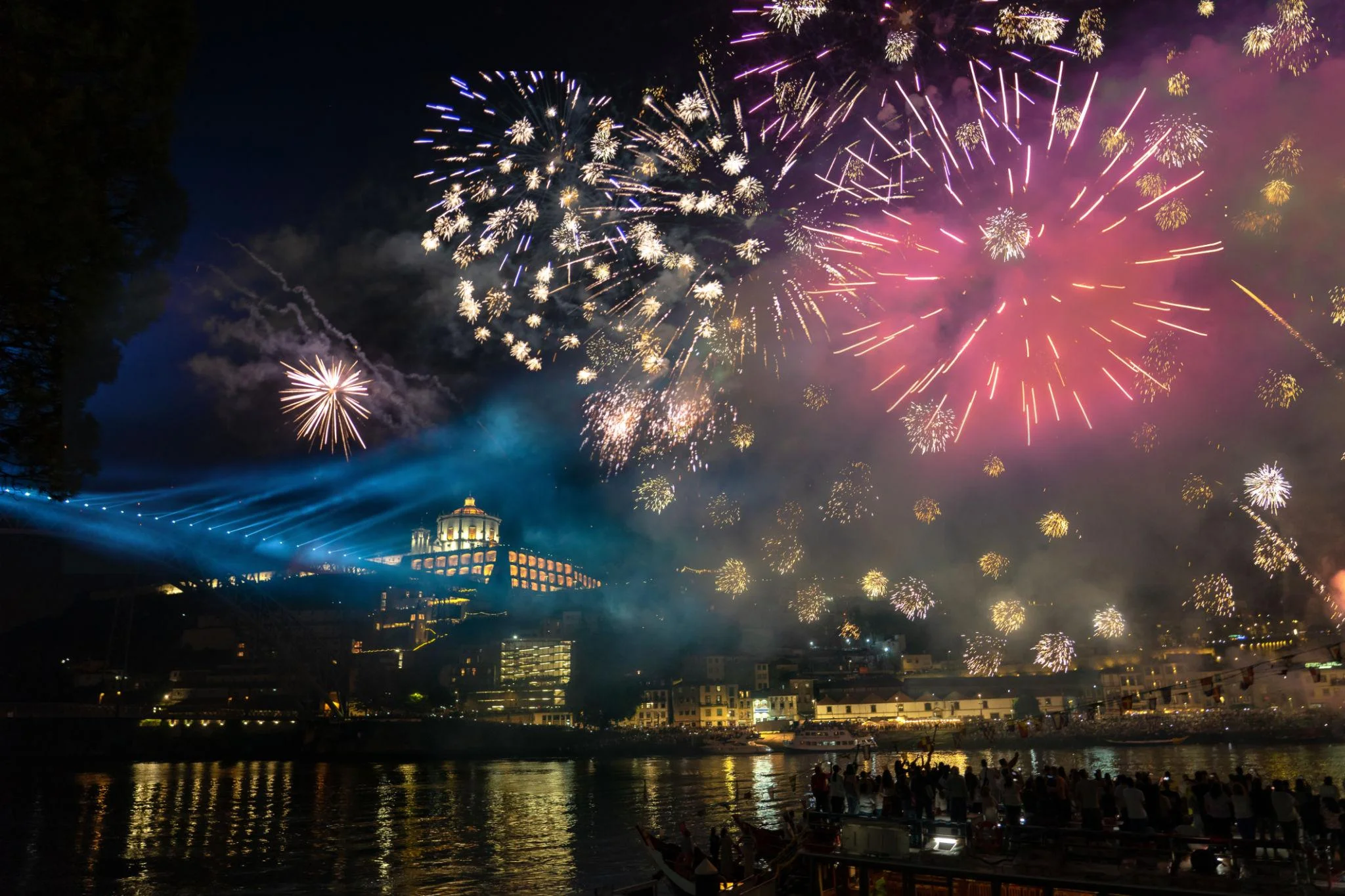
June 23–24

São João Festival

Porto

One of Portugal’s most famous festivals, celebrating Saint John with street parties, fireworks, music, and traditional food. The historic streets of Porto become filled with locals and visitors, creating one of the country’s most vibrant cultural experiences.

São João Festival

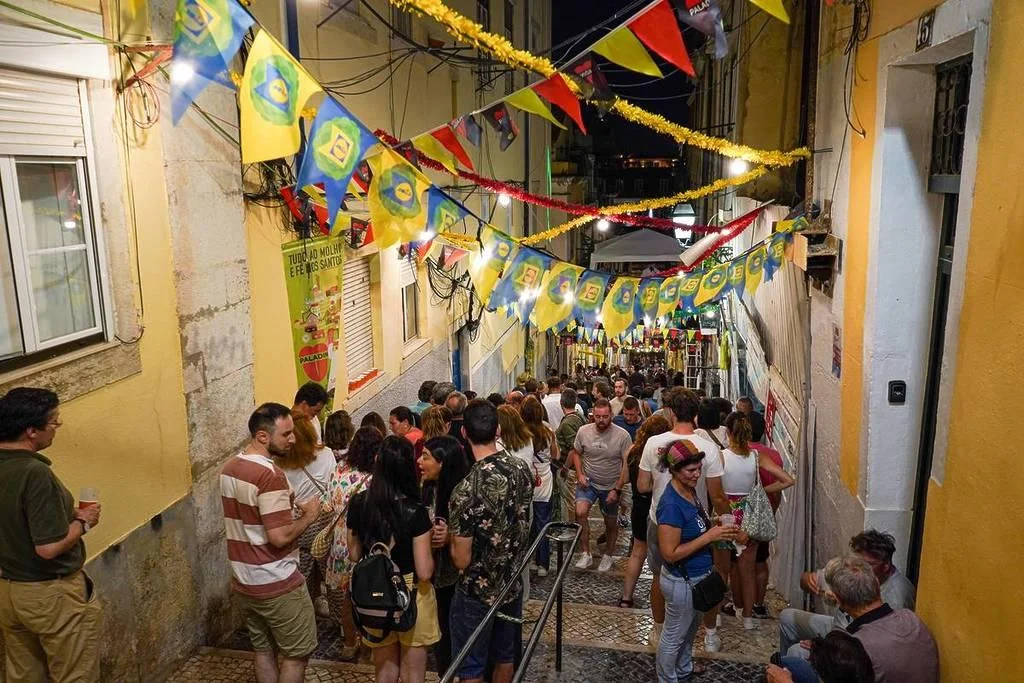
June 12–13

Festa de Santo António

Lisbon

Lisbon’s largest traditional celebration honors the city’s patron saint. Neighborhoods are decorated with colorful lights, streets fill with music and dancing, and grilled sardines become a symbol of the festival.

Festa de Santo António

February or March

Carnival

Across Portugal

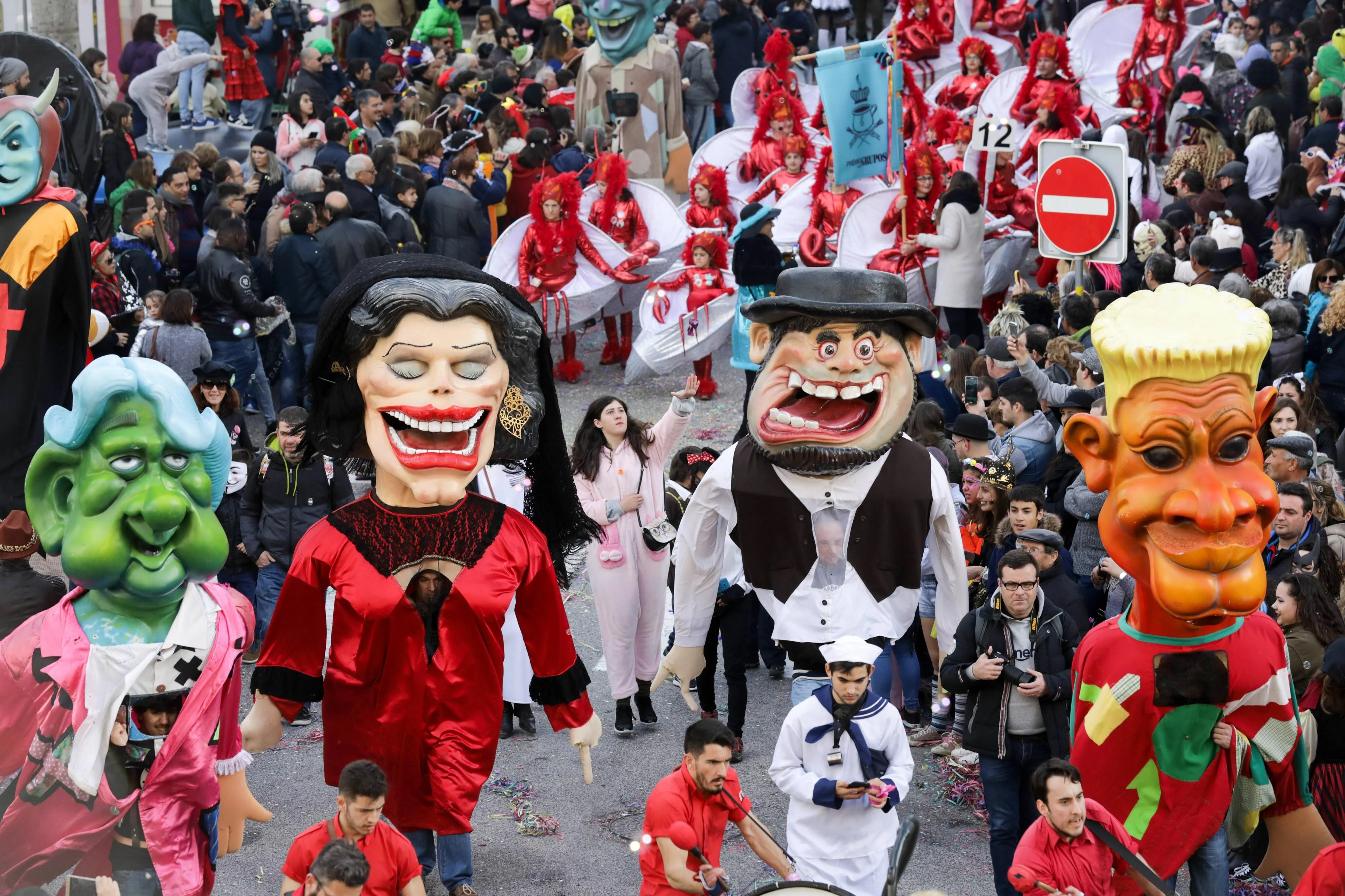
Portuguese Carnival combines costumes, parades, humor, and music. Towns such as Torres Vedras and Loulé are famous for creative celebrations that bring communities together.

Carnival

December

Christmas Traditions

Northern Portugal

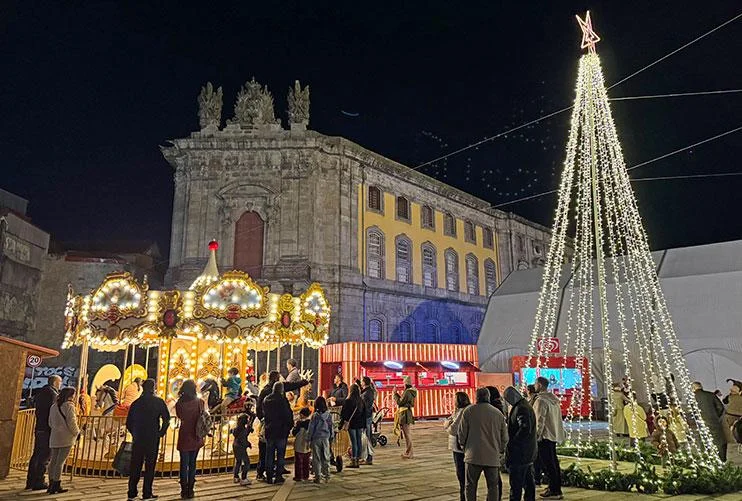
Cities such as Porto, Braga, and Guimarães celebrate Christmas with markets, lights, traditional sweets, and family gatherings reflecting Portuguese customs.

Christmas Traditions
Shopping
titleDecore bar

Shopping in Portugal combines tradition, craftsmanship, creativity, and modern design. From historic ceramic workshops and luxury cork products to fashion brands, gourmet foods, and traditional markets, Portuguese products reflect the country’s culture, regional identity, and Atlantic heritage. The label “Made in Portugal” is increasingly recognised for quality, sustainability, and skilled craftsmanship.

Well-Known Brands

Portugal has a strong reputation for textile production and high-quality footwear, combining craftsmanship with contemporary design.

Salsa Jeans
Salsa Jeans

Founded in northern Portugal, Salsa is known internationally for denim, modern clothing, and innovative fits.

Laranjinha
Laranjinha

A Portuguese children’s fashion brand recognised for quality clothing and elegant designs.

Lion of Porches
Lion of Porches

A Portuguese fashion brand inspired by classic European style and modern lifestyle.

Camperos / Portuguese Shoe Industry

Portugal is one of Europe’s leading footwear producers, known for handmade leather shoes and premium craftsmanship.

Local Goods & Retail

Portuguese souvenirs often represent the country’s history, craftsmanship, and regional traditions.

🌿 Cork Products
🌿 Cork Products

Évora & Alentejo Region

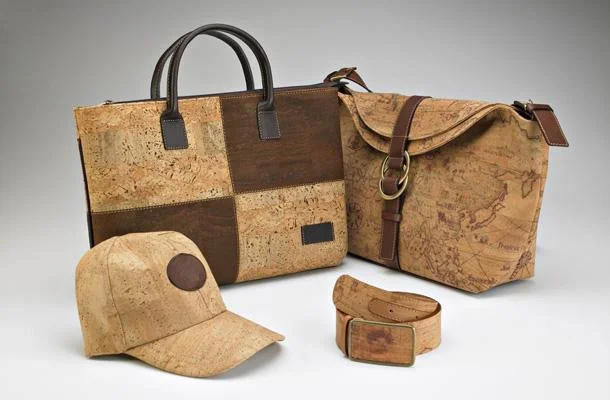
Eco-friendly bags, wallets, hats, accessories, and souvenirs made from Portuguese cork.

Azulejos (Traditional Tiles)

Lisbon & Porto

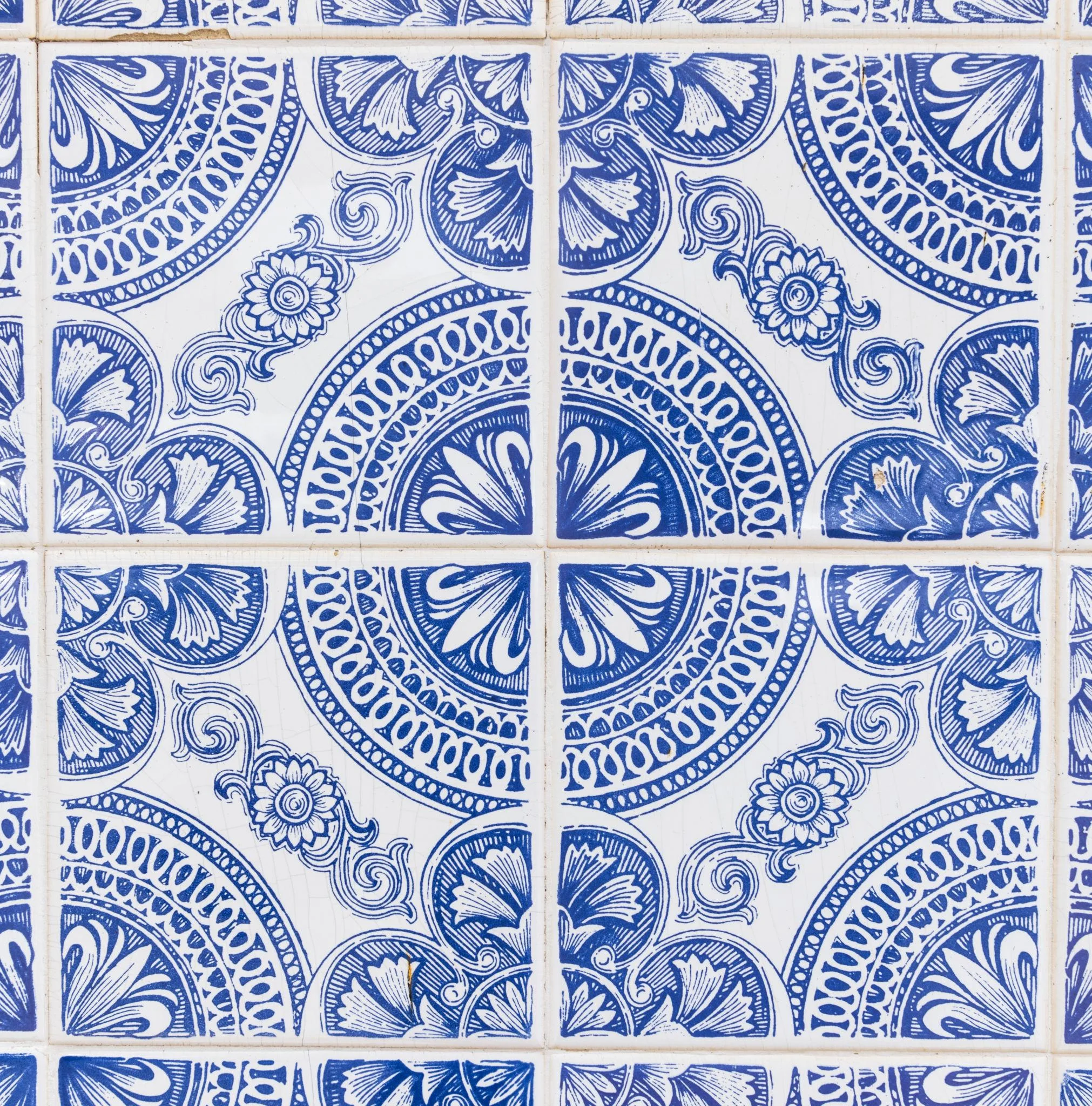
Decorative ceramic tiles used in Portuguese architecture and available as artworks, plates, and home decorations.

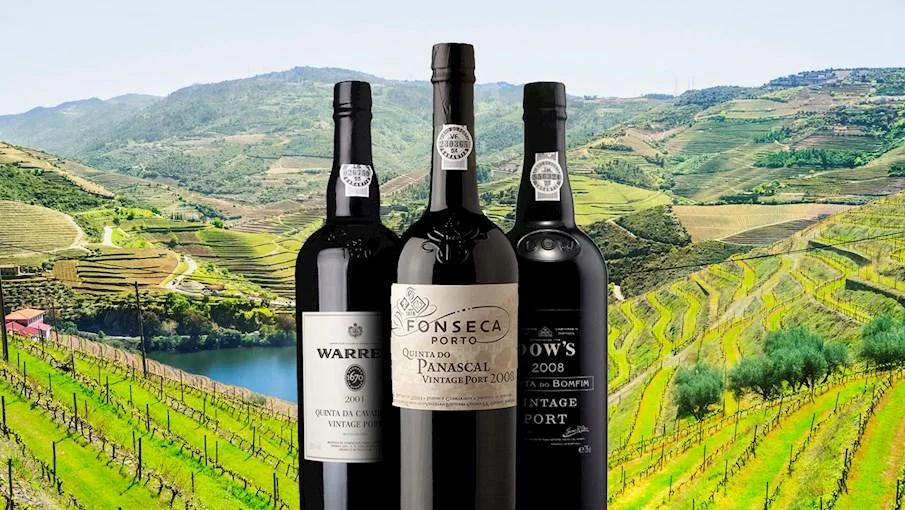
🍷 Port Wine
🍷 Port Wine

Porto & Douro Valley

A classic Portuguese gift from the Douro Valley, available in many styles and ages.

🍮 Pastel de Nata
🍮 Pastel de Nata

Lisbon & Belém

Traditional Portuguese custard pastries and gift products inspired by this famous dessert.

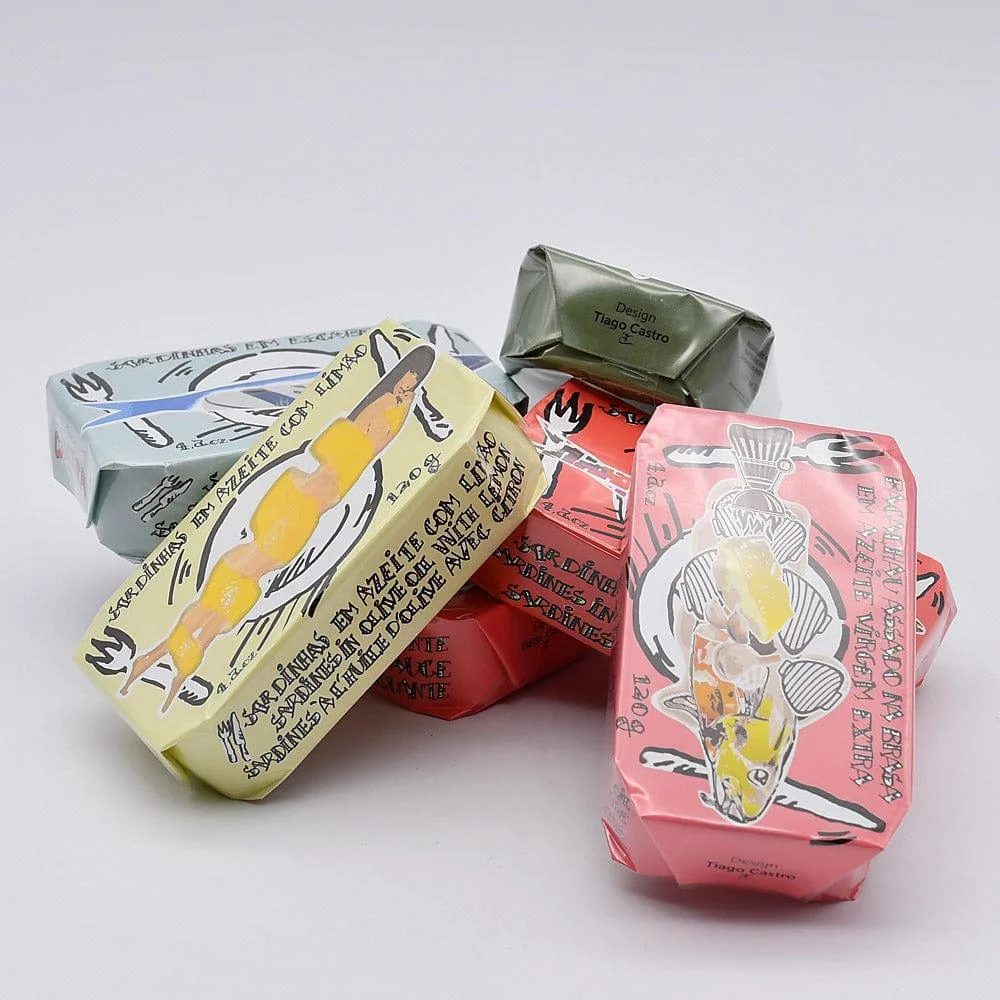
🐟 Canned Seafood
🐟 Canned Seafood

Lisbon, Porto & Matosinhos

Traditional Portuguese sardines, tuna, and seafood tins with artistic packaging.

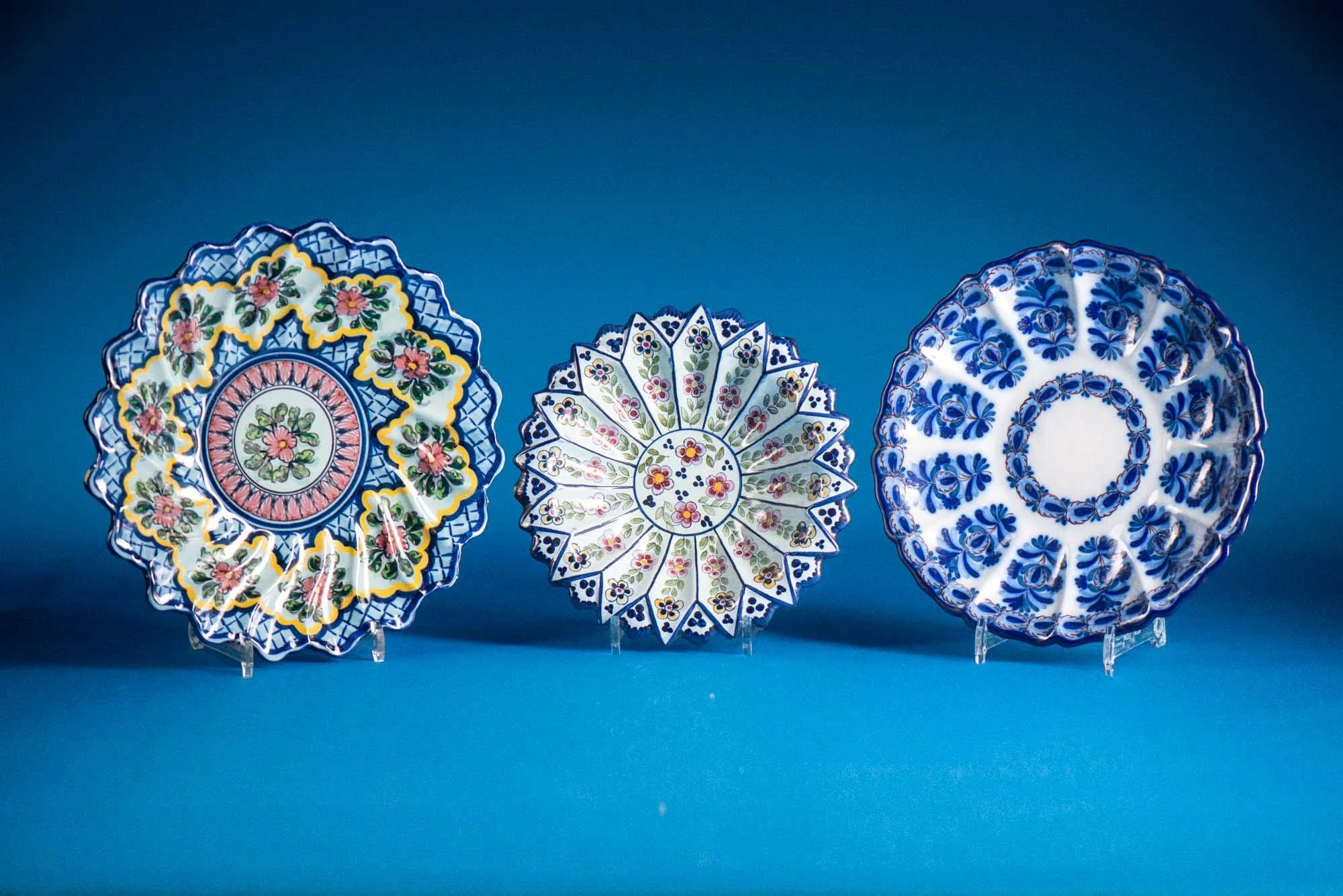
🏺 Handmade Ceramics
🏺 Handmade Ceramics

Caldas da Rainha & Alcobaça

Decorative pottery from regions famous for Portuguese ceramic traditions.

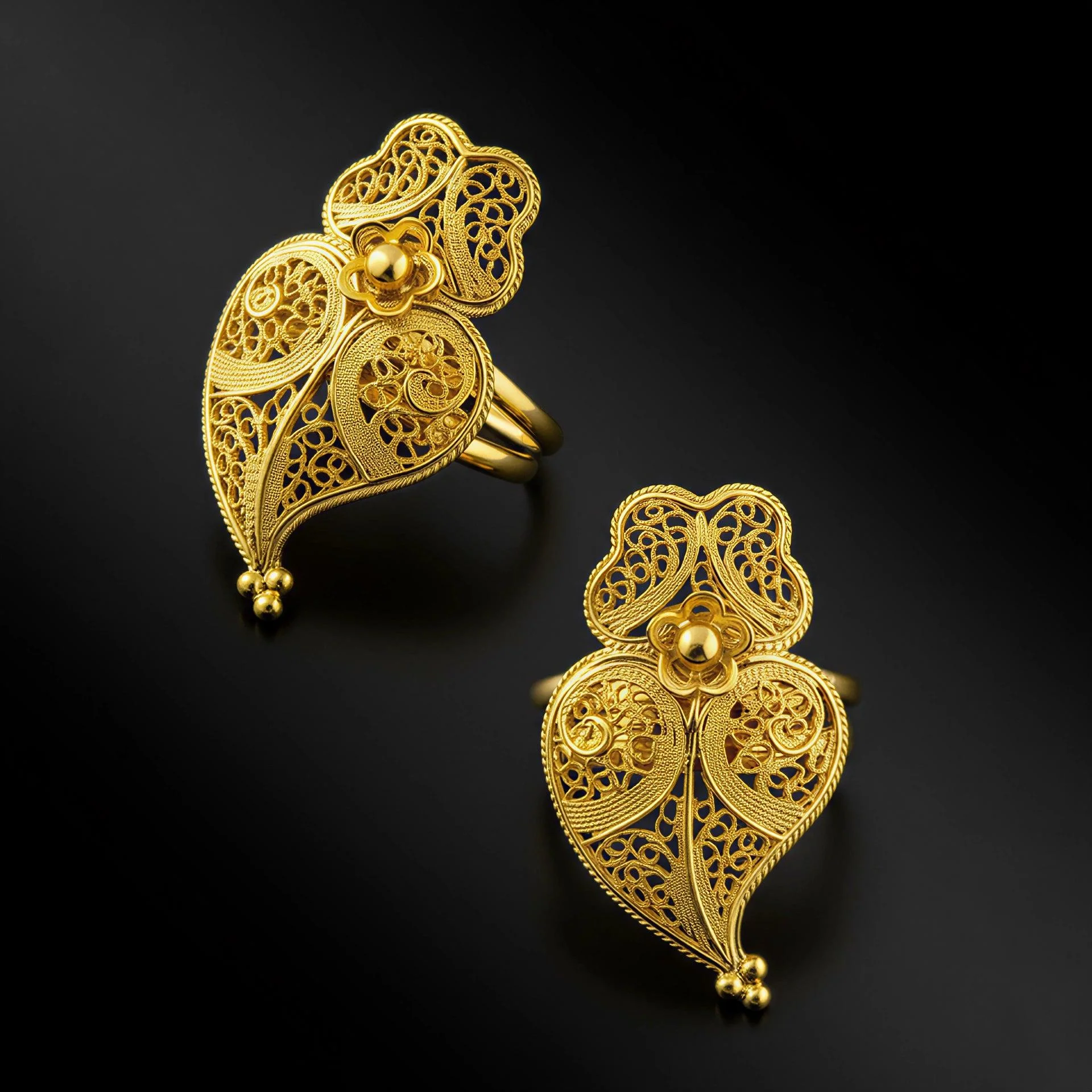
💍 Gold Filigree Jewelry

Braga & Gondomar

Traditional Portuguese gold craftsmanship, especially famous in northern Portugal.

Traditional Textiles

Guimarães, Serra da Estrela & Alentejo

Handmade blankets, scarves, and embroidered products representing regional traditions.

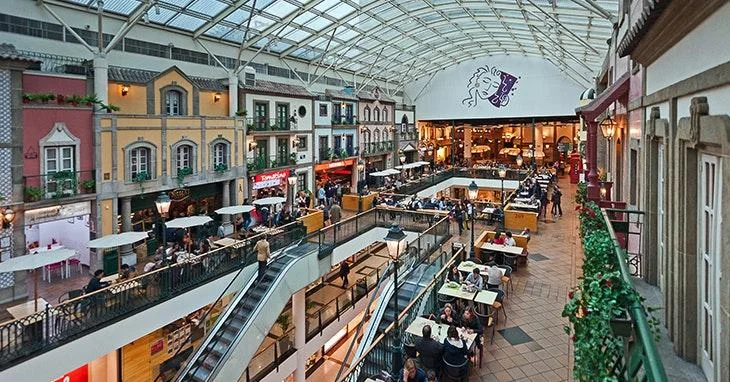
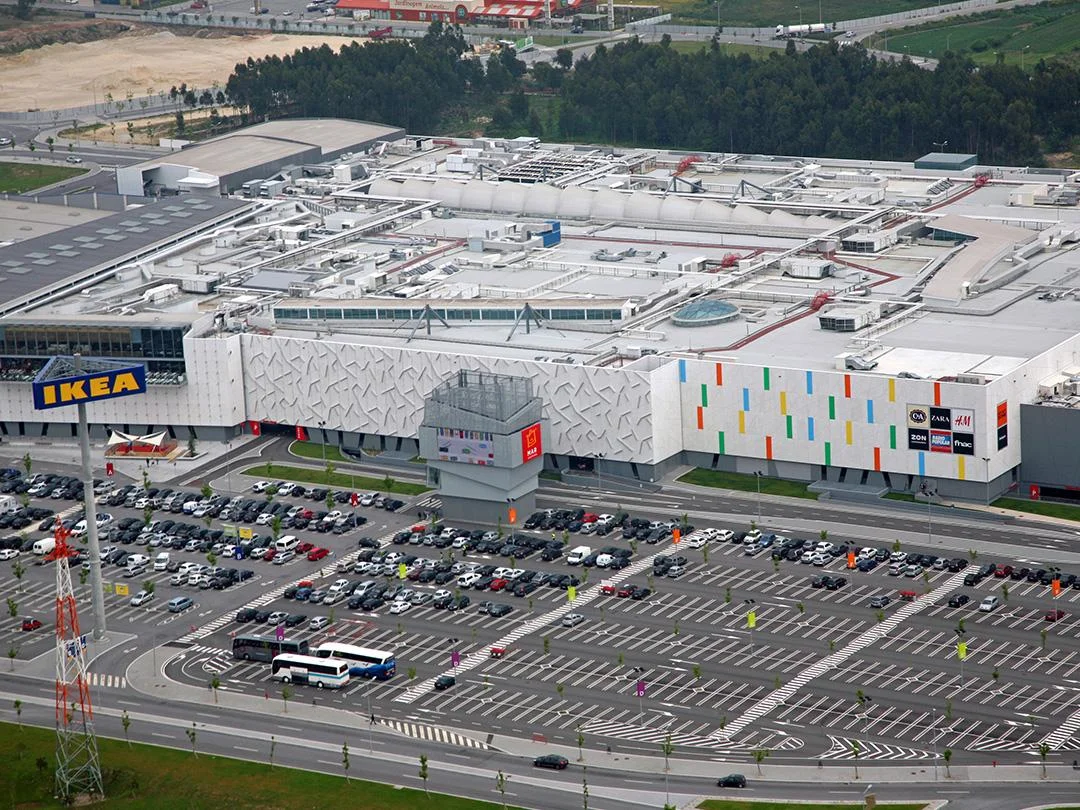
Portugal offers modern shopping centres with international brands, restaurants, and entertainment.
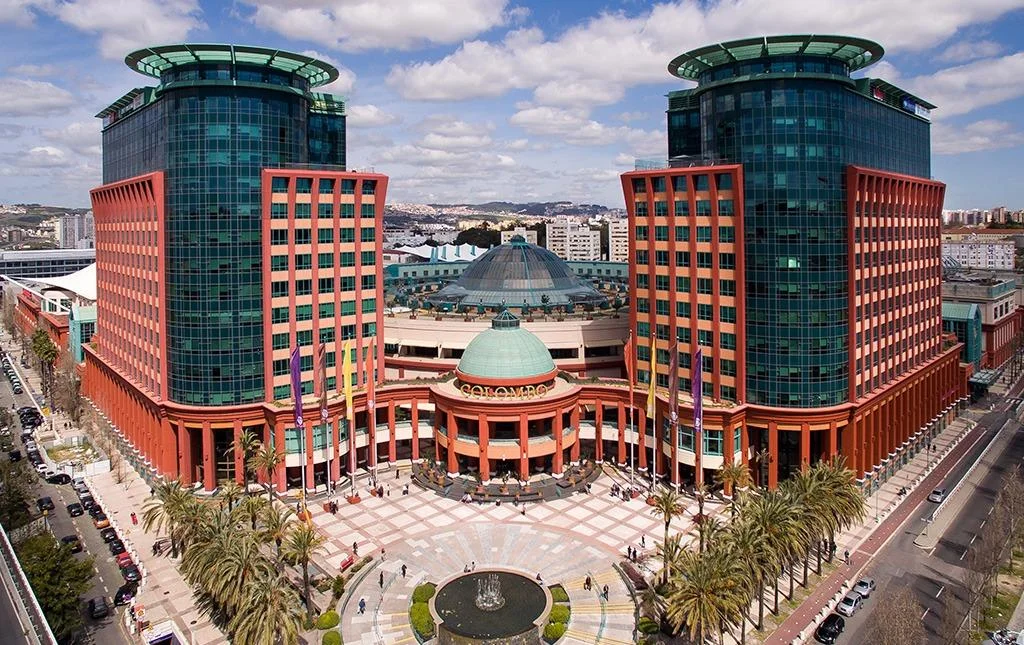
Colombo Shopping Centre

Lisbon

One of Portugal’s largest shopping centres with fashion, dining, and entertainment.
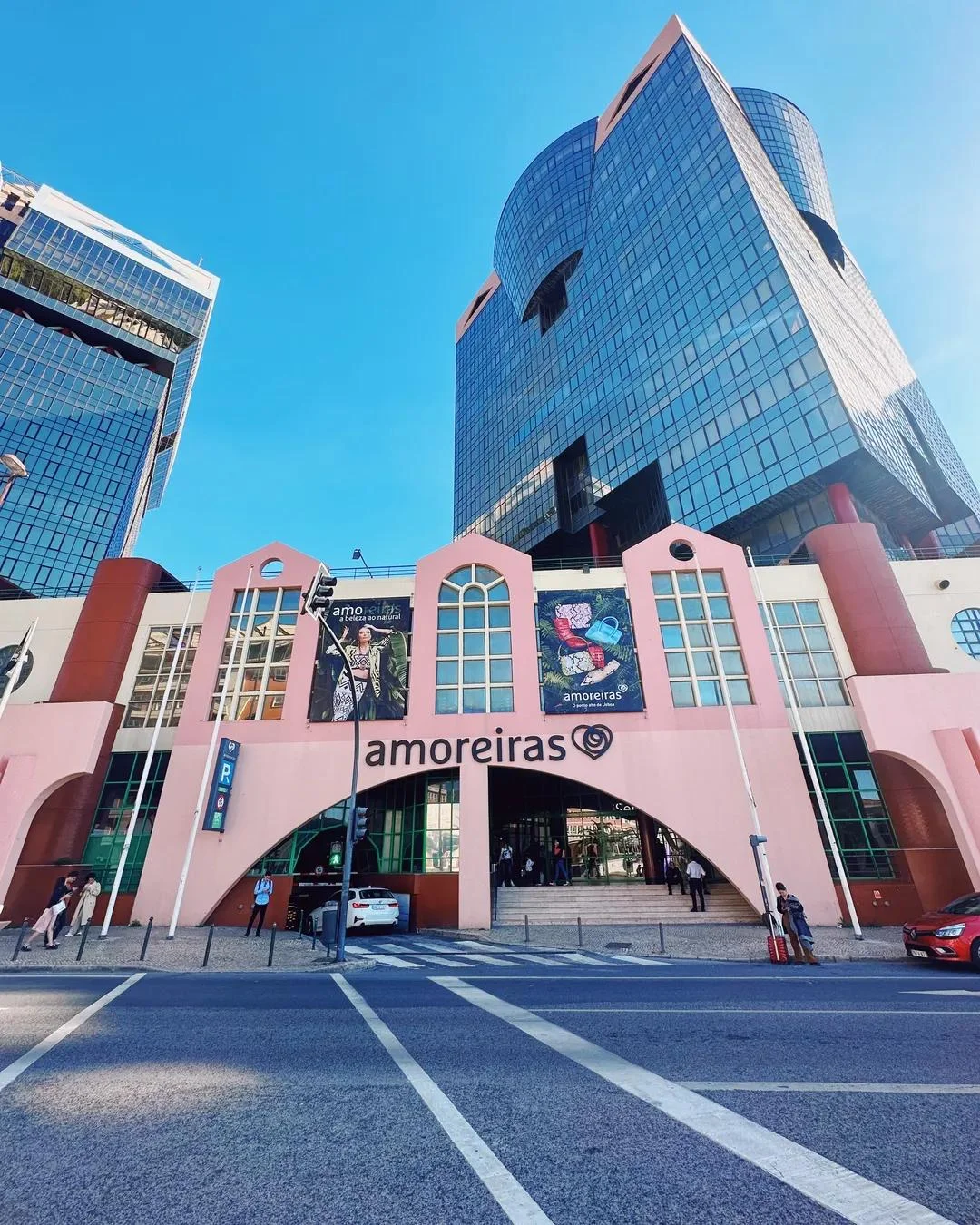
Amoreiras Shopping Centre

Lisbon

A historic shopping destination known for fashion brands and city views.

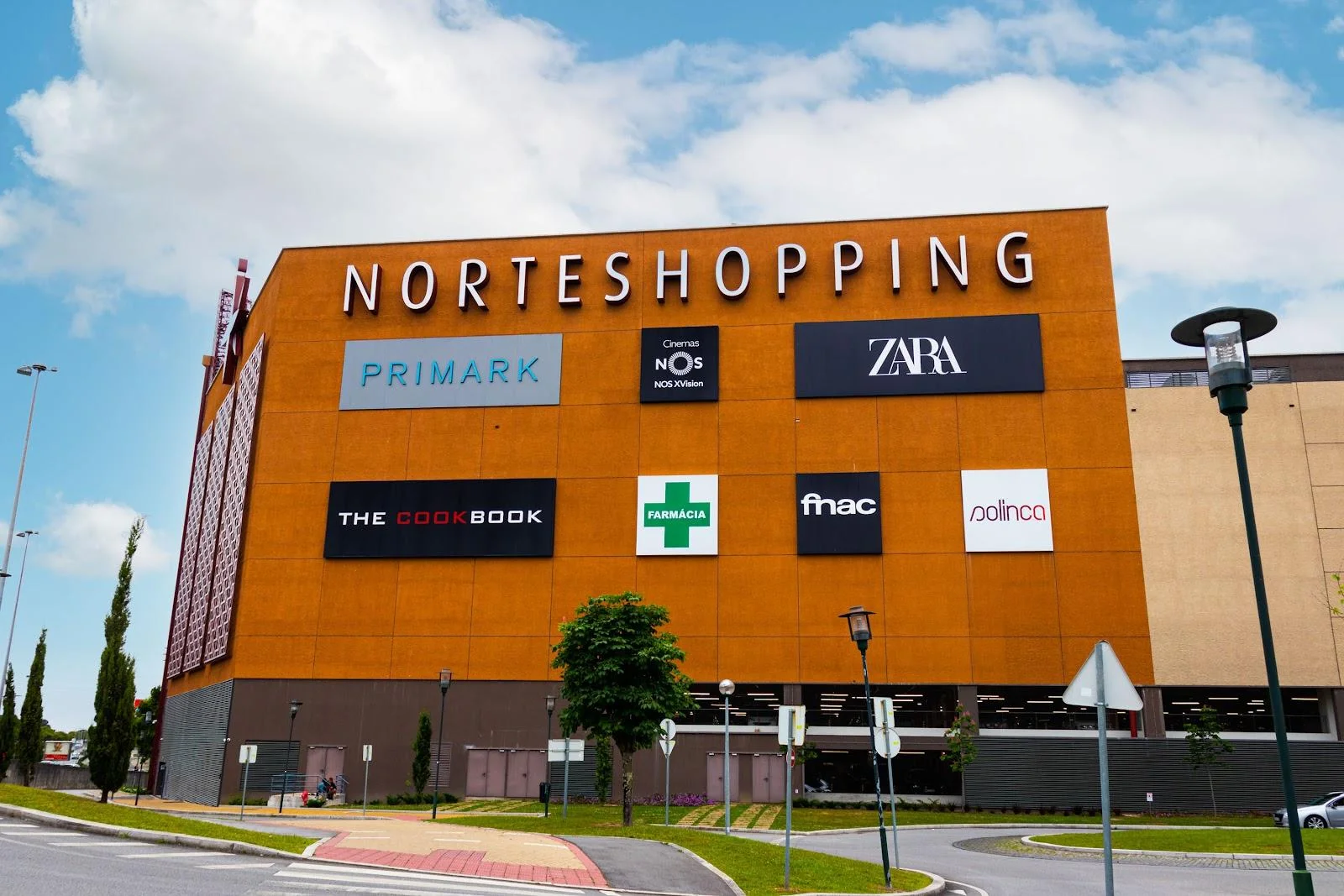
NorteShopping
NorteShopping

Porto Area

A central Porto shopping centre popular with locals and visitors.

Via Catarina Shopping

Porto

A central Porto shopping centre popular with locals and visitors.

Mar Shopping
Mar Shopping

Porto Area

Modern shopping and lifestyle destination near Matosinhos

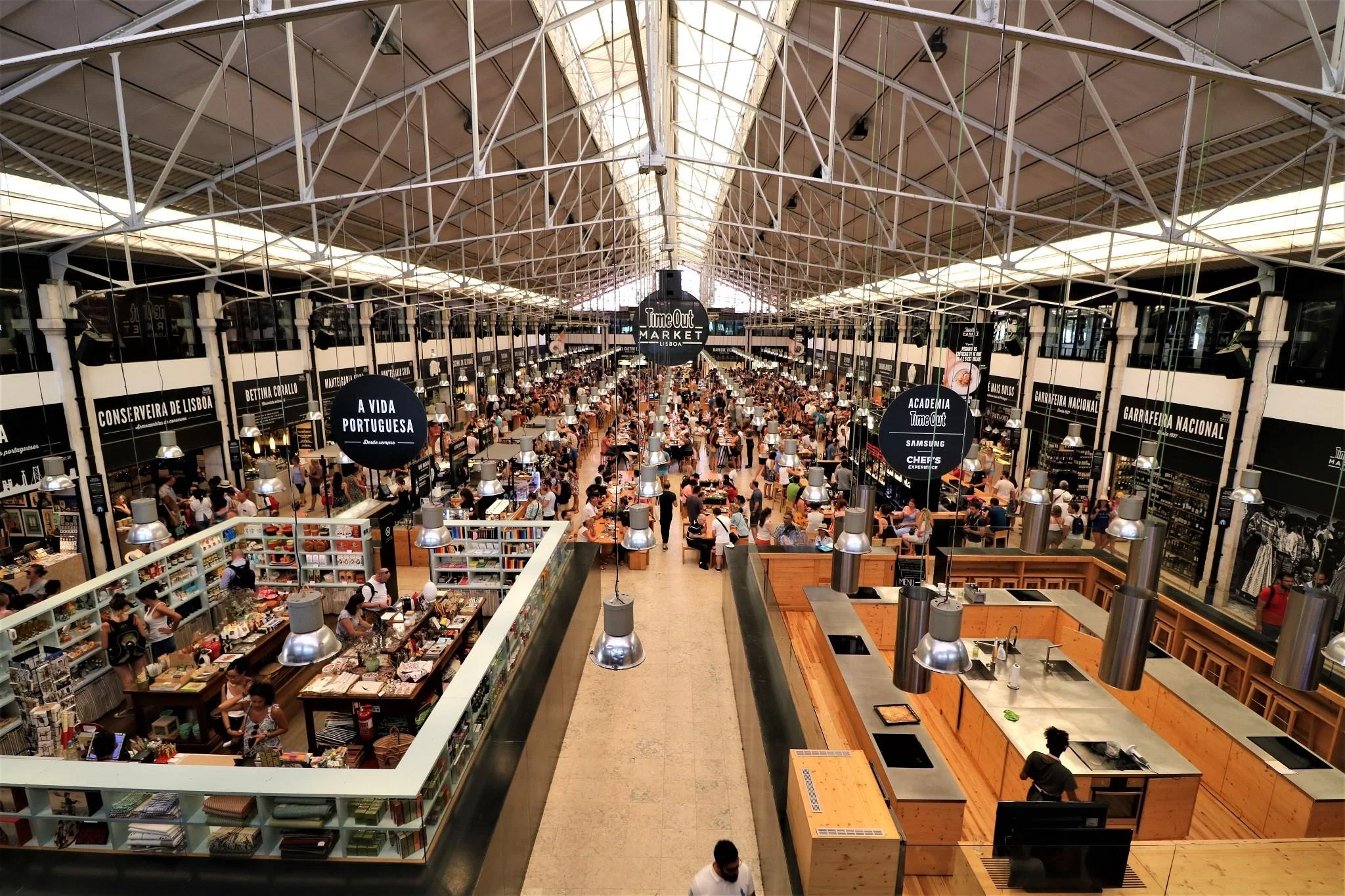
Mercado da Ribeira
Mercado da Ribeira

Lisbon

Historic market combining traditional Portuguese food with modern dining.

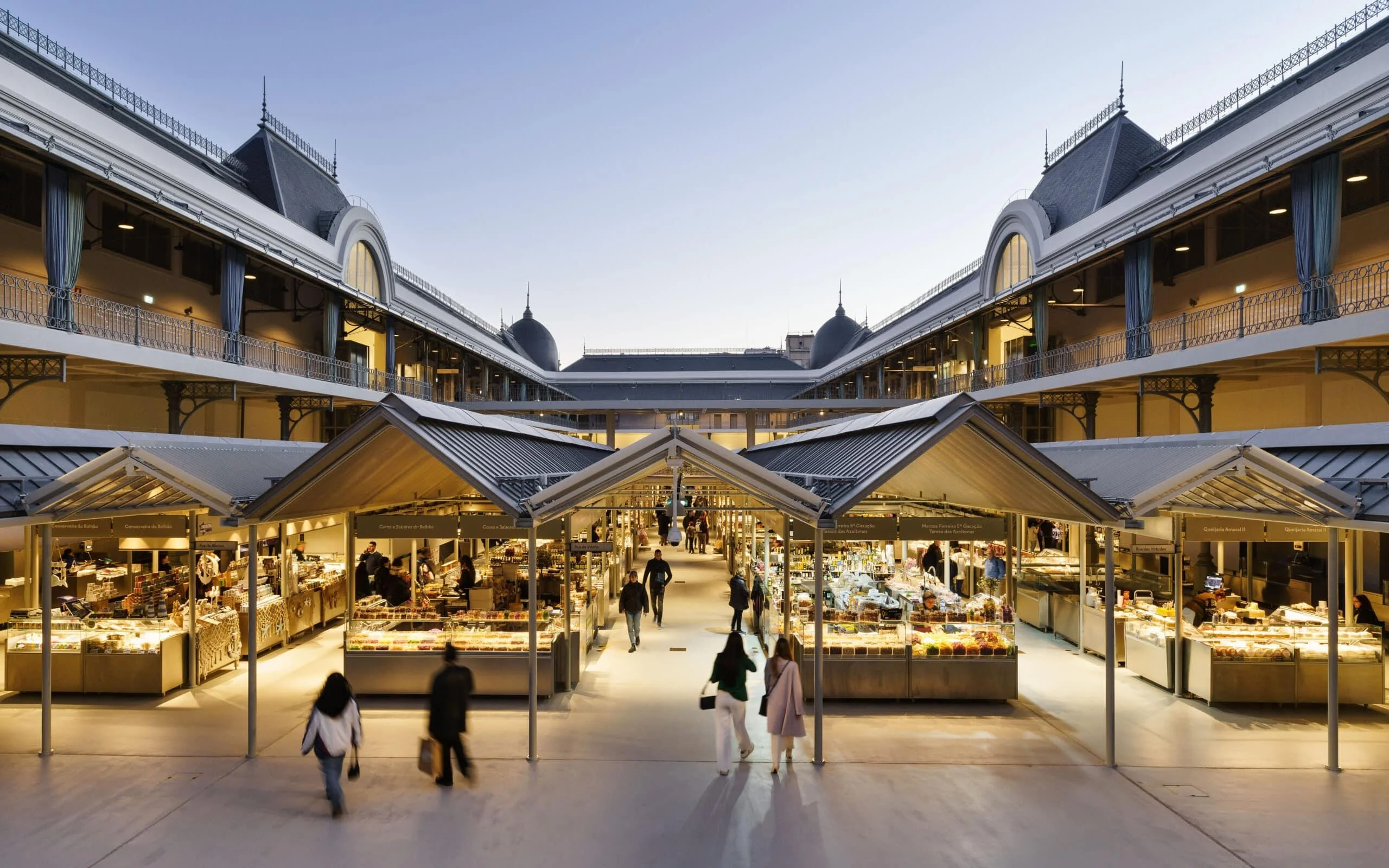
Mercado do Bolhão
Mercado do Bolhão

Porto

A famous renovated market offering fresh products, flowers, seafood, and local specialties.

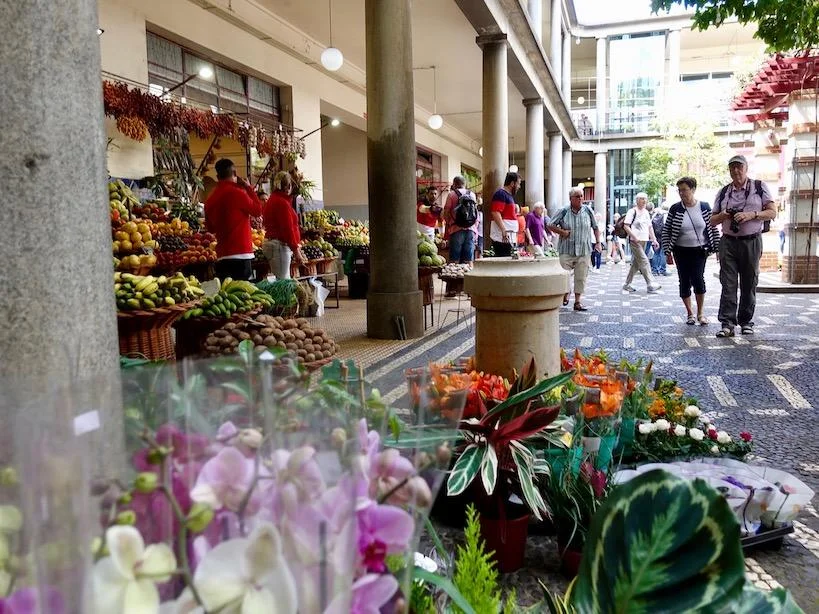
Mercado dos Lavradores

Funchal, Madeira

Known for tropical fruits, flowers, seafood, and island products.

For affordable shopping and Portuguese products:

Continente

Portugal’s largest supermarket chain, offering groceries and local products.

Pingo Doce

Popular supermarket chain known for Portuguese food, fresh products, and daily shopping

Auchan Portugal

Large supermarkets and hypermarkets with international and local products.

Lidl Portugal

Affordable supermarkets offering Portuguese specialties and seasonal products.

Intermarché Portugal

A widespread supermarket chain with local food products.

Getting Around & Accommodation
titleDecore bar

Portugal is a compact and easy-to-navigate country with efficient trains, modern airports, reliable buses, and excellent roads. Travellers can comfortably explore historic cities, Atlantic beaches, wine regions, and rural villages by choosing between rail travel, flights, or road trips.

When to Visit

A seasonal breakdown of Portugal to help you choose the best climate and event experiences.

Winter

December to February

The quietest season, with mild temperatures in most regions. It is a good time for city breaks, cultural visits, food experiences, and lower accommodation prices.

WEATHER PROFILE

Mild and cooler — 8–18°C (Colder in northern and mountain areas)

SEASONAL HIGHLIGHTS

• Fewer tourists and shorter queues.

• Lower hotel prices.

• Ideal for Lisbon, Porto, and historic towns.

• Winter festivals and Christmas markets.

• Excellent season for Portuguese cuisine and wine regions.

Spring

March to May

One of the best times to visit Portugal. The weather is pleasant, landscapes are green, and outdoor activities become enjoyable.

WEATHER PROFILE

Pleasant and warm — 15–25°C

SEASONAL HIGHLIGHTS

• Comfortable sightseeing conditions.

• Beautiful flowers and countryside landscapes.

• Ideal for walking tours and coastal exploration.

• Fewer crowds than summer.

• Wine regions begin their active season.

Summer

June to September

The most popular season, especially for beaches, coastal resorts, and island holidays. Southern Portugal and the Algarve are particularly busy.

WEATHER PROFILE

Warm and sunny — 25–35°C (Hotter inland areas)

SEASONAL HIGHLIGHTS

• Beach holidays and water activities.

• Festivals and outdoor events.

• Long sunny days.

• Algarve resorts and Atlantic coast attractions.

• Ideal for Madeira and Azores.

Autumn

October to November

A beautiful season with comfortable temperatures, fewer visitors, and excellent conditions for exploring cities, vineyards, and countryside.

WEATHER PROFILE

Mild and comfortable — 15–25°C

SEASONAL HIGHLIGHTS

• Wine harvest season in Douro Valley and Alentejo.

• Pleasant walking and sightseeing weather.

• Lower hotel prices than summer.

• Cultural events and food festivals.

• Great time for road trips.

Portugal has a modern and comfortable railway network connecting major cities, coastal areas, and regional destinations. Operated mainly by Comboios de Portugal (CP), trains are an affordable and convenient way to travel between Lisbon, Porto, Coimbra, Braga, and the Algarve.

Best for:

Comfortable, scenic, and budget-friendly travel — the best option for most city-to-city journeys.

  • High-speed trains (Alfa Pendular) connect Lisbon, Porto, Coimbra, Braga, and Faro at speeds up to around 220 km/h
  • Intercidades trains serve major cities and regional routes.
  • Regional trains reach smaller towns, beaches, and countryside areas.
  • Central stations make train travel convenient: o Lisbon Oriente / Santa Apolónia o Porto Campanhã o Coimbra-B o Faro
  • Advance booking offers better prices, especially on Alfa Pendular routes
  • Regional tickets usually need to be purchased before boarding.

Portugal is well connected internationally with Europe, the Middle East, North America, and Africa. Domestic flights are mainly useful for reaching the islands of Madeira and the Azores, while mainland Portugal is usually easier by train or car.

Best for:

International travel and island connections.

MAJOR CARRIERS

Plane

• Lisbon and Porto are Portugal’s main international aviation hubs. • Domestic flights are most useful for: o Madeira o Azores • Major airports have metro, bus, taxi, and private transfer connections.

TAP Air Portugal

Portugal’s national airline, offering extensive European, international, Madeira, and Azores routes. Main hub at Lisbon Airport.

Ryanair / EasyJet / Wizz Air

Low-cost airlines offering many European routes with competitive fares.

Portuguese airports are modern and well connected to city centres through metro, buses, trains, and taxis.

Best for:

First arrivals, international connections, and onward travel.

MAJOR AIRPORTS

Lisbon Humberto Delgado Airport (LIS)

Portugal’s largest international gateway. Connected to the city by metro, buses, and taxis. The metro reaches central Lisbon in around 20 minutes.

Porto Francisco Sá Carneiro Airport (OPO)

Northern Portugal’s main airport. Direct metro connection links the airport with Porto city centre.

Faro Airport (FAO)

Main gateway for the Algarve coast, popular for beach holidays and resorts.

Madeira Cristiano Ronaldo Airport (FNC)

Main airport serving Madeira Island, famous for dramatic landscapes and coastal tourism.

Portugal has an excellent motorway network (Autoestradas) connecting cities, beaches, vineyards, and rural regions. Driving is ideal for exploring the Algarve, Douro Valley, Alentejo, and smaller villages.

Best for:

Nature-focused travel, flexibility, and scenic road trips.

  • Many motorways are toll roads (electronic toll systems are common).
  • Historic centres may have restricted traffic zones and limited parking.
  • Parking in Lisbon and Porto city centres can be difficult and expensive.
  • International driving permits may be required for some non-EU visitors.
  • Car rental is widely available at airports and major cities.
  • • Driving is highly recommended for: o Douro Valley vineyards o Alentejo countryside o Algarve coastline o Serra da Estrela mountains

Ideal Trip Duration

5–7 days

Air Travel — City-Focused

• Visit 2–3 destinations: o Lisbon + Porto o Lisbon + Algarve o Porto + Douro Valley • Focus on: o History o Architecture o Food o Culture • Domestic flights mainly useful for Madeira and Azores.

7–10 days

Train Travel — Rail Trip

The most comfortable way to experience Portugal’s major cities. • Visit 3–5 destinations using trains. • No driving or parking stress. • City-centre stations provide easy access to attractions. Suggested Route: Lisbon → Coimbra → Porto → Braga → Faro Highlights: • Historic cities • UNESCO heritage sites • Coastal scenery • Portuguese cuisine

10–14 days

Road Trip — By Car

The best way to explore Portugal’s countryside, villages, beaches, and wine regions. • Combine: o Cities o Vineyards o Atlantic coast o Historic villages Popular Road Trip Routes: Northern Portugal • Porto → Braga → Guimarães → Douro Valley Central Portugal • Lisbon → Óbidos → Nazaré → Coimbra → Aveiro Algarve Coast • Faro → Lagos → Albufeira → Tavira Portugal Grand Route • Lisbon → Alentejo → Algarve → Porto

  • Discover places not easily reached by train.
Practical Travel Tips
titleDecore bar

Portugal is one of Europe’s most welcoming and enjoyable destinations — combining historic cities, beautiful coastlines, traditional villages, and modern infrastructure. Understanding local customs, transport systems, and practical details will help make your journey smoother and more enjoyable.

Emergency Numbers

Police

112

Ambulance / Fire

112

English support widely available on 112

The service is available throughout Portugal and operators can assist in English, especially in tourist areas. The emergency number works from any mobile phone, even without a local SIM card.

Electricity & Plugs

Voltage & Frequency

230V • 50Hz

Plug Types

Type C and F Plugs
Adapter needed for: Travellers from the UK, US, Iran, and UAE require a plug adapter.

Portugal uses the standard European electrical system. Plug Types: • Type C (European two-pin) • Type F (Schuko) • Devices designed only for 110V require a voltage converter. • Most modern chargers (phones, laptops, cameras) support dual voltage (100–240V). • Always check the label before connecting devices. • Hotels may provide adapters, but availability is not guaranteed. • A universal travel adapter is highly recommended.

Portugal is considered one of the safest countries in Europe for travellers. Violent crime is low, and tourist infrastructure is well developed. The most common concerns are petty theft and pickpocketing in crowded tourist areas.
Overall Safety

• Portugal is very safe for solo travellers, families, and older visitors.

• Police presence is visible in major cities and tourist areas.

• Walking at night is generally safe in busy areas.

• Exercise normal caution in crowded locations.

• Pickpocketing and tourist scams are the most common issues.

Public Transportation

Trains, metros, buses, and trams are generally safe and reliable.

Major stations have security and surveillance systems.

Keep bags and valuables secure, especially in: • Lisbon • Porto • Popular tourist attractions • Crowded public transport

Road Safety

Roads and motorways are generally high quality.

Portuguese driving standards are similar to other European countries.

Historic city centres may have narrow streets and limited parking.

Toll roads are common on major highways.

Follow speed limits and parking regulations.

General Safety Tips

Keep valuables secure in crowded places.

Carry digital and physical copies of passports and important documents.

Be careful with belongings on beaches, trains, and busy streets.

Use official taxis or trusted ride-hailing services.

Follow local signs and regulations.

Portugal is highly card-friendly, especially in cities and tourist areas, but carrying some cash is still useful.

Credit and debit cards are widely accepted.

Contactless payments are common.

ATMs are widely available.

Cash is useful for small cafés, markets, and rural areas.

Inform your bank before international travel if required.

Tipping

Restaurants usually do not include a service charge.

Tipping is appreciated but not mandatory.

Rounding up the bill is common.

Leaving around 5–10% for excellent service is appreciated.

Large American-style tips are not expected.

Portugal has an efficient transport network with trains, metro systems, buses, trams, and ferries connecting major destinations.
Public Transport Rules

Buy tickets before travelling when required.

Validate transport cards or tickets where applicable.

Ticket inspections are common.

Travelling without a valid ticket may result in fines.

Useful Apps: • CP — Portuguese railway services • Metro Lisboa — Lisbon metro information • Andante — Porto public transport • City transport apps for buses and metro systems

Driving & Roads 🚗

Portugal’s motorway network (Autoestradas) connects cities and regions efficiently.

Many motorways require toll payments.

Electronic toll systems are common.

Historic centres may have restricted access areas.

Parking can be difficult in Lisbon and Porto.

International driving permits may be required for some non-EU visitors.

Portugal has excellent mobile coverage in cities, coastal areas, and tourist destinations. Some remote mountain regions may have weaker signals.
SIM Cards & Mobile Internet

Prepaid SIM cards are available at airports, mobile shops, and stores.

Passport identification may be required when purchasing a SIM card.

eSIM options are convenient for international travellers.

MEO, Vodafone, and NOS provide the strongest coverage.

Wi-Fi

Free Wi-Fi is common in hotels, cafés, restaurants, and airports.

Public Wi-Fi quality varies

Mobile data is often more reliable for maps, translation, and travel apps.

Mobile Operators
MEO

Portugal’s largest telecommunications operator with excellent nationwide coverage, including rural areas.

Vodafone Portugal

Strong network coverage with fast mobile data speeds in cities and tourist destinations.

NOS

Major Portuguese operator offering mobile plans, internet, and strong urban coverage.

NOWO

Budget-friendly provider offering competitive prepaid and mobile packages.

Portugal has a modern healthcare system with good hospitals, clinics, and pharmacies.

Emergency healthcare is available throughout the country.

Pharmacies (Farmácia) are common and well stocked.

English is often spoken in major hospitals and tourist areas.

Travel insurance is strongly recommended.

Non-EU visitors may face significant medical costs without insurance.

Travel insurance is essential for a safe and worry-free visit to Portugal

Everyday life in Portugal follows a relaxed and friendly rhythm, with a strong focus on family, social connections, food, and enjoying daily moments. Understanding local customs will help you connect with Portuguese culture and experience the country more naturally.
Time & Social Rhythm

Portugal values a balanced lifestyle, personal relationships, and taking time to enjoy conversations and meals.

Social occasions are generally relaxed, and being a few minutes late is often acceptable.

Meals are social experiences and are not usually rushed.

Portuguese people value politeness, friendliness, and personal connections.

Smaller towns often have a slower pace of life compared with major cities.

“Take your time and enjoy the moment” reflects the Portuguese way of life.

Shop Hours & Daily Schedule

Portuguese business hours are generally flexible, although smaller shops may follow traditional schedules.

Many shops open around 9:00–10:00 AM and close around 7:00–8:00 PM.

Smaller family businesses may close for lunch breaks.

Shopping centres usually remain open all day, including weekends.

Sundays often have reduced opening hours, especially outside tourist areas.

Museums and attractions may have weekly closing days.

Always check opening hours before visiting.
Dining Hours 🍽️

Portuguese dining times are usually later than Northern Europe.

Lunch is typically served from 12:30–2:30 PM.

Dinner usually begins from 7:30 PM onwards.

Restaurants may be quieter before local dining hours.

Reservations are recommended for popular restaurants.

Eating very early may mean fewer restaurant options.
Coffee Culture ☕

Espresso is commonly enjoyed throughout the day.

A small espresso is often called “bica” in Lisbon.

Coffee is usually enjoyed quickly at cafés or during social breaks.

Pastelarias (traditional cafés) are central to Portuguese daily life.

Ordering coffee after meals is common.

Enjoying a coffee at a local café is one of the best ways to experience Portuguese life.
Public Behaviour & Dress

Portuguese culture values politeness, respect, and a calm public atmosphere.

Dress modestly when visiting churches and religious sites.

Comfortable smart-casual clothing is common in cities.

Greetings are important — saying “Bom dia” (Good morning) or “Boa tarde” (Good afternoon) is appreciated.

Loud or disruptive behaviour is generally discouraged.

Courtesy and patience are highly valued.

A friendly greeting goes a long way in Portugal.
Water & Food Culture

Portuguese cuisine is strongly connected to local traditions, seafood, and regional products.

Try local specialities instead of only international dishes.

Try local specialities instead of only international dishes.

Popular foods include: • Bacalhau (salted cod) • Pastel de nata • Grilled sardines • Portuguese cheeses • Regional wines

Tap water is generally safe to drink throughout Portugal.

Bottled water is widely available in restaurants and cafés.

Bread and olives may be served before meals and sometimes charged separately.

Portuguese meals are about enjoying flavours, conversation, and time together.

A collection of smaller but important tips that will make your trip smoother and more enjoyable.
Planning & Preparation

Book popular attractions in advance during peak seasons.

Reserve accommodation early for Lisbon, Porto, Algarve, and Madeira during summer.

Train tickets are often cheaper when purchased in advance.

Carry a reusable water bottle.

Wear comfortable shoes — Portuguese cities often have hills and cobbled streets.

Good preparation saves time and makes travel easier.
Communication & Culture

Portuguese people appreciate visitors who try basic Portuguese phrases.

English is widely spoken in major tourist areas, especially among younger people.

Rural areas may have less English communication.

Greetings and polite expressions are important.
Useful phrases: • Olá — Hello • Bom dia — Good morning • Obrigado / Obrigada — Thank you • Por favor — Please

A simple greeting creates a positive connection.
Public Toilets 🚻

Public toilets may charge a small fee in some locations.

Carry small coins when travelling.

Shopping centres, museums, cafés, and restaurants usually provide toilets for customers.

Accommodation 🏨

Rooms in historic city centres may be smaller.

Older buildings may have small elevators or stairs.

Air conditioning varies, especially in traditional properties.

Tourist taxes may apply in some cities and are often paid separately.

Always check what is included in your booking.
Weather & Packing ☀️

Portugal’s climate varies from north to south.

Summers are hot and dry, especially in inland areas and the Algarve.

Northern Portugal has cooler and wetter winters.

Comfortable walking shoes are essential for hills and cobbled streets.

Bring sunscreen, a hat, and water during summer.

A light jacket is useful for evenings near the Atlantic coast.

Portugal is best explored slowly, especially on foot.
Personal Space & Behaviour

Portuguese social culture is warm, polite, and generally relaxed.

Queues are common, although the pace may feel less formal than Northern Europe.

Personal interactions are friendly and respectful.

Respect religious sites, historic buildings, and local traditions.

Keep belongings secure in crowded tourist areas.

Relax, be patient, and enjoy the Portuguese rhythm of life.

Portugal rewards travellers who slow down, appreciate local culture, enjoy long meals, and discover everyday moments beyond the famous landmarks

A few simple local tips can make your trip to Portugal smoother and more enjoyable. Following these practical do's and don'ts will help you respect local customs, avoid common travel mistakes, and make the most of your visit.
✅ Do's

• Carry a contactless bank card, though some small cafés and rural businesses may prefer cash.

• Validate your ticket before boarding where required and keep it until the end of your journey.

• Respect quiet hours and local communities, especially in residential neighborhoods.

• Book popular attractions and wineries in advance during the summer season.

• Wear comfortable shoes, as many historic streets are steep and paved with cobblestones.

• Try local specialties and support family-run restaurants and cafés.

• Carry a reusable water bottle—tap water is safe to drink throughout Portugal.

• Keep some sunscreen and a light jacket, as coastal weather can change quickly.

❌ Don'ts

• Don't assume all businesses accept credit cards, particularly in small towns.

• Don't drive or park in restricted historic city centers without checking local regulations.

• Don't underestimate walking distances in cities such as Lisbon and Porto.

• Don't remove sand, shells, or rocks from protected beaches and natural parks.

• Don't make excessive noise late at night in residential areas.

• Don't leave valuables unattended on beaches or in parked vehicles.

• Don't ignore ocean warning flags—Atlantic currents can be strong even on calm-looking beaches.

• Don't litter—Portugal takes environmental protection seriously.

Extra Useful Tips

• Check current entry requirements before traveling, as regulations may change.

• Public transport is reliable, with trains connecting most major cities.

• The best weather for sightseeing is generally from April to June and September to October.