
From one of the world's most famous airport landings to breathtaking mountain peaks above the clouds, misty UNESCO forests, scenic Levada trails, waterfalls cascading onto coastal roads, and the soothing sound of waves rolling volcanic stones, Madeira is an island that awakens every sense. Discover why Portugal's Atlantic paradise is far more than a destination—it's an experience you'll never forget.
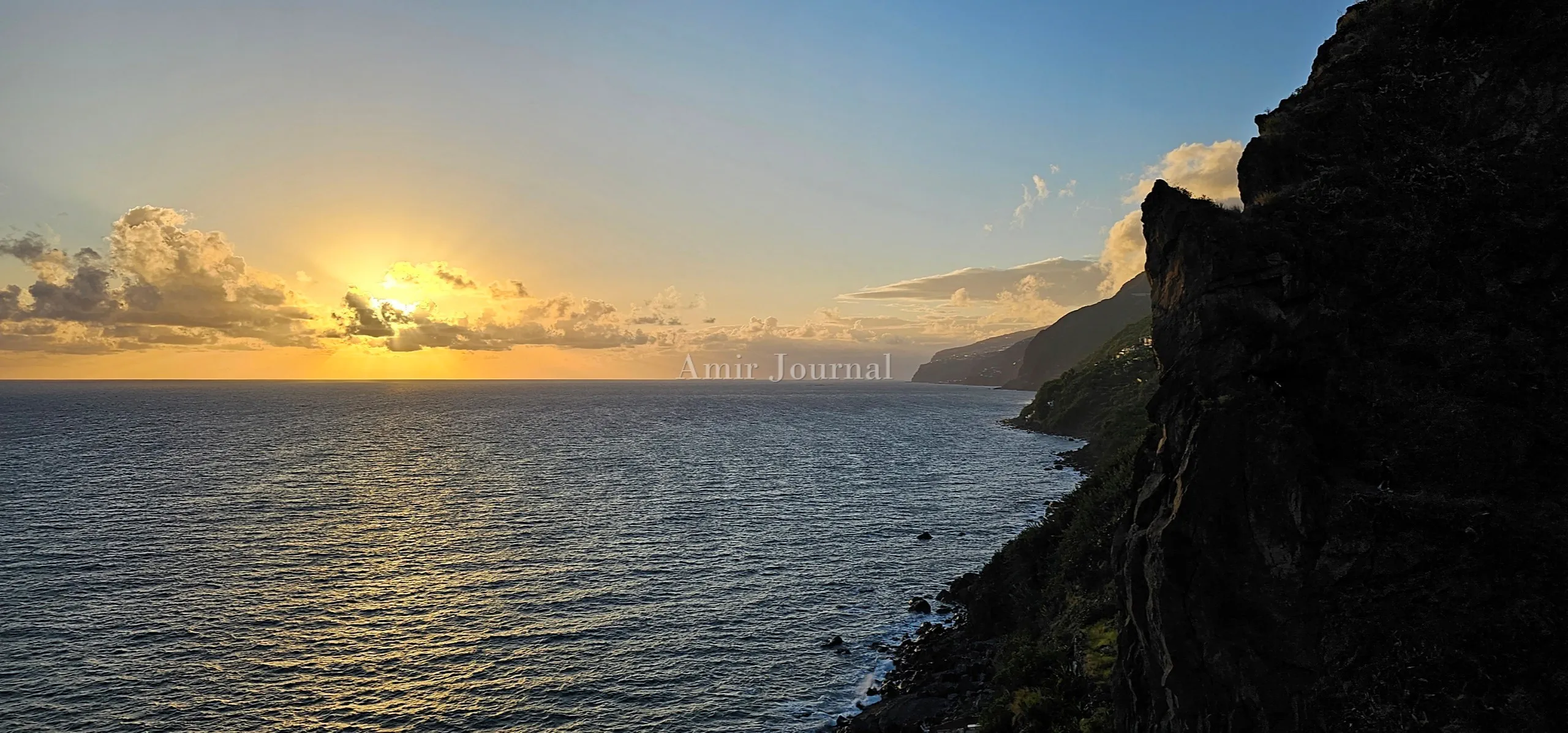
Madeira Coastline at Sunset
Some journeys remain in photographs. Others settle quietly within the heart. Madeira somehow does both.
Long after leaving the island, the names of roads may begin to fade, yet the feeling remains: cool mountain air on the face, forests carrying the scent of rain, the endless blue of the Atlantic, and waves rolling smooth volcanic stones along the shore.
In Madeira, the journey begins before the aircraft reaches the ground.
As the plane descends towards Cristiano Ronaldo International Airport, cliffs rise directly from the Atlantic and the runway appears beside the ocean. The coastline fills the windows, the cabin grows quiet, and every passenger seems to follow the final approach together.
Then the wheels touch the runway. Shoulders relax, smiles appear, and the island has already created its first memory.
The Story
Madeira’s story began through fire and water. Volcanic activity beneath the Atlantic gradually formed an island of steep mountains, deep valleys, rocky headlands, and dramatic sea cliffs. Its isolated position later allowed plants and animals to develop in remarkable ways.
Portuguese navigators reached the archipelago during the fifteenth century, and settlers began shaping the steep landscape for farming. Sugar cane became an early source of prosperity, followed by Madeira wine, whose distinctive character eventually carried the island’s name around the world.
Life on the slopes required creativity. Farmers built terraces into the mountains and developed narrow irrigation channels known as levadas to transport water from the wetter north towards the farms and settlements of the drier south.
Some levadas date back to the fifteenth century. Originally created to support sugar cane fields and later banana farming, they now form an extensive network of waterways and walking paths that carries the history of labour, agriculture, and adaptation across the island.
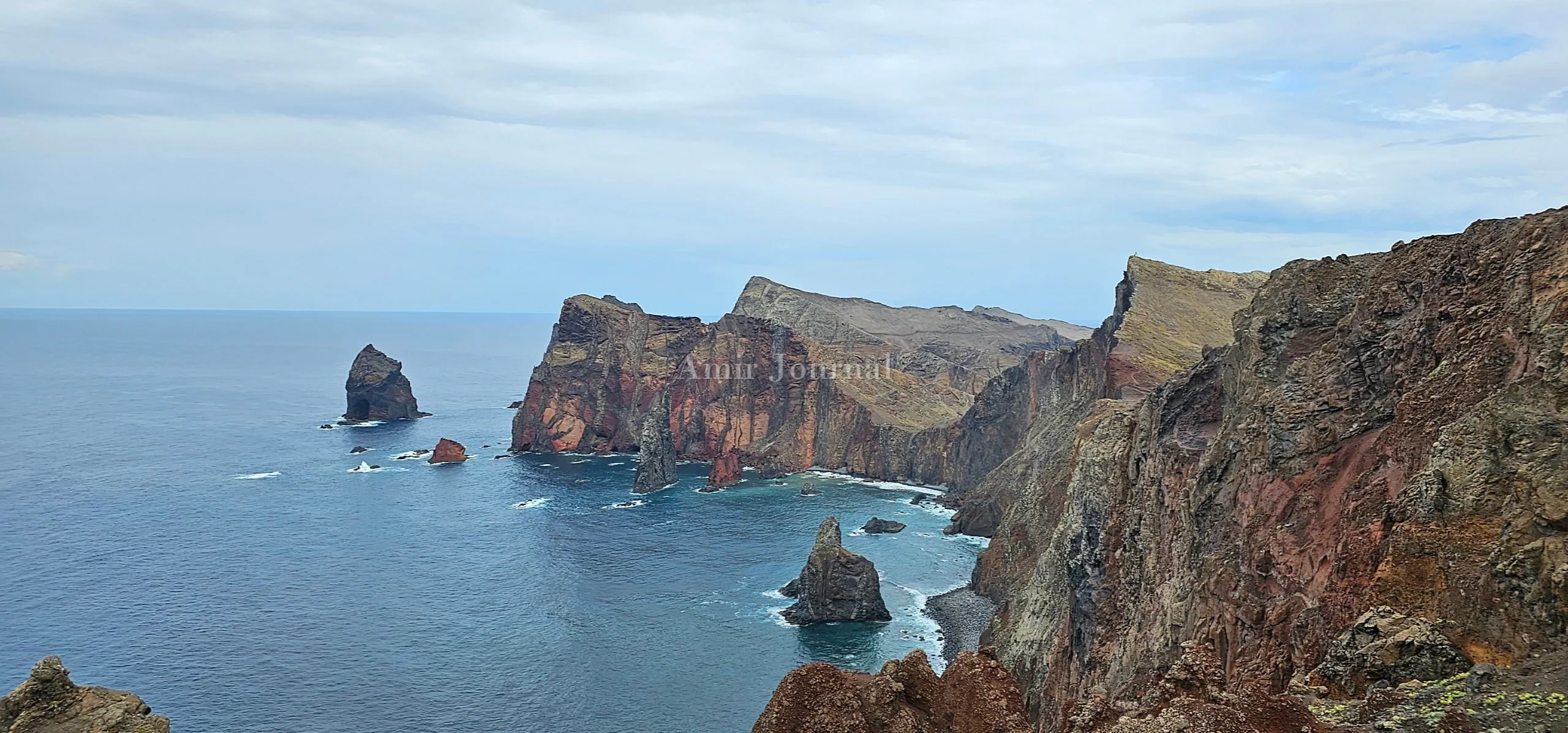
This relationship between people and landscape still defines Madeira. Banana terraces follow the hillsides, vineyards climb the slopes, fishing villages gather around small harbours, and roads pass through tunnels carved into volcanic mountains.
Leaving the airport, the island begins to reveal these contrasts.
The road curves above the Atlantic, disappearing into tunnels before emerging between green valleys and colourful villages. Waterfalls descend from cliffs, houses cling to steep hillsides, and viewpoints repeatedly invite us to stop.
During my journey, each pause seemed to reveal a different Madeira. One view opened towards the ocean, another towards terraced farms, and the next towards mountains wrapped in clouds. The island felt far larger than its size, holding several landscapes within a single day.
The climb towards Pico do Areeiro brings one of Madeira’s most powerful transformations.
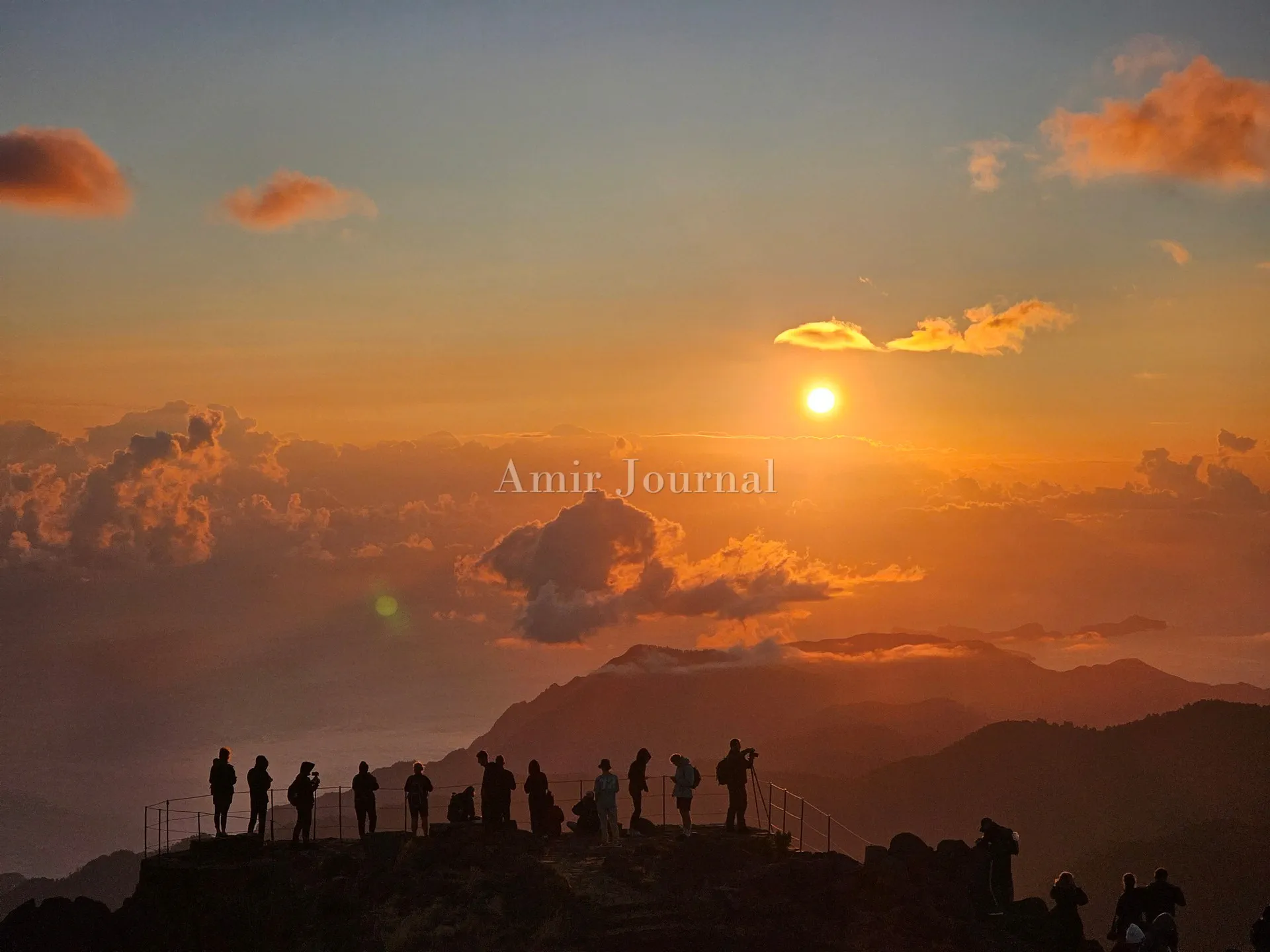
At 1,818 metres, it is the island’s third-highest peak. As the road rises, villages and forests gradually disappear beneath the clouds. At the summit, jagged ridges stretch across the central mountain massif while the Atlantic appears in the distance on clear days.
Standing above the clouds brings a rare sense of stillness. Wind moves across the ridge, sunlight falls on the volcanic peaks, and conversation naturally fades. The landscape seems suspended between mountain and sky.
Yet Madeira’s character lives equally within its forests.
Mist begins to drift between ancient trees as the road enters the Laurisilva Forest. Moss covers the rocks, ferns spread across the ground, and light passes softly through the dark green canopy.
This forest is a surviving remnant of a type of laurel woodland that covered parts of southern Europe between 15 and 40 million years ago. Madeira protects the largest surviving area of primary laurel forest, recognised by UNESCO for its biodiversity and its essential role in maintaining the island’s water balance.
Walking beneath these trees feels like entering another age. Water moves along the levadas beside the path, passing through tunnels, beneath waterfalls, and across steep valleys. Every step reveals the patient engineering of earlier generations and the natural world their work helped sustain.
Madeira has more than 2,000 kilometres of levadas available to explore on foot. Their calm water guides walkers into landscapes that roads rarely reach, making the journey itself the heart of the experience.
At sea level, Funchal introduces another rhythm.
The city rises from the waterfront into the surrounding hills, bringing together tiled streets, gardens, historic buildings, markets, cafés, and a harbour open towards the Atlantic. In the old town, painted doors add colour to narrow lanes while restaurant tables fill the pavements.
At the market, vendors arrange tropical fruit, flowers, vegetables, and fish in bright displays. Madeira bananas, passion fruit, sugar cane, and local produce reflect the island’s fertile microclimates. Nearby cafés serve coffee while residents exchange familiar greetings and begin their daily routines.
Food carries Madeira’s relationship with both land and sea. Black scabbardfish appears with banana, while espetada brings beef seasoned with garlic and salt to the table on long skewers. Bolo do caco, warm bread served with garlic butter, accompanies shared meals, and poncha reflects the island’s sugar-cane tradition through a mixture of spirit, honey, and citrus.
Local culture also lives through embroidery, wickerwork, folklore, music, and festivals. These traditions reveal the patient skill of generations and the way island communities transformed available materials into beauty and identity.
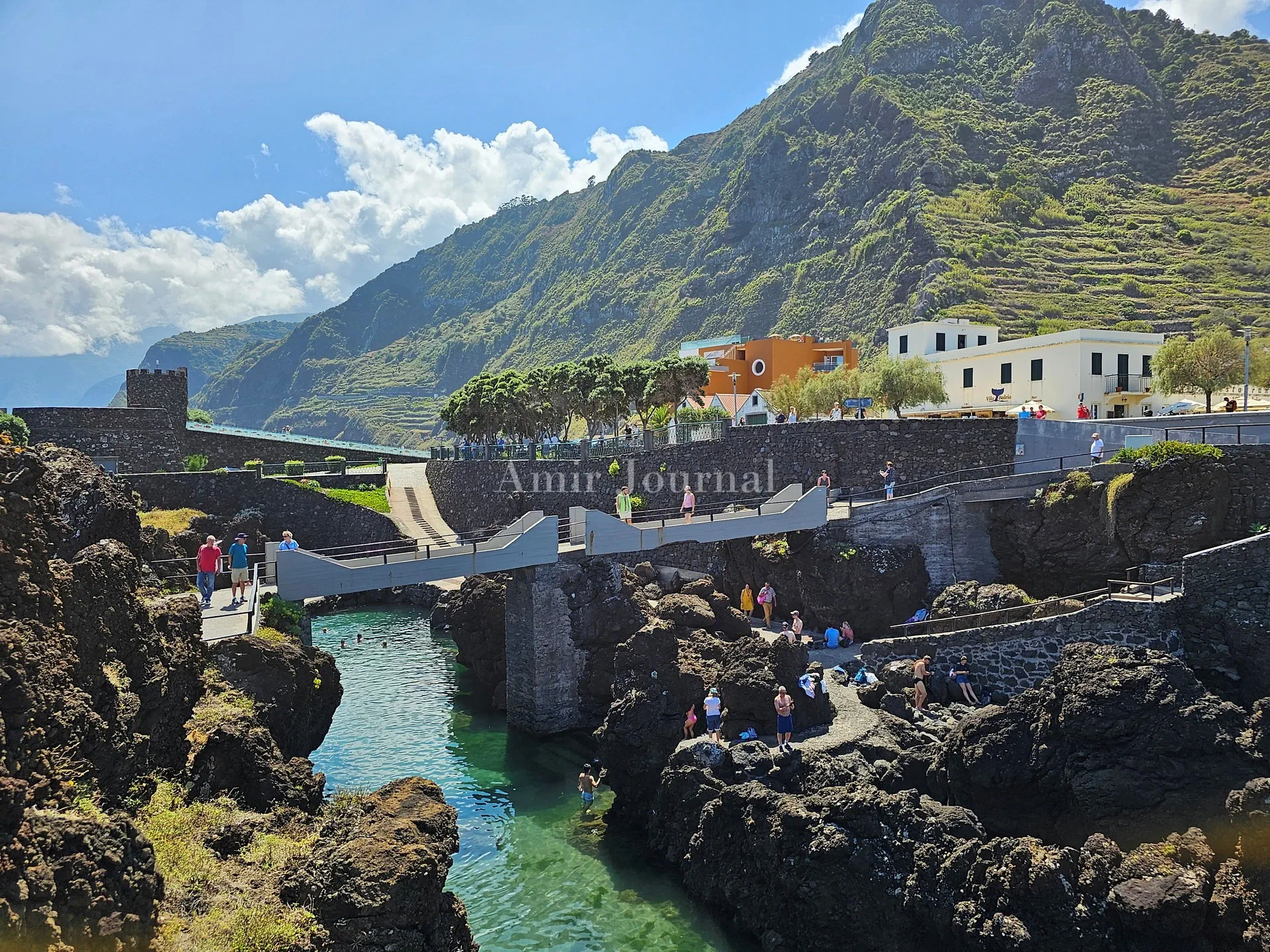
West of Funchal, Câmara de Lobos carries a strong fishing character. Boats rest in the harbour as fishermen prepare equipment and families continue traditions closely tied to the Atlantic. The village’s daily life adds a human story to the dramatic coastal landscape.
The island changes again along its volcanic beaches.
Standing near the water, the Atlantic pushes thousands of smooth black stones forward and draws them back with every wave. The sound is gentle, rhythmic, and deeply calming—a natural composition created by water and rock.
For a while, the island seems to provide its own soundtrack. The sound of stones replaces music, and attention settles entirely on the movement of the tide.
This is where Madeira’s deepest impression begins to form. It comes through the constant change of scenery, the freedom of its open roads, the warmth of its people, and the quiet moments that arrive between famous viewpoints.
As evening settles over the Atlantic, lights appear across Funchal’s hills and fishing boats return towards the harbour. The mountains grow darker behind the city while the ocean holds the final colours of the sky.
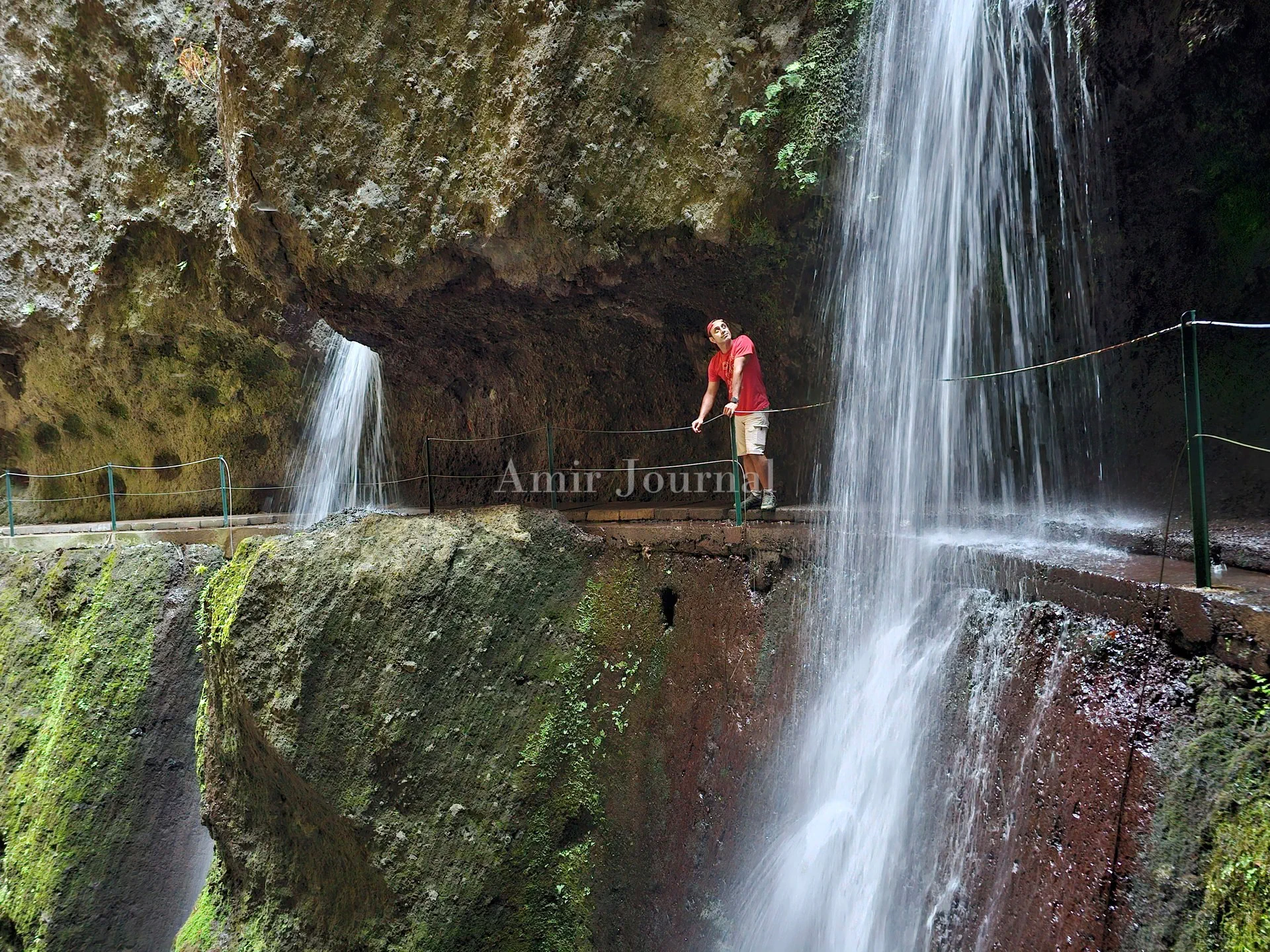
Madeira stays with us through details the camera can only suggest: silence above the clouds, mist among ancient trees, waterfalls beside the road, and the music of volcanic stones along the shore.
The photographs preserve the landscape. The heart remembers how it felt to move through it.
Long after the island disappears beneath the clouds, Madeira continues to breathe quietly within us.
Perhaps that's why so many people don't say goodbye to Madeira.
They simply say,
"I'll be back."