
Hidden among the misty hills just outside Lisbon, Sintra is one of Portugal's most enchanting destinations. With colourful palaces, medieval castles, lush forests, and romantic gardens, this UNESCO World Heritage Site feels like a place where history and imagination exist side by side. More than a collection of remarkable landmarks, Sintra offers an atmosphere that invites travellers to slow down, explore, and experience the timeless charm of Portugal's fairytale landscape.
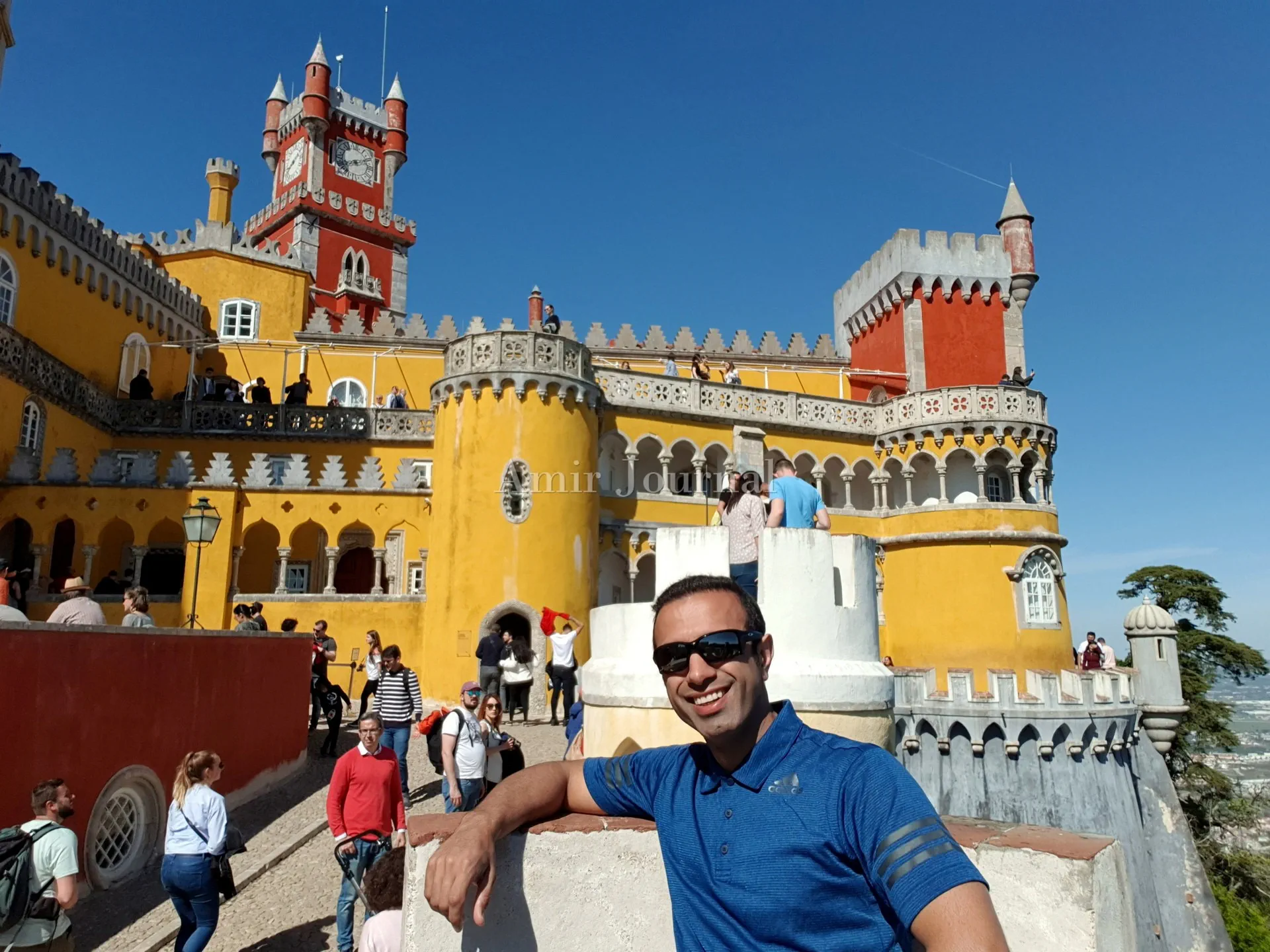
Pena Palace is a 19th-century Romanticist palace - UNESCO
Some destinations attract us through their beauty. Others seem to exist between reality and imagination. Sintra belongs to that rare second kind—a place where colourful palaces rise above forests, ancient walls follow mist-covered hills, and gardens lead towards hidden paths and quiet stories.
A short journey from Lisbon brings us into cooler air and softer light. The road climbs through green hills as the capital gradually fades behind us. From the first moment, Sintra feels different, shaped by a remarkable harmony between history, nature, and imagination.
The Story
Sintra’s hills have attracted residents, royalty, and travellers for centuries. Their mild summer climate offered Portuguese monarchs an escape from Lisbon’s heat, while the forests and Atlantic views provided an ideal setting for royal palaces, country estates, and gardens.
High above the town, the Moorish Castle recalls an earlier chapter. Founded during the tenth century under Islamic rule, the fortress occupied a strategic position overlooking the surrounding territory and the maritime routes towards Lisbon. Its granite walls still follow the ridge between boulders, forest, and open sky.
The town later became closely connected with the Portuguese monarchy. At its heart, the National Palace of Sintra, recognised by its two great conical chimneys, developed into a royal residence shaped by medieval, Moorish, Manueline, and Renaissance influences.
Sintra entered its most imaginative period during the nineteenth century. King Ferdinand II, remembered as the Artist-King, transformed the remains of a monastery into Pena Palace. Gothic towers, Moorish arches, Renaissance details, and brilliant colours came together in a bold expression of Romanticism.
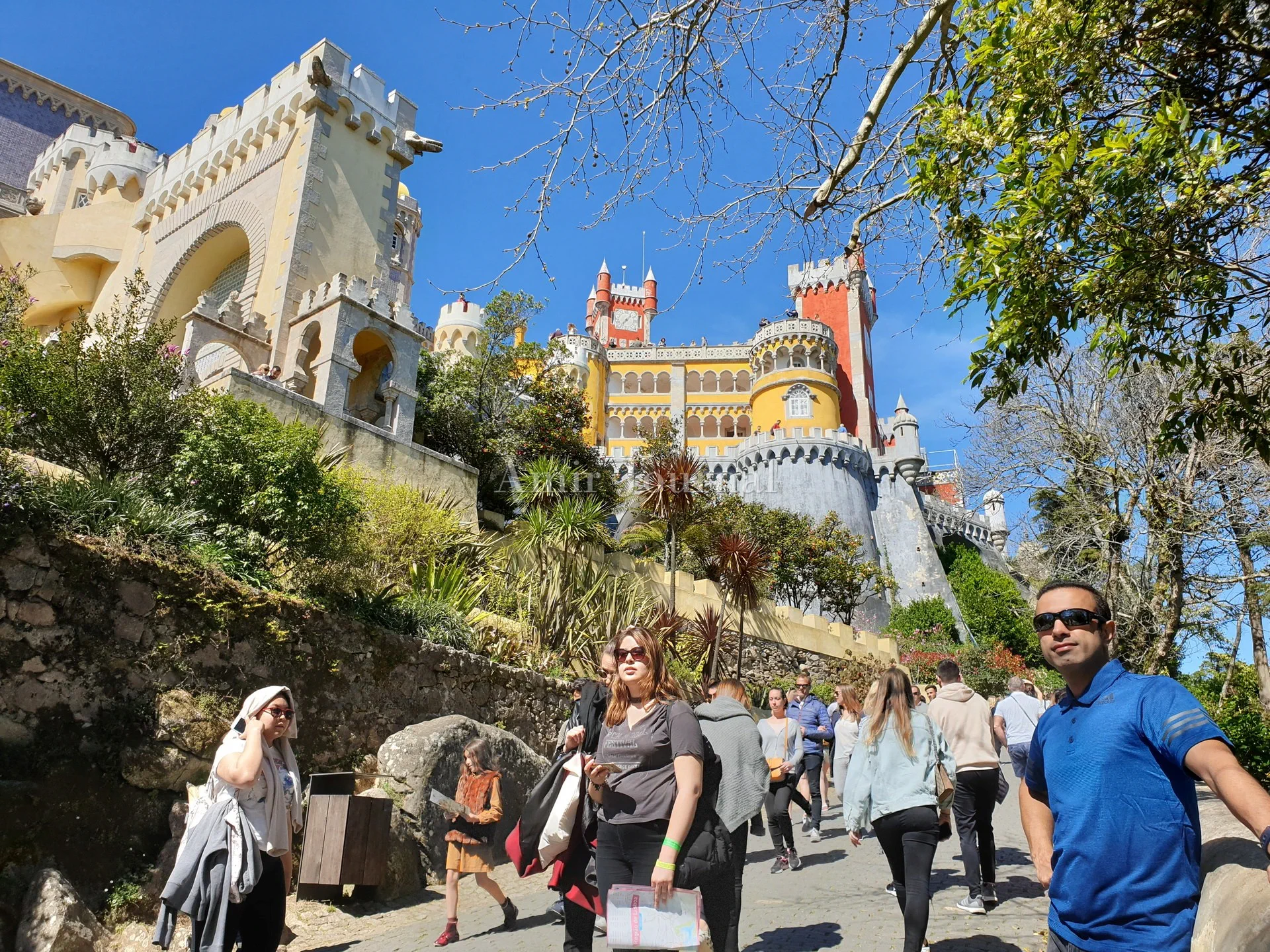
Around the palace, Ferdinand created an extensive park filled with winding paths and trees brought from different parts of the world. Architecture and forest became part of the same artistic vision. Sintra emerged as Europe’s first great centre of Romantic architecture and joined the UNESCO World Heritage List as a cultural landscape in 1995.
That Romantic spirit accompanies us as we enter the town.
The historic centre opens through cobbled lanes, tiled façades, small shops, and cafés gathered beneath the hills. Church bells mark the passing hours while the scent of warm pastry moves gently through the streets.
Here, queijadas, traditional cheese tarts, and almond-filled travesseiros carry part of Sintra’s culinary identity. Enjoying one beside a café window becomes a simple connection with local life and recipes preserved through generations.
Shopkeepers arrange their windows, bakers prepare another tray of pastries, and residents move between familiar streets. These ordinary moments give warmth to a town often associated with royal palaces and fairytale architecture.
From the centre, the road rises through dense woodland towards Pena Palace. The palace appears gradually between the trees, its red and yellow towers standing against the deep green forest.
Walking through its gateways and courtyards feels like entering the imagination of the Artist-King. Domes, arches, tiled walls, and carved figures bring together influences from different cultures and periods. Every terrace reveals another view across the Sintra Hills towards the Atlantic.
The surrounding park extends the experience beyond the palace. Paths curve beneath ferns and tall trees, leading towards lakes, fountains, grottoes, and quiet viewpoints. Camellias introduced by Ferdinand II during the 1840s became part of the gardens’ botanical identity and still bring colour to Sintra’s winters.
Nearby, the Moorish Castle offers a different relationship with the landscape. Stone steps rise along the ancient walls as wind moves across the ridge. From above, Pena Palace appears among the forest, the town rests in the valley, and the Atlantic forms a blue line in the distance.
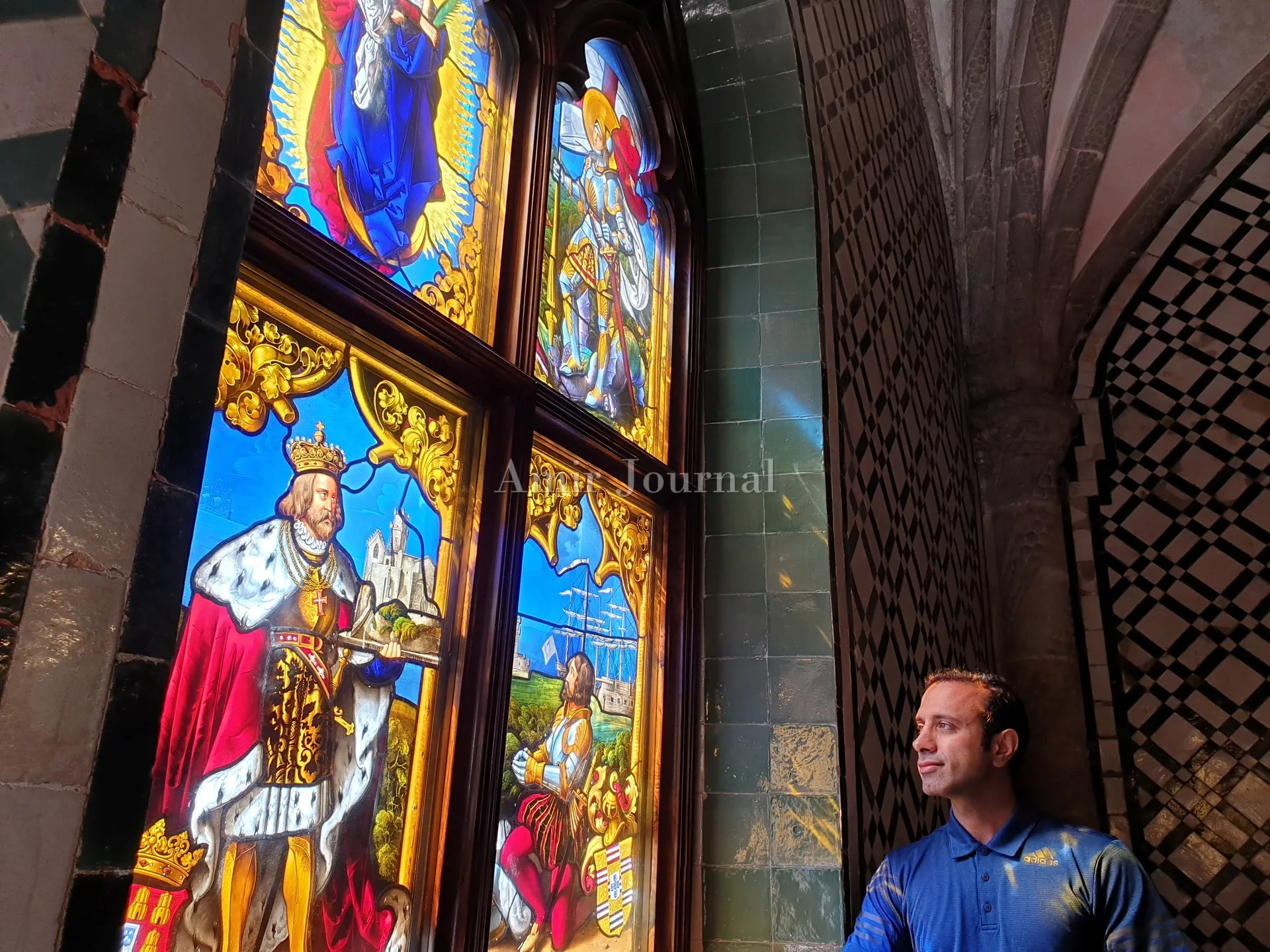
Sintra’s atmosphere grows deeper within its historic estates. At Quinta da Regaleira, gardens unfold through towers, grottoes, underground passages, and symbolic spaces. Each path awakens curiosity and seems to lead towards another secret.
At Monserrate Palace, architectural influences from different cultures meet within an exotic garden. Villas, monasteries, and country houses appear throughout the hills, revealing how architecture became woven into Sintra’s natural landscape.
Yet the town’s deepest magic often arrives through quieter moments.
During my walk, mist moved between the trees and briefly softened the palace towers above them. A few minutes later, sunlight returned and transformed the colours of the hills. Sintra seemed to create a new scene with every change in the weather.
A warm pastry held between cool hands, leaves moving above a forest path, or a palace tower appearing through the mist can become as memorable as the grandest monument.
Gardeners, craftspeople, guides, café owners, and local families keep this heritage alive. Their daily work connects Sintra’s royal and Romantic past with the present, allowing history to remain part of a living community.
As afternoon turns towards evening, visitors gradually return to the station and the old streets grow quieter. Shadows gather across the hills, the air becomes cooler, and palace towers appear briefly between the trees.
Sintra stays with us through these images: Pena Palace rising above the forest, ancient walls following the ridge, mist drifting through hidden gardens, and the warmth of a pastry on a cool mountain morning.
A journey here becomes an encounter with Portugal’s imagination—a landscape created by kings, architects, gardeners, poets, and nature across centuries.
Long after the mist closes around the hills, Sintra continues to live quietly within the dream.