
Golden cliffs, hidden beaches, the iconic Benagil Cave, turquoise Atlantic waters, and unforgettable sunsets—discover why the Algarve is Portugal's most spectacular coastal destination and one of Europe's finest beach escapes.
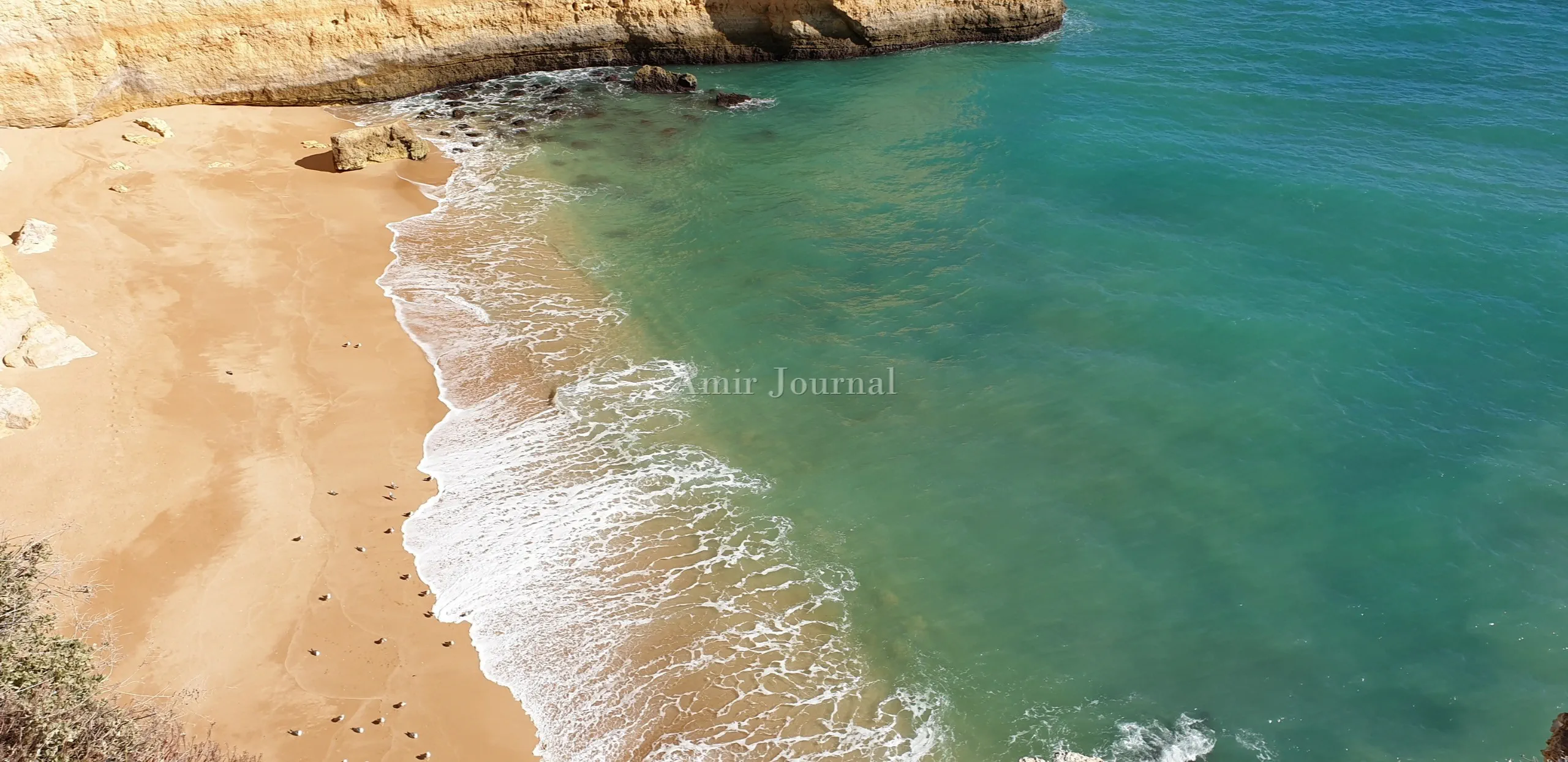
Algarve's golden coast
Some places impress us for a moment. The Algarve remains long after the journey ends, returning through the colour of the Atlantic, sunlight on golden cliffs, or the memory of a road opening towards the sea.
Before arriving, I had seen countless photographs of turquoise water and hidden beaches. The real landscape carried a scale and movement that photographs could capture only briefly. Standing above the coastline for the first time, I remained there far longer than planned, watching the ocean change colour as waves echoed against the cliffs.
The Algarve gradually became a feeling of openness, freedom, and time moving at a gentler pace.
The Story
The identity of the Algarve has always been connected to the sea. Phoenicians, Romans, and Muslim communities travelled, traded, and settled along this southern edge of Portugal. The region’s name comes from the Arabic Al-Gharb, meaning “the West,” recalling the centuries when this land formed the western edge of the Islamic world.
Moorish influence still appears in whitewashed houses, decorative chimneys, tiled courtyards, and the narrow streets of historic towns. Silves preserves traces of its Arab past, while Lagos carries memories of Portugal’s maritime expansion.
Fishing communities also shaped the region. For generations, boats left harbour early in the morning as families worked with the movement of tides and seasons. Sardines, octopus, clams, and other seafood became part of local culture.
One of the Algarve’s most characteristic dishes is cataplana, prepared in a hinged metal vessel that holds the aromas of seafood, herbs, and vegetables. It reflects the region’s deep connection with the Atlantic and its layered cultural history.
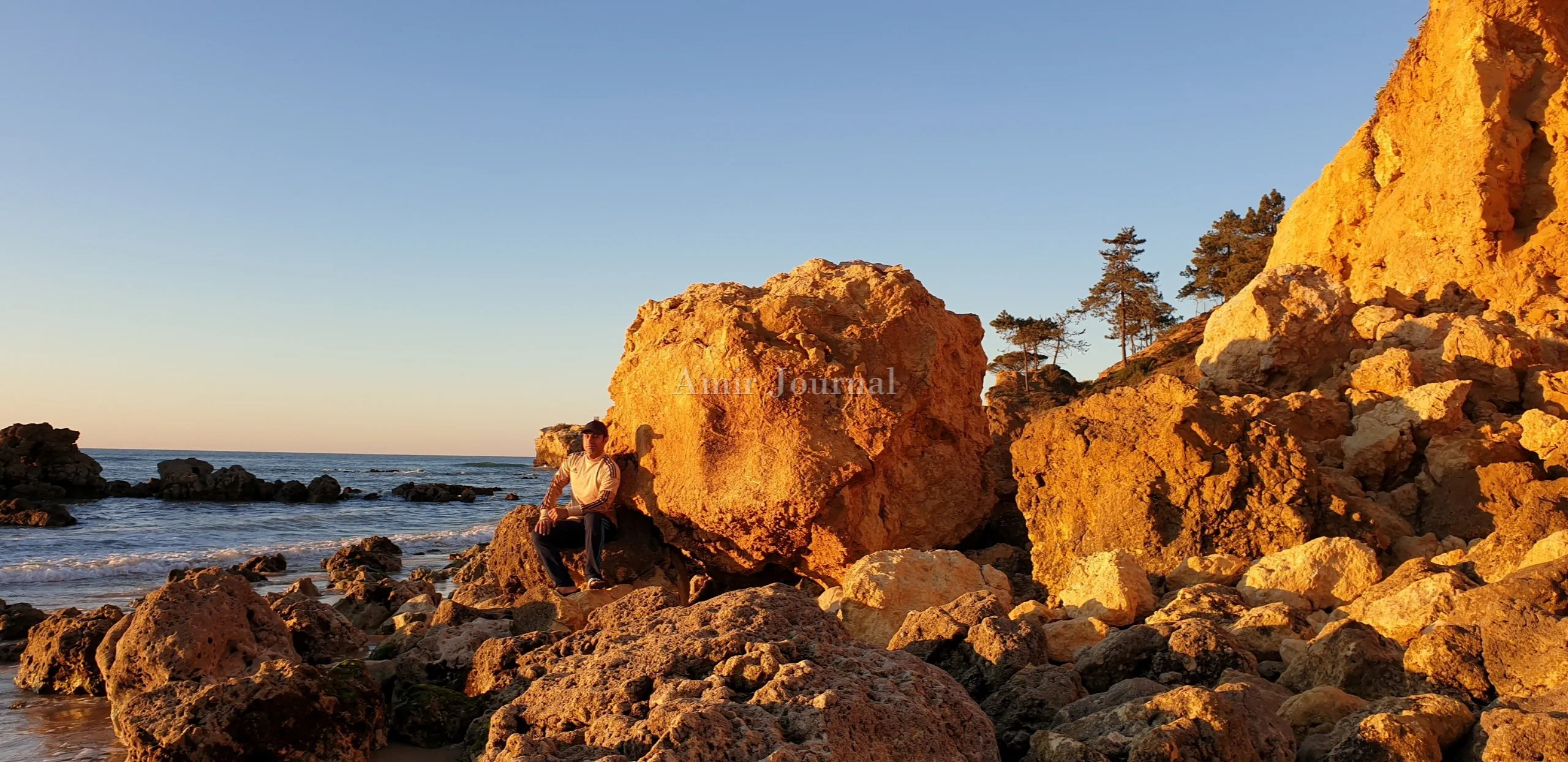
The coastline tells an even older story. Wind and waves carved its limestone into cliffs, arches, caves, pillars, and sheltered coves. Driving beside this landscape encourages spontaneous pauses, as every turn reveals another beach, village, or open view of the ocean.
Near the fishing village of Benagil lies Benagil Cave, where a circular opening in the ceiling allows sunlight to fall onto the sand and golden walls.
As a boat enters the cave, the sound of the sea becomes softer and light pours through the opening above. Reflections move across the stone, turning the interior into a natural cathedral. For a few moments, the camera naturally lowers and attention shifts entirely to the water, light, and surrounding silence.
Yet the Algarve’s character also emerges in the moments between its celebrated landmarks.
In Carvoeiro, white houses gather above a small beach framed by cliffs. Boats rest near the shore as cafés and family-run restaurants bring warmth to the village streets.
Farther west, Lagos carries a livelier rhythm. Cobbled lanes lead through the historic centre, restaurant tables fill the squares, and the waterfront reflects the city’s maritime heritage. Nearby, the cliffs of Ponta da Piedade rise above clear water in a landscape of arches and rocky pillars.
The road eventually reaches Sagres, where the coast becomes wilder. At Cape St. Vincent, cliffs fall sharply towards the Atlantic. Wind moves across the headland, waves break far below, and the ocean stretches towards the horizon.
Standing there brings a powerful sense of scale. The land reaches its edge while the sea continues beyond sight, carrying the spirit of sailors and explorers who once looked towards distant worlds.
The eastern Algarve reveals a gentler landscape. Around Tavira, cliffs give way to rivers, salt marshes, lagoons, and barrier islands. Traditional buildings and church towers rise above streets leading towards the Gilão River.
Nearby, the Ria Formosa Natural Park extends through channels, islands, marshland, and sandy beaches. Traditional boats move across its calm waters, while fishing communities continue to follow the rhythm of the tides.
Food becomes part of the journey. Fresh fish arrives grilled with olive oil and lemon, while cataplana is opened at the table, releasing the aroma of seafood, garlic, and herbs. Almonds, figs, and oranges carry the flavours of the inland countryside.
As evening approaches, the cliffs turn golden. Restaurant terraces begin to glow, people gather at viewpoints, and the sun slowly descends towards the Atlantic.
During my journey, these final moments became some of the most memorable. The sky moved through orange and soft pink while the ocean carried the light towards the horizon.
The Algarve stays with us through these details: waves echoing inside Benagil Cave, a road opening towards the Atlantic, fresh seafood beside the harbour, and evening light resting on the cliffs.
By the time I left, my connection belonged to the entire feeling of the region—the freedom of the road, the openness of the ocean, and the invitation to breathe more slowly.
Long after the coastline disappeared behind me, the Atlantic continued to speak quietly within my heart.