
Discover Weimar through the legacy of Johann Wolfgang von Goethe, exploring how this quiet German city became a center of literature, philosophy, culture, and intellectual transformation.
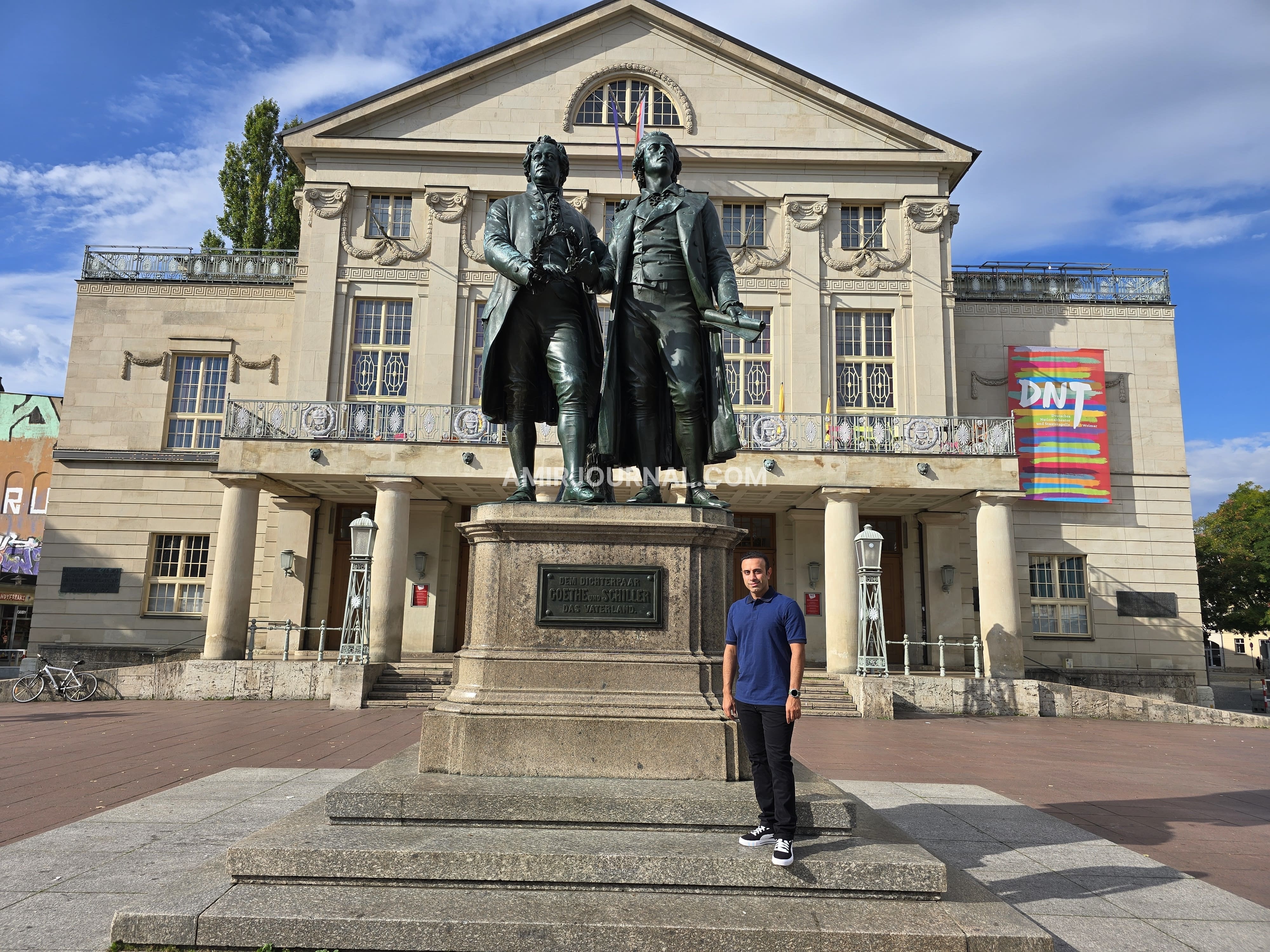
The Goethe and Schiller Monument, Weimar
From My Steps in Weimar to the Cultural Transformation Goethe Inspired in the German Soul
Soft morning light passed through the branches and settled across Weimar’s cobbled streets. The gentle sound of bicycle wheels blended with birdsong, while tall classical windows reflected the surrounding trees. People moved calmly past cafés, bookshops, and historic gardens, as though the city had long understood that ideas need silence, time, and attention to take shape.
As I walked through Weimar, the presence of Johann Wolfgang von Goethe appeared in street names, historic houses, libraries, and the cultural atmosphere of the city. He was a major poet, an influential playwright, a curious scientific observer, and an active figure in public life. His life reveals a mind that viewed literature, science, nature, social responsibility, and self-development as parts of one continuous journey.
Goethe’s importance begins with this wide vision. He connected the development of society with the cultivation of the individual and believed that knowledge gains its deepest value when it becomes experience, responsibility, and action.
The Story of a Man Who Shaped an Era
Goethe was born in Frankfurt on 28 August 1749 and spent the defining years of his life in Weimar, the city that remained his intellectual and cultural home until his death on 22 March 1832.
His lifetime coincided with one of Europe’s most remarkable periods of intellectual change. Enlightenment ideas expanded the role of reason, education, and freedom of thought, while Romanticism brought emotion, imagination, nature, and the inner life of the individual to the centre of art and literature.
Goethe created a bridge between these currents. In his view, reason gave direction to human life, while emotion gave it depth and meaning. A fuller understanding of humanity emerged through harmony between these two forces, a balance reflected throughout his poetry, theatre, scientific studies, and way of life.
Together with figures such as Friedrich Schiller, Goethe helped transform Weimar into one of Europe’s important centres of literature and intellectual exchange. Their conversations and collaborations contributed to the movement now known as Weimar Classicism, which placed humanism, beauty, education, ethics, and the complete development of the individual at its heart.
In Goethe’s work, the human being is always growing: learning through experience, accepting responsibility, and continually opening new paths toward understanding the world. This intellectual vision made him one of the defining voices of modern German culture.
As I approached Goethe’s house, the calm of the street deepened into a quieter kind of stillness. The residence, now preserved as part of the Goethe National Museum, brings visitors close to the everyday life of a mind that moved constantly between literature, science, art, and nature.
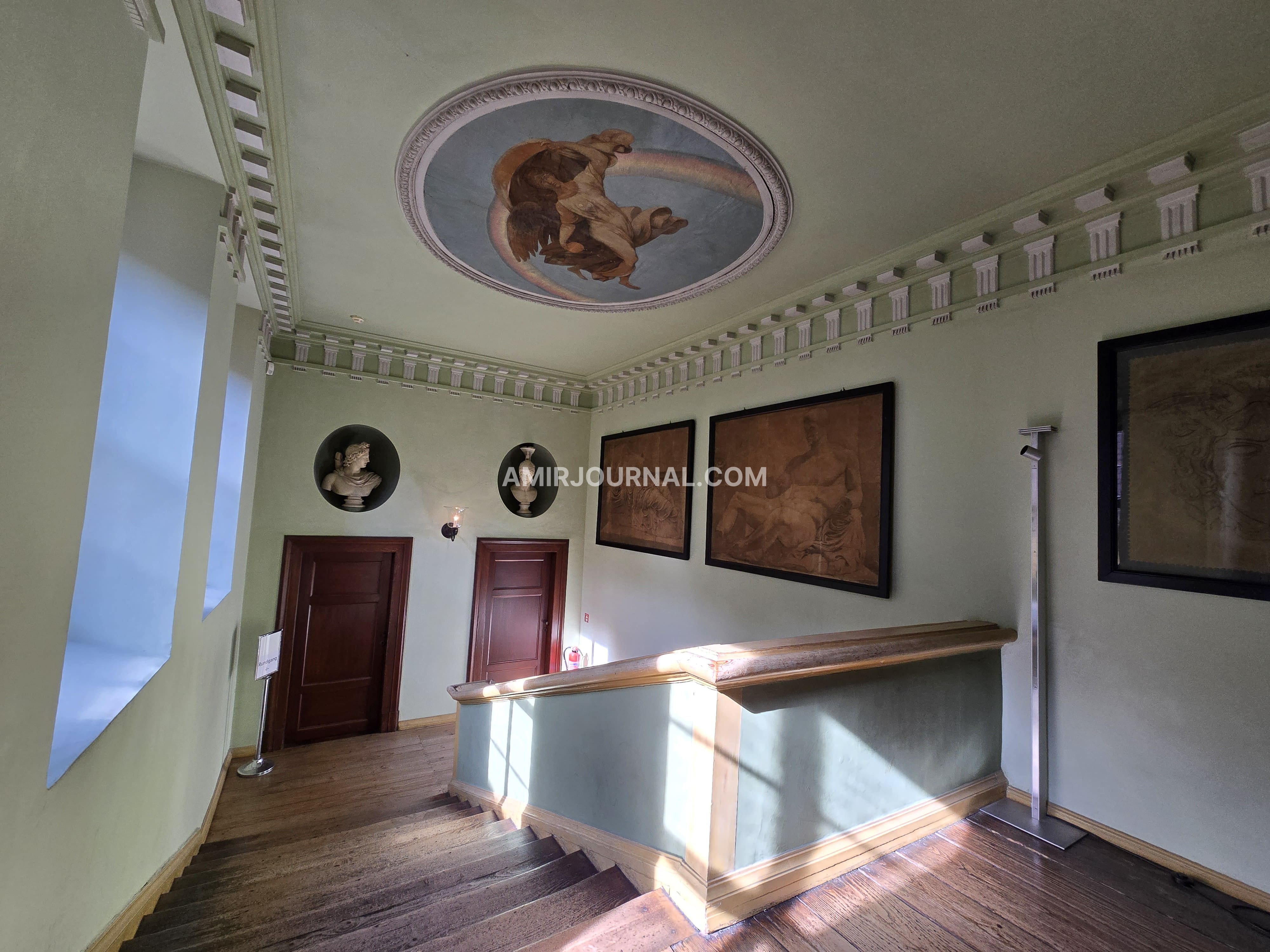
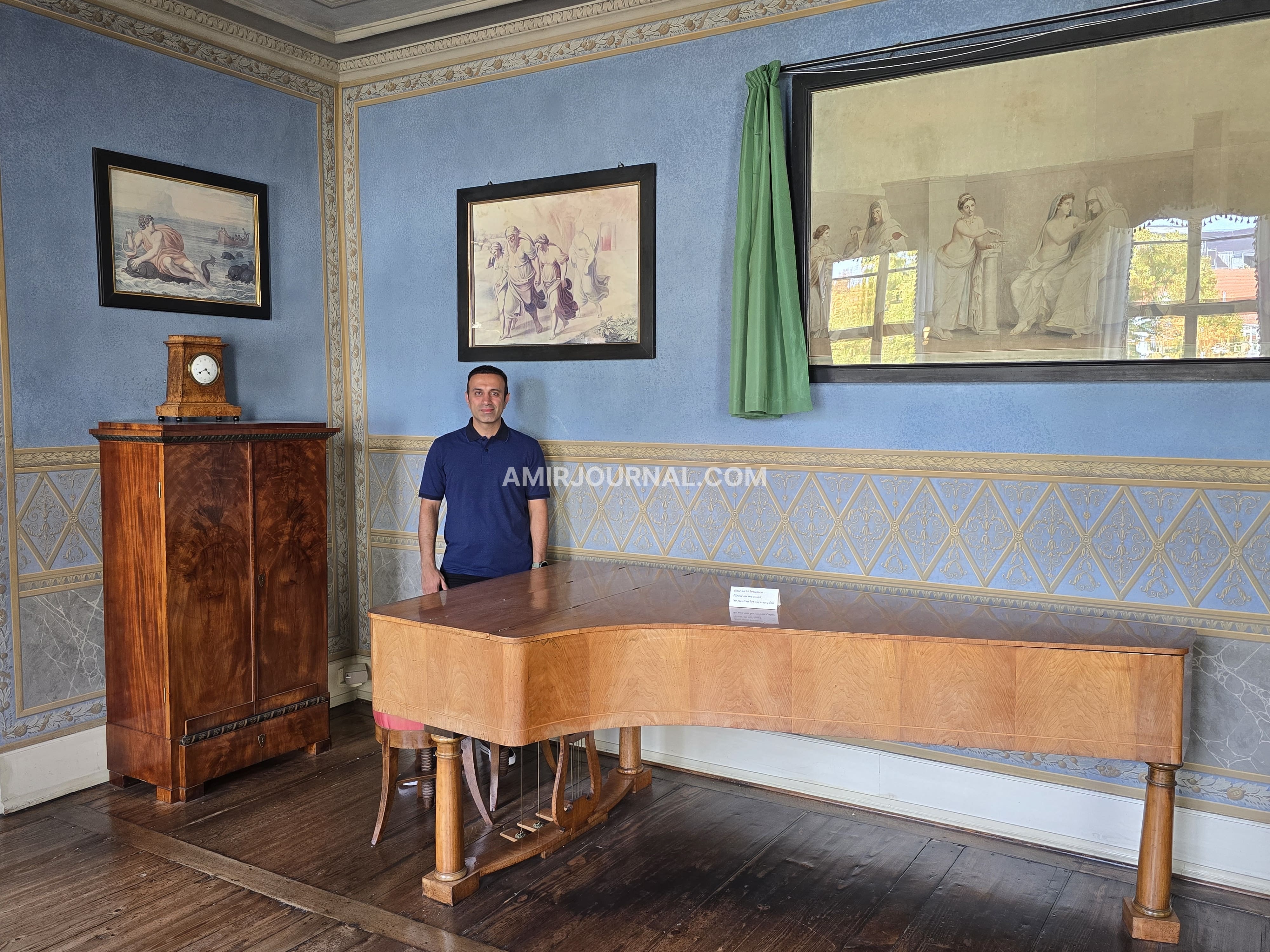
Natural light entered through the windows and rested on the wooden floors. His simple writing desk remained in its place, the same desk where many of his enduring ideas and works took form. Shelves held books in several languages, while scientific instruments revealed his fascination with light, colour, and the natural sciences.
Nearby, his collection of rocks and minerals reflected the curiosity of a man who saw nature as a living book, with every form, colour, and pattern offering another path toward understanding the world.
Inside those rooms, one of Goethe’s most famous ideas gained a more immediate meaning:
“Knowing is not enough; we must apply. Willing is not enough; we must do.”
The words express a connection that shaped his entire life: the connection between thought and action. Goethe saw knowledge as a force for building life and intention as the beginning of a journey completed through action.
This spirit later gained an important place in Germany’s educational and intellectual culture, where research, skill, responsibility, discipline, and practical application developed side by side. Goethe became one of the influential voices within this tradition, a tradition that contributed to Germany’s literary, scientific, and educational progress and left a lasting mark on modern European culture.
Goethe and the Dialogue Between East and West
One of the most meaningful aspects of Goethe’s presence in Weimar is his connection with Eastern literature and thought. Persian poetry, especially the works of Hafez and Saadi Shirazi, opened a new intellectual horizon for him.
In Hafez, Goethe discovered spiritual freedom, vitality, and the courage to think openly. In Saadi, he admired ethical balance, practical wisdom, compassion, and attention to the shared experience of humanity. This encounter led him toward a cultural dialogue that found its clearest expression in his celebrated work, the West–Eastern Divan.
Within this work, East and West appear as equal voices in conversation. Poetry becomes a shared language, and cultures move closer through curiosity, respect, and mutual understanding.
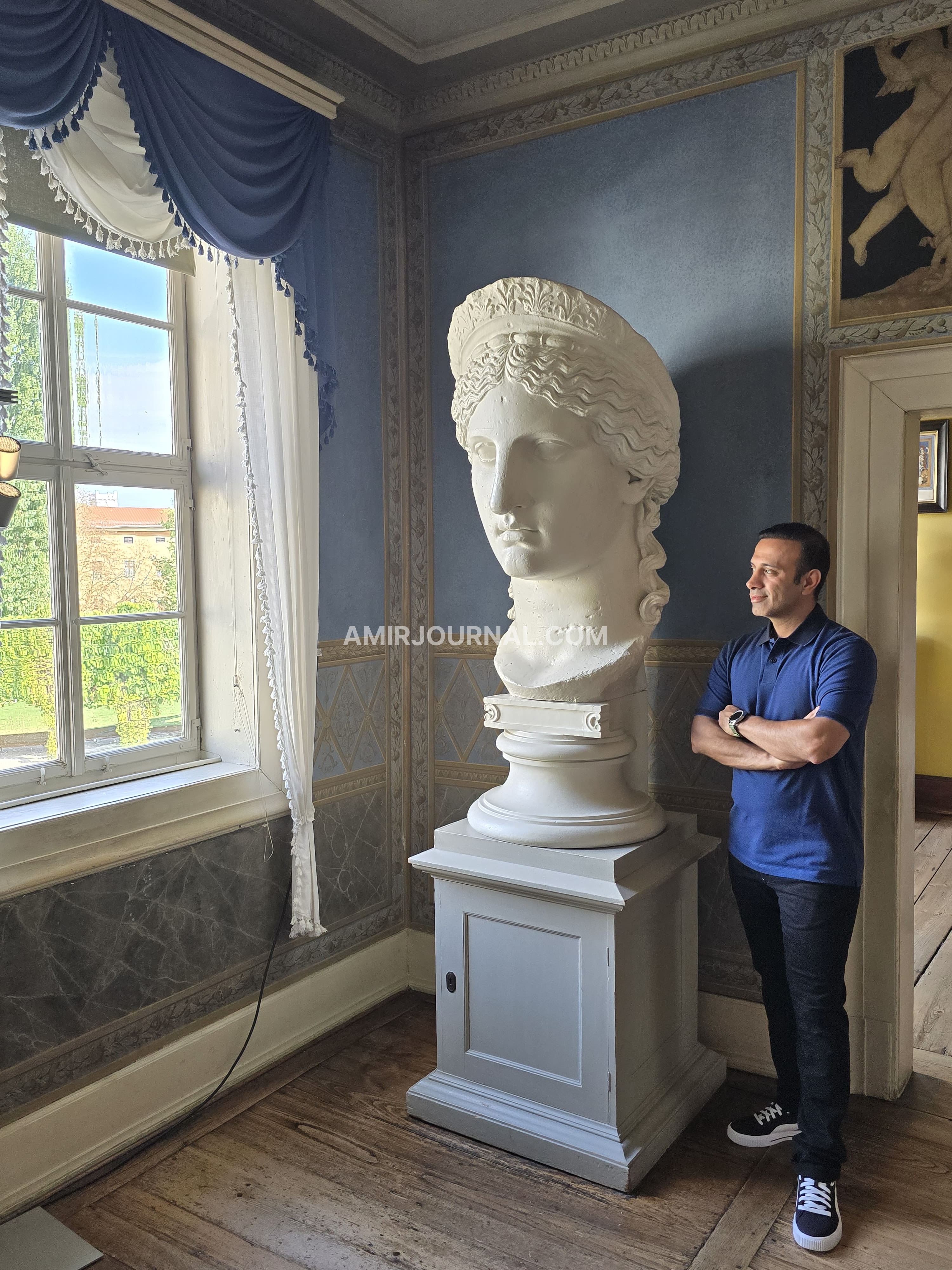
Standing inside the home of a German writer who had listened deeply to the voices of Persian poets gave this connection a special meaning for me. He had absorbed their ideas, lived with their words, and created a work that carried their influence into European literature. In that moment, the distance between Shiraz and Weimar seemed to grow smaller, and literature brought two distant worlds into one human conversation.
This global vision remains a central part of Goethe’s legacy. He saw culture as a space for learning from others and identity as a living force enriched through exchange. The same spirit continues today through cultural cooperation, international education, and dialogue among nations.
Goethe’s name now belongs to a cultural institution that promotes the German language and culture around the world, while supporting education, cultural diversity, exchange, and mutual understanding. It stands as a modern continuation of the bridge he once built between intellectual and literary worlds.
A Legacy in German and European Culture
Goethe’s influence on German language and literature reached deeply into the country’s cultural life. His works expanded the expressive possibilities of German and connected personal human experience with universal questions about love, freedom, responsibility, knowledge, and the meaning of life.
His novel The Sorrows of Young Werther captured the emotional spirit of a generation and gained extraordinary recognition across Europe. His dramatic work Faust transformed humanity’s endless search for knowledge, power, experience, and meaning into one of the most enduring stories in world literature.
Goethe’s intellectual importance also lies in the balanced image of humanity that runs through his work. Science moves alongside imagination, emotion gains strength from reason, freedom develops through responsibility, and individual growth contributes to the development of society.
This vision became part of Germany’s humanist and educational traditions. Universities, literature, art, and public culture increasingly became spaces for cultivating the whole person: someone capable of thinking, feeling, learning, and acting with purpose.
The progress of modern Germany and Europe grew from the work of many generations, intellectual movements, institutions, and historical transformations. Within this broad development, Goethe remained a powerful voice for education, culture, curiosity, dialogue, and human cultivation. His legacy continues through literature, philosophy, art, universities, and cultural exchange across borders.
As I left Goethe’s house, afternoon light rested on the pale walls of the building. People crossed the small squares, students talked outside cafés, and the quiet rhythm of daily life continued through the streets.
Weimar showed me how an idea can begin in a simple room, travel across borders, and remain alive in human thought for centuries.
In the silence of Weimar, thought still walks gently on.