
The United Arab Emirates is far more than a destination of iconic skylines and world records. Discover its remarkable journey from pearl-diving villages to a global hub of innovation, culture, and tourism. Explore vibrant cities, timeless traditions, breathtaking landscapes, and the diverse communities that make the UAE one of the world's most fascinating places to visit.
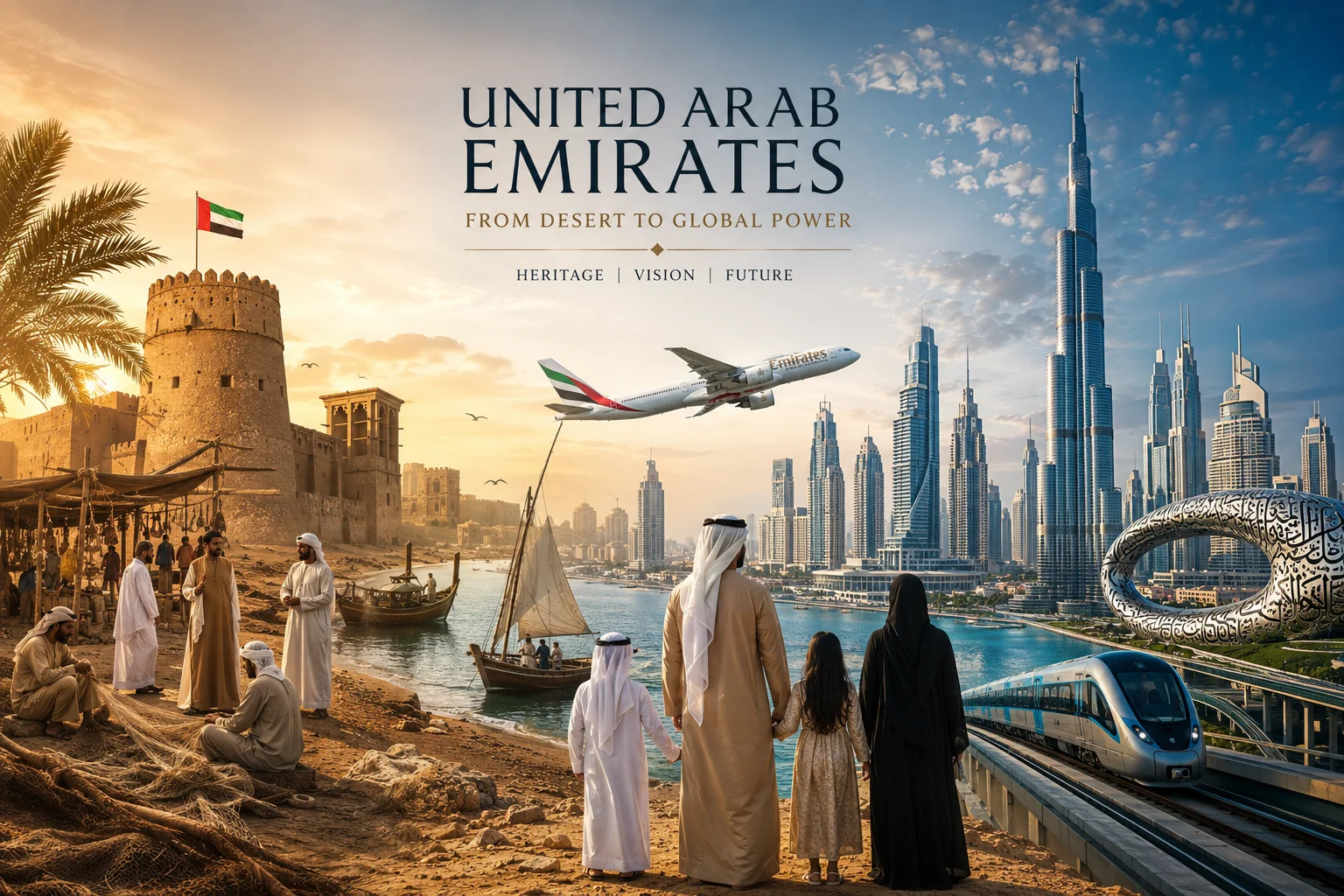
Few countries have experienced a transformation as remarkable as the United Arab Emirates. In a little more than half a century, communities shaped by the desert, sea, and oasis created a nation recognised for global connectivity, advanced infrastructure, cultural diversity, and confidence in the future.
Yet the deeper story of the UAE lives beyond its skylines. It lives in the values that guided people through earlier generations: resilience, cooperation, generosity, hospitality, and respect. These qualities became the human foundation of a country that chose to develop through vision, knowledge, and investment in people.
The Story
Long before modern cities rose beside the Arabian Gulf, life followed the rhythm of nature. Coastal communities depended on fishing, maritime trade, and pearl diving, while people in the interior moved between desert settlements, farms, and oases.
Pearl diving demanded extraordinary endurance. During the main summer season, divers and sailors spent months at sea while families waited along the coast for their return. Fishing and trade connected settlements across the Gulf, and the desert taught communities the value of patience, resourcefulness, and mutual support.
In the oasis, date palms offered food, shade, and materials for daily life. The ancient falaj irrigation system carried water towards farms and gardens, helping communities grow around reliable sources of life. Al Ain Oasis still preserves this relationship between water, agriculture, and human settlement as part of a UNESCO World Heritage landscape.
Traditional crafts reflected the surrounding environment. Bedouin women practised Al Sadu, weaving wool from sheep, goats, and camels into geometric patterns for tents and furnishings. Palm leaves became baskets and practical objects through Khoos, while Talli embroidery brought silver and gold threads to traditional clothing.
At the heart of social life stood the majlis, where people gathered to exchange news, welcome guests, and discuss community matters. Arabic coffee, served from the dallah into small cups, expressed hospitality through a ritual of generosity and respect.
These traditions formed the cultural roots of a modern nation.
In 1971, the emirates came together through the leadership of the Founding Fathers. Sheikh Zayed bin Sultan Al Nahyan, the UAE’s first President, placed human development at the centre of the national vision. Natural resources were directed towards education, healthcare, housing, roads, and infrastructure, while cooperation between the emirates created the strength of the Union.
Schools, hospitals, ports, airports, and new neighbourhoods appeared across the country. Roads connected distant communities, electricity reached towns and villages, and educational opportunities prepared new generations to participate in national development.
The founding vision understood that the country’s greatest resource would always be its people. This principle continued through investment in universities, scientific research, entrepreneurship, technology, culture, and opportunities for talent from around the world.
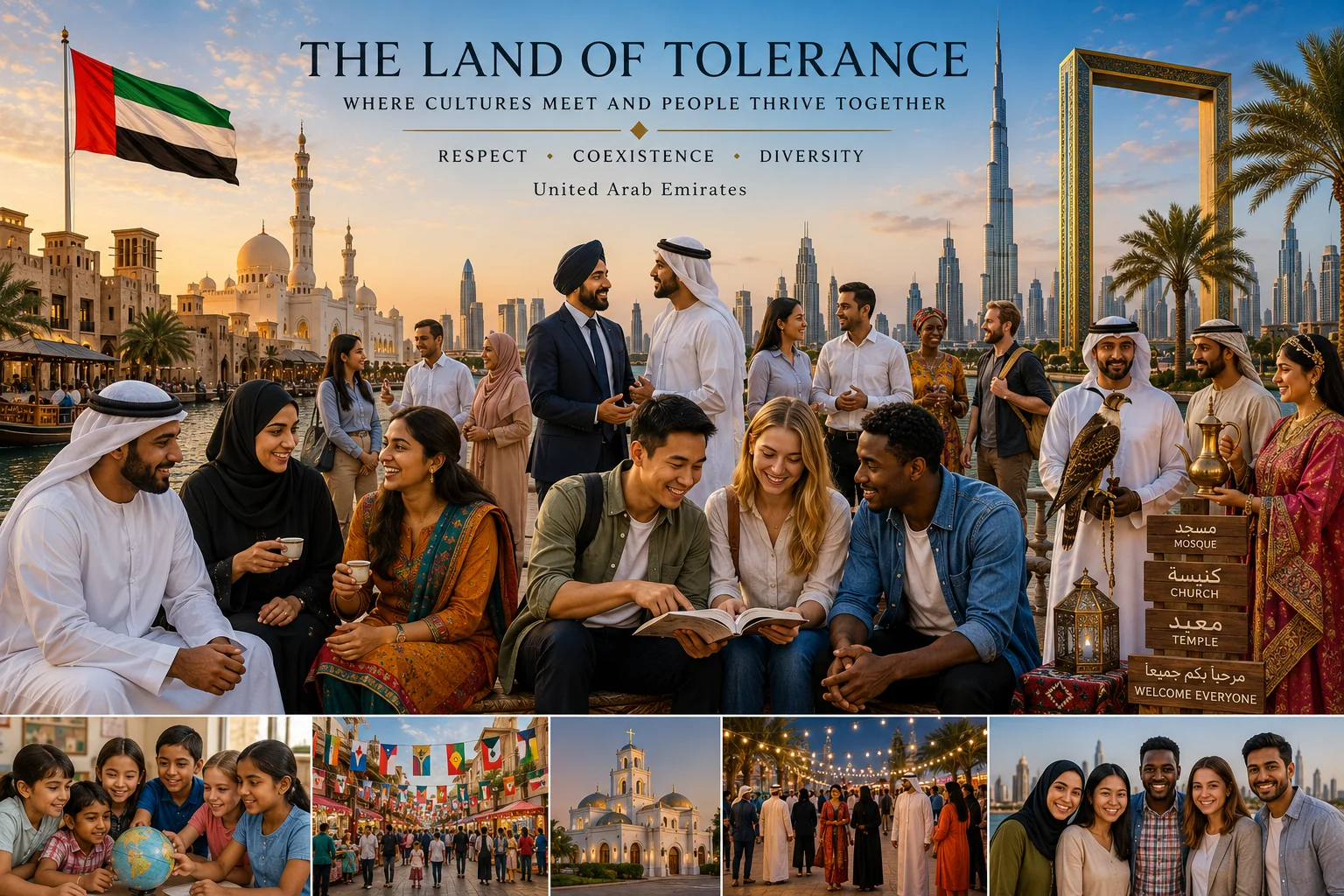
Today, the UAE brings together more than 200 nationalities. Arabic remains the official language, while English, Hindi, Urdu, Tagalog, Persian, Russian, and many other languages form part of everyday life.
This diversity becomes visible from the moment we enter its cities.
In Dubai, conversations from many parts of the world fill offices, cafés, schools, neighbourhoods, and metro carriages. Colleagues from different cultures work together, children grow up among international friendships, and restaurants carry flavours from almost every continent.
During Ramadan, Emirati families preserve traditions of prayer, hospitality, and shared meals, while residents from different backgrounds join community iftars and learn about the meaning of the month. Diwali lights, Christmas celebrations, Chinese New Year events, and national festivals add further colours to the social calendar.
This daily coexistence gives the UAE a distinctive identity. Diversity becomes part of ordinary life—experienced through work, friendship, food, education, and neighbourhood connections.
The story changes character in each emirate.
Abu Dhabi expresses the dignity of a national capital through government institutions, cultural landmarks, mangroves, islands, and broad waterfronts. Qasr Al Hosn, the city’s oldest surviving structure, recalls the period when Abu Dhabi was a small coastal settlement shaped by fishing, pearling, and trade.
Dubai carries the energy of commerce, movement, and ambition. The Creek preserves memories of dhows, merchants, and early trading communities, while the modern skyline reflects a city that developed into a global centre for aviation, tourism, finance, and enterprise.
In Sharjah, museums, libraries, galleries, historic souks, and restored neighbourhoods place knowledge and culture at the heart of the city. Nearby, Khorfakkan opens towards the Gulf of Oman, where mountains meet turquoise water.
Ajman and Umm Al Quwain carry quieter coastal rhythms, while Ras Al Khaimah rises towards the dramatic peaks of the Hajar Mountains. Fujairah faces the Gulf of Oman through a landscape of forts, fishing communities, beaches, and rugged mountain valleys.
Together, the seven emirates create a country of remarkable variety.
Beyond the cities, another UAE emerges.
At sunrise, light moves across the desert dunes and reveals patterns shaped overnight by the wind. The air remains cool for a brief time as camels cross the sand and distant camps begin their morning.
In Al Ain, date palms form a green canopy above pathways where falaj channels still carry water. The sound of moving water, birds among the trees, and farmers caring for the groves reveal an ancient relationship between people and the oasis.
In Hatta and the Hajar Mountains, rocky peaks and wadis replace the open desert. Along the eastern coast, the sea becomes deeper in colour, fishing boats gather near harbours, and mountain roads lead towards small communities shaped by a different landscape.
The Emirates also preserve their heritage through daily gestures. A cup of gahwa is offered with dates. Incense brings the scent of oud into homes and gatherings. Families meet around rice, fish, and spiced meat, while younger generations carry traditional values into contemporary life.
Within a short journey, visitors can move from wind-tower houses and narrow lanes to research centres, futuristic museums, and architecture designed around the possibilities of tomorrow. Heritage and innovation exist as parts of the same national story.
During the years I lived in the UAE, this balance left the deepest impression on me. I watched people from many countries build lives beside one another, exchange traditions, celebrate important moments, and contribute their skills to a shared society.
The country also gave me a base from which I could travel widely and discover the world. Each return offered the familiar feeling of arriving somewhere shaped by safety, opportunity, energy, and a constant desire to progress.
The UAE’s greatest achievement may be found in this human experience. Its skylines reveal ambition, while its people reveal the spirit that gives development meaning.
A journey through the Emirates becomes an encounter with a nation that remembers where it came from and continues to imagine where it can go. The sea, desert, oasis, and modern city remain connected through the values of the Union and a belief in the potential of future generations.
As the evening light settles over desert and skyline, the UAE continues its journey—carrying its heritage forward with confidence, generosity, and hope.