
The Giant's Causeway is more than Northern Ireland's most famous landmark. It is a place where volcanic forces shaped nearly 40,000 basalt columns, where the legend of Finn McCool has endured for centuries, and where the Atlantic Ocean continues to sculpt one of the world's most extraordinary coastlines. This journey explores the science behind the stones, the folklore that gives them life, and the unforgettable experience of walking across a landscape created millions of years before human history
Millions of years in the making. One unforgettable walk
The first thing that caught my attention was the stillness.
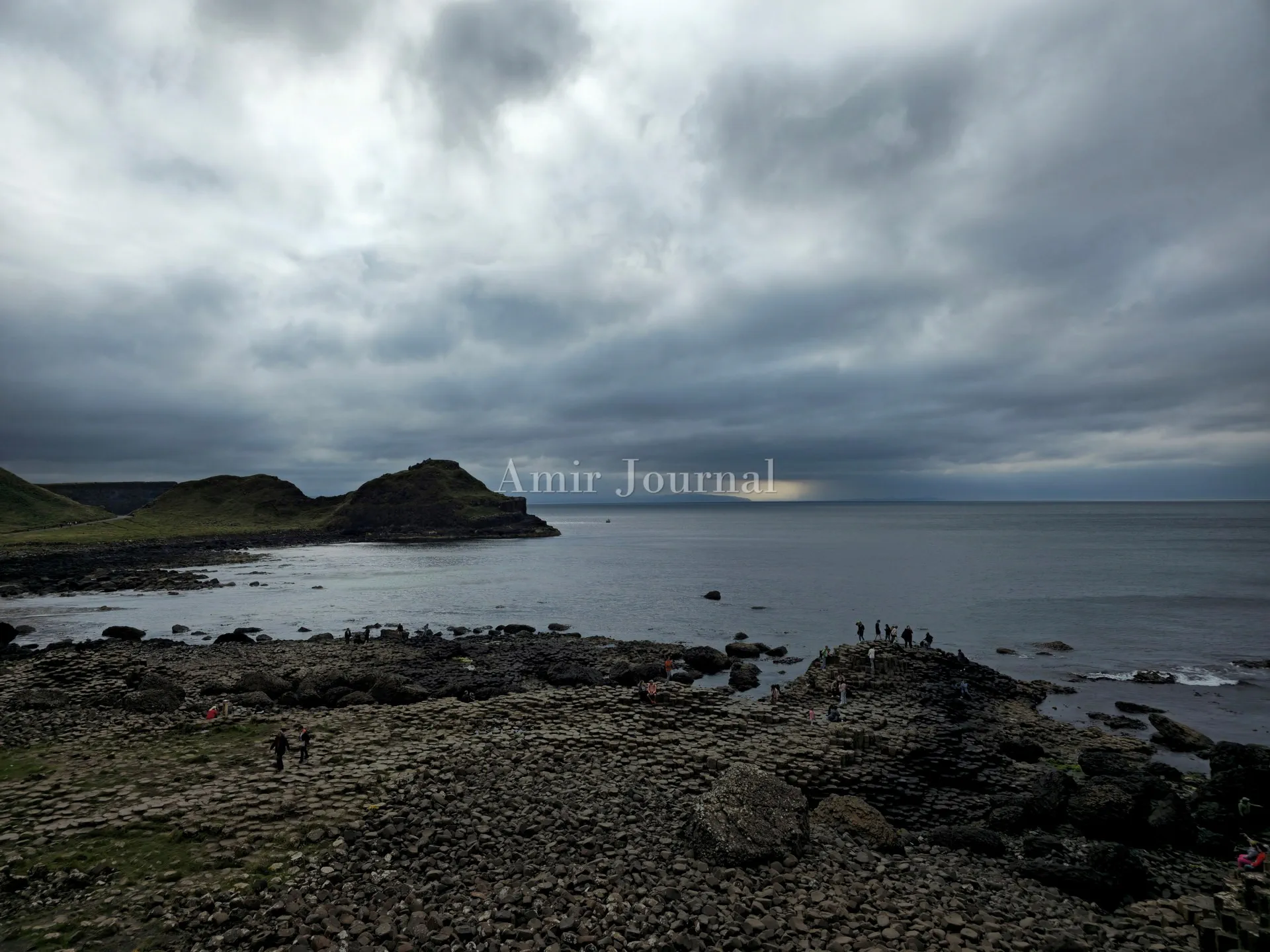
Along the northern coast of County Antrim, the Atlantic waves meeting the rocks became the landscape’s only music. From the walking trail above, the famous stone columns appeared gradually—dark geometric lines stretching towards the sea and revealing more of their form with every step.
As I moved closer, their symmetry became captivating. Thousands of basalt columns stood tightly together, their surfaces forming a vast natural pavement. Many carried six sides, while others displayed five, seven, or eight. They seemed carefully measured and arranged, as though an ancient architect had placed each stone by hand.
One question naturally came to mind:
How could nature create something so precise?
The Story
The answer began around 60 million years ago, during a period of intense volcanic activity when the North Atlantic was taking shape.
Vast flows of molten basalt spread across the landscape at temperatures exceeding 1,000°C. As the lava cooled and solidified, it contracted. Tension travelled through the rock and created fractures, similar to the patterns that appear when mud dries beneath the sun.
As cooling continued, the cracks extended deeper into the lava and formed long polygonal columns. Near-hexagonal patterns emerged because they distributed the contracting forces efficiently across the surface. The same geometric form appears throughout nature, from honeycombs to certain crystal structures, wherever balance and efficient use of space shape the final design.
Layer after layer of volcanic activity formed the Antrim Plateau. Over millions of years, erosion and the constant movement of the Atlantic exposed the remarkable columns visible today.
The result is a landscape of around 40,000 interlocking basalt columns, rising from beneath the cliffs and descending towards the sea. Some appear like stepping-stones, while others form tall structures with names inspired by their shapes, including the Organ, the Chimney Stacks, and the Giant’s Boot.
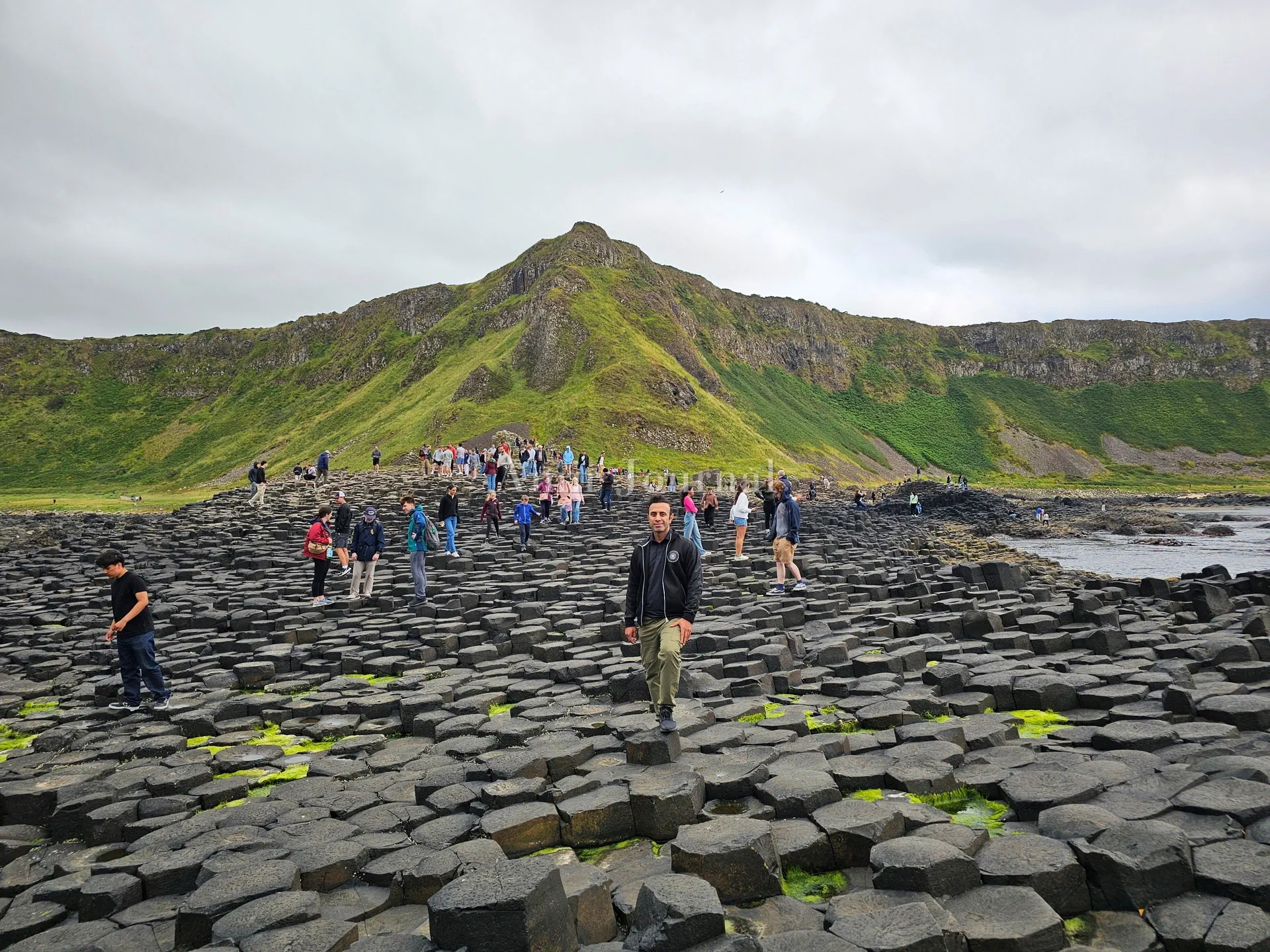
Walking across them means stepping upon the remains of an ancient lava flow and touching a chapter of Earth’s history written in stone.
The geological importance of the site led to its recognition as a UNESCO World Heritage Site in 1986. Scientists have studied the Giant’s Causeway for centuries, using its exposed rock formations to understand volcanic processes, cooling lava, and the formation of columnar basalt.
Science tells one extraordinary story.
Irish folklore carries another.
According to legend, the Irish giant Finn McCool, known in Irish as Fionn mac Cumhaill, built a stone causeway across the sea to confront his Scottish rival, Benandonner. When Finn discovered the enormous size of his opponent, his wife Oonagh devised a clever plan and disguised him as a baby.
Seeing the size of the “child,” Benandonner imagined the scale of its father and hurried back towards Scotland, tearing apart the causeway behind him. The remaining stones along the Antrim coast became the Giant’s Causeway, while similar basalt formations on the Scottish island of Staffa seemed to mark the opposite end of the ancient path.
Looking towards the horizon, where the columns disappear beneath the Atlantic, the legend feels perfectly at home. Geology explains how the stones formed; folklore expresses how generations of people experienced their wonder. Together, they reveal two ways of understanding the same landscape—one through evidence and another through imagination.
Storytelling holds a special place in Irish culture. Tales of giants, warriors, supernatural beings, and ancient heroes travelled through families and communities for centuries. In places such as the Giant’s Causeway, these stories gave personality to cliffs, caves, rocks, and islands, turning the natural world into a living cultural memory.
That connection remains present as visitors walk down towards the shore. Guides share local legends, families pause beside the Giant’s Boot, and travellers from around the world carefully cross the uneven stone surfaces. Each person encounters the same columns through a different perspective, continuing the site’s long tradition of curiosity and storytelling.
Closer to the water, the stones reveal another form of life. Green and brown seaweed moves gently with the tide, while small pools collect between the columns. Limpets, mussels, sea anemones, and other coastal creatures inhabit these miniature worlds, adapting to the daily rhythm of waves and changing water levels.
The basalt provides shelter, the tides deliver nutrients, and seabirds move above the cliffs. Fire created the foundation, while the Atlantic gradually transformed it into a living coastal ecosystem.
Standing on the columns brings every part of the landscape together. Emerald cliffs rise behind the shore, clouds move quickly across the Northern Irish sky, and the ocean stretches towards Scotland. Beneath our feet lies the memory of volcanic fire; ahead of us lies the route imagined by giants.
Time feels different here. Sixty million years of geological change, centuries of oral tradition, and a single afternoon of travel meet in one place. The human visit feels brief, yet it becomes part of the Causeway’s continuing story.
As I followed the path back above the shoreline, the columns gradually returned to dark lines beside the sea. Their perfect surfaces became smaller in the distance, while the sound of the waves continued below.
The Giant’s Causeway reminds us that Earth was creating masterpieces long before human hands began to shape stone—and its oldest stories are still unfolding beneath our steps.