
Nestled in the Italian Alps, the Dolomites are a landscape where towering peaks, emerald meadows, and crystal-clear lakes create a scene straight from a painting. Famous for the magical Enrosadira glow at sunrise and sunset, these UNESCO-listed mountains offer unforgettable hiking, skiing, and nature experiences. Discover why the Dolomites are considered one of Earth's greatest masterpieces and a destination that inspires travelers, artists, and dreamers alike.
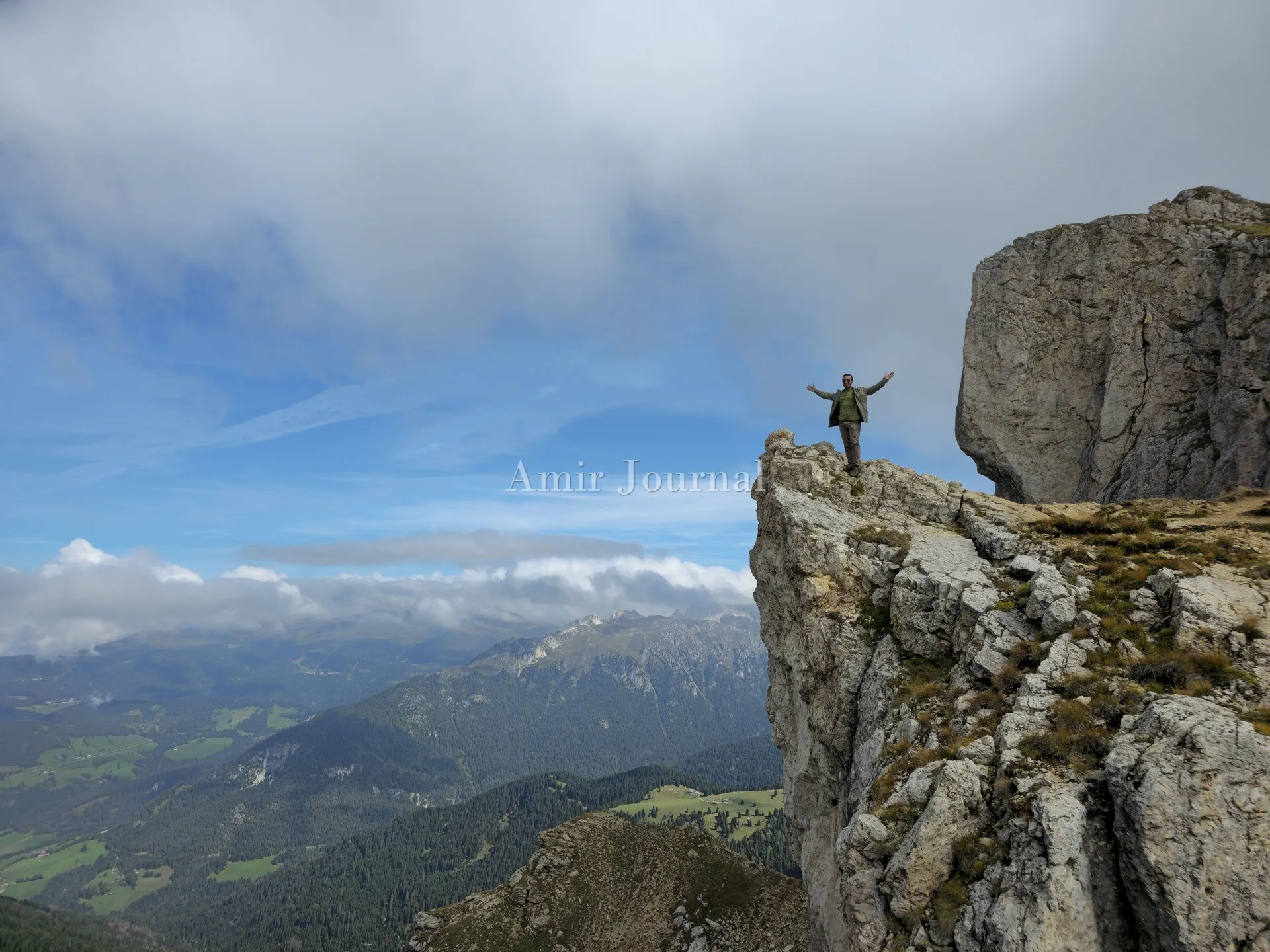
Dolomites - Nature at its grandest
Some landscapes capture our attention through their beauty. Others change the rhythm within us. The Dolomites belong to that rare second kind—a place where pale cliffs rise above green valleys, forests gather beneath sculpted peaks, and mountain lakes reflect the sky with remarkable clarity.
In northern Italy, every meadow, wooden hut, and distant summit seems carefully placed, as though nature had composed the landscape on a vast canvas. The first view fills us with wonder; the journey that follows encourages us to slow down, observe more carefully, and experience the quiet power of the natural world.
The Story
The story of the Dolomites began during the Triassic period, when this region lay beneath an ancient tropical sea. Coral reefs, shells, and marine sediments accumulated over millions of years, creating layers of rock that geological forces later lifted towards the sky.
Wind, water, ice, and erosion gradually shaped these formations into dramatic towers, pinnacles, cliffs, and valleys. Today, their exposed rocks preserve an extraordinary record of Earth’s history, including evidence of how marine life recovered after the planet’s greatest mass extinction.
In 2009, UNESCO inscribed the Dolomites on the World Heritage List. The protected area includes nine mountain systems, celebrated for their distinctive pale peaks, monumental forms, and geological importance.
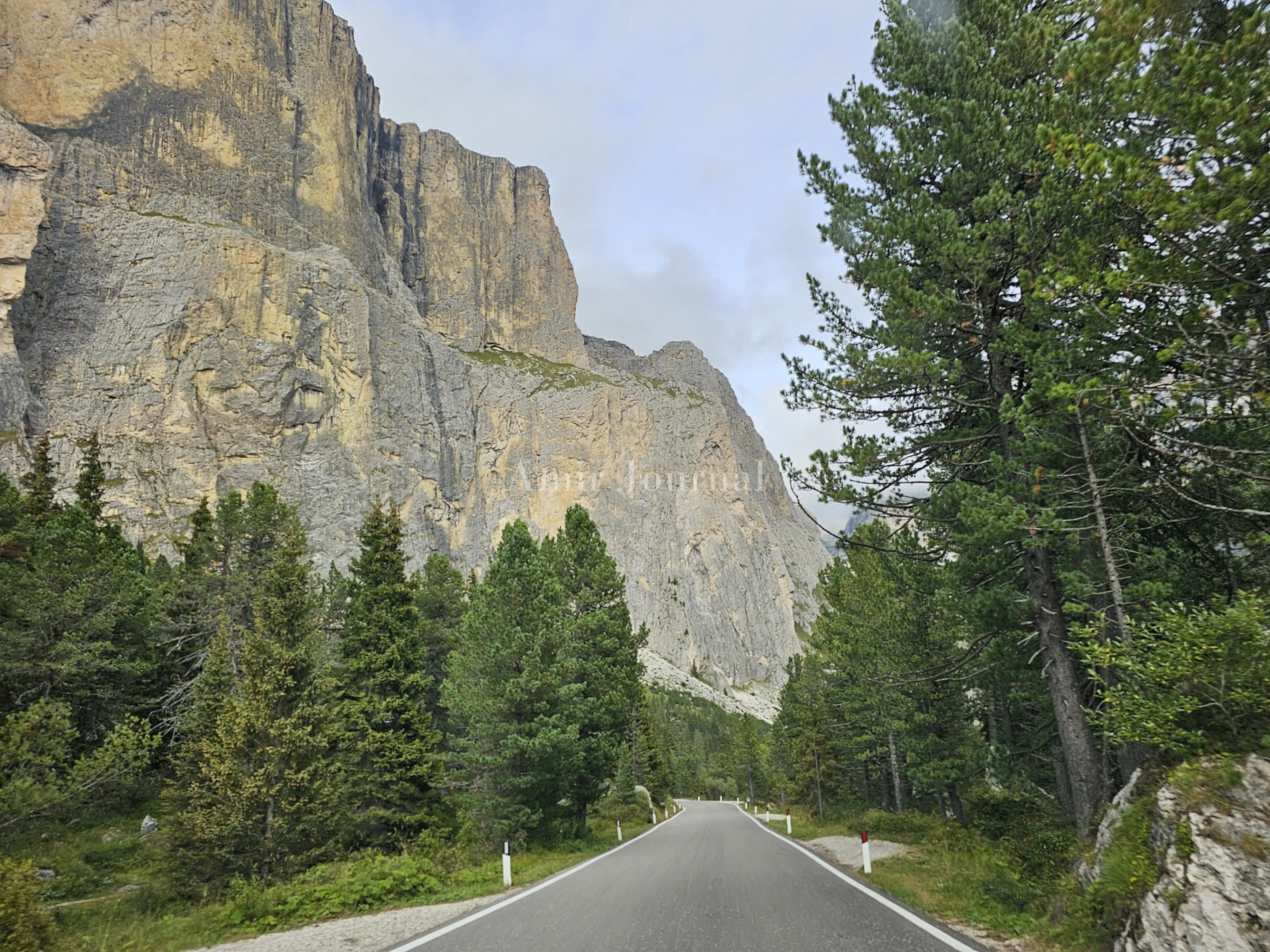
The mountains take their name from dolomite, a mineral named after the eighteenth-century French geologist Déodat de Dolomieu, who studied the unusual composition of the rock. His scientific observations gave these ancient peaks the identity by which the world knows them today.
Yet the deeper story of the Dolomites also belongs to the people who have lived among their valleys.
For generations, mountain communities have followed the rhythm of the seasons, caring for forests, livestock, farms, and high-altitude meadows. Villages developed their own traditions through woodcarving, architecture, music, festivals, and food. Stone churches and wooden barns became part of a landscape shaped by patience, cooperation, and an intimate understanding of nature.
In valleys such as Val Gardena and Alta Badia, Ladin culture remains an essential part of local identity. Its language, legends, crafts, and family customs carry memories across generations. Italian and German influences also meet throughout the region, creating a cultural landscape as layered as the mountains themselves.
This relationship between people and nature becomes clearer as we begin to walk.
Morning light reaches the highest summits while the valleys remain in shadow. A path passes through a quiet forest and opens into an alpine meadow, where the gentle sound of cowbells moves across the grass. Wooden huts rest beneath the cliffs, and wildflowers add small touches of colour beside the trail.
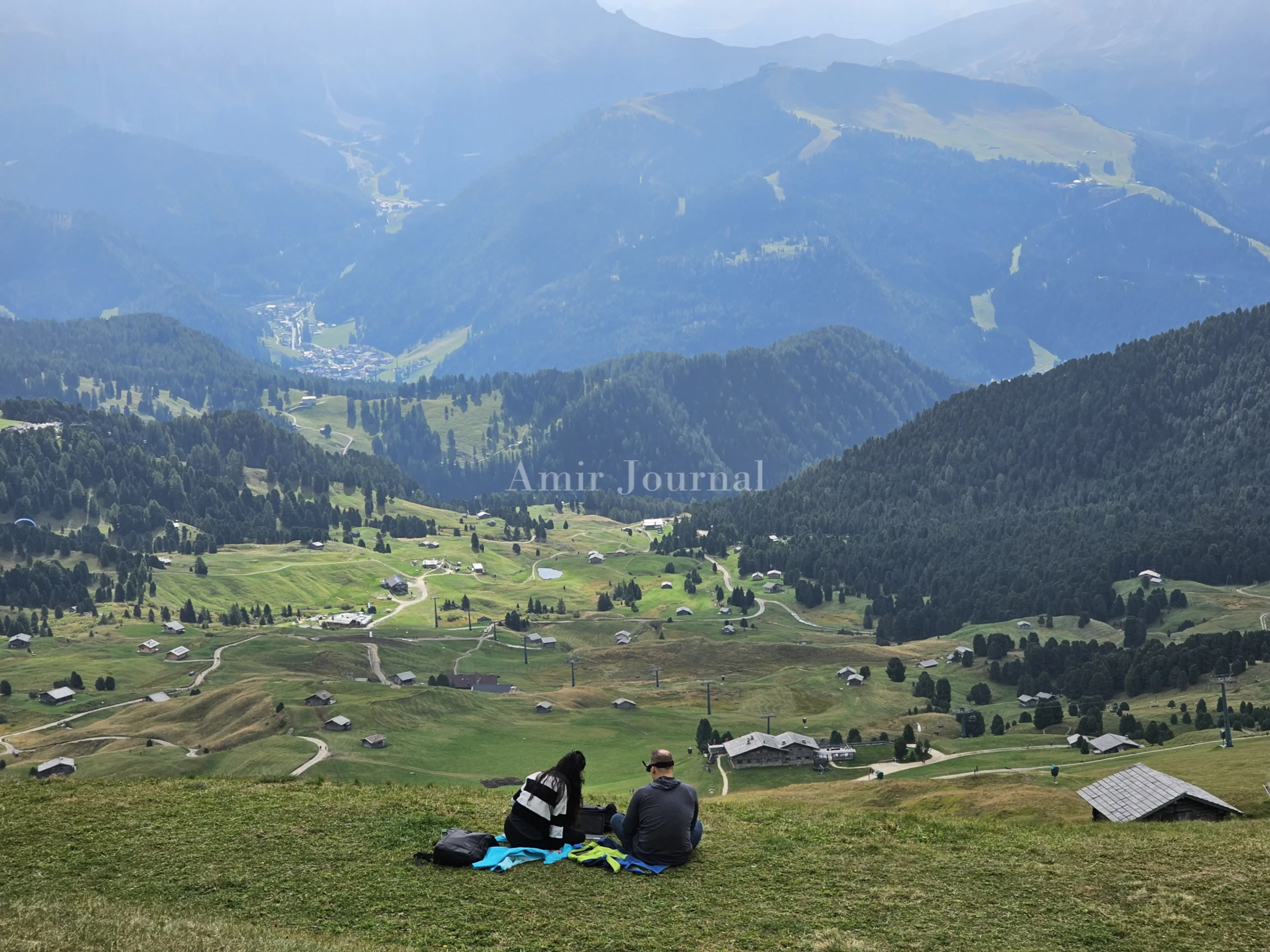
Walking through the Dolomites feels like stepping inside a painting. The landscape recalls the peaceful worlds created by Bob Ross, whose mountains, forests, reflections, and “happy little trees” offered a sense of calm and possibility.
Here, that familiar artistic vision seems to come alive. Trees move with the breeze, clouds drift beyond the peaks, and lakes carry the mountains across their still surfaces. Each turn in the path reveals another natural composition.
During my own journey, I found that the most memorable moments often arrived quietly: a patch of sunlight crossing a meadow, a distant hut beneath a towering cliff, or the reflection of a summit trembling gently on the water. These small scenes gave the landscape its emotional depth.
Light holds a special place in the Dolomites.
At sunrise and sunset, the pale rock can glow in shades of pink, orange, red, and gold. This phenomenon is known as Enrosadira, a name connected with the Ladin expression for turning pink. The colours appear through the interaction between sunlight and the distinctive composition of Dolomite rock.
For a few brief moments, the mountains seem to hold the light within them. The valleys grow quieter, shadows lengthen across the meadows, and the peaks become a living work of art. As the sunlight changes, the colour slowly fades and the mountains return to their pale evening tones.
Summer brings a gentle rhythm to the high country. Trails cross flower-filled meadows and mountain passes, connecting traditional rifugi where hikers find food, rest, and warm hospitality.
Inside these mountain huts, boots gather near the entrance and maps unfold across wooden tables. Conversations move between Italian, German, Ladin, and the languages of travellers. Simple dishes such as polenta, local cheese, dumplings, bread, and apple strudel carry the flavours of Alpine life.
The hut keepers, farmers, craftspeople, and guides give the landscape its human character. Their knowledge of weather, trails, animals, and seasons has grown through generations of life in the mountains. Through them, the Dolomites become a living cultural home as well as a place of extraordinary natural beauty.
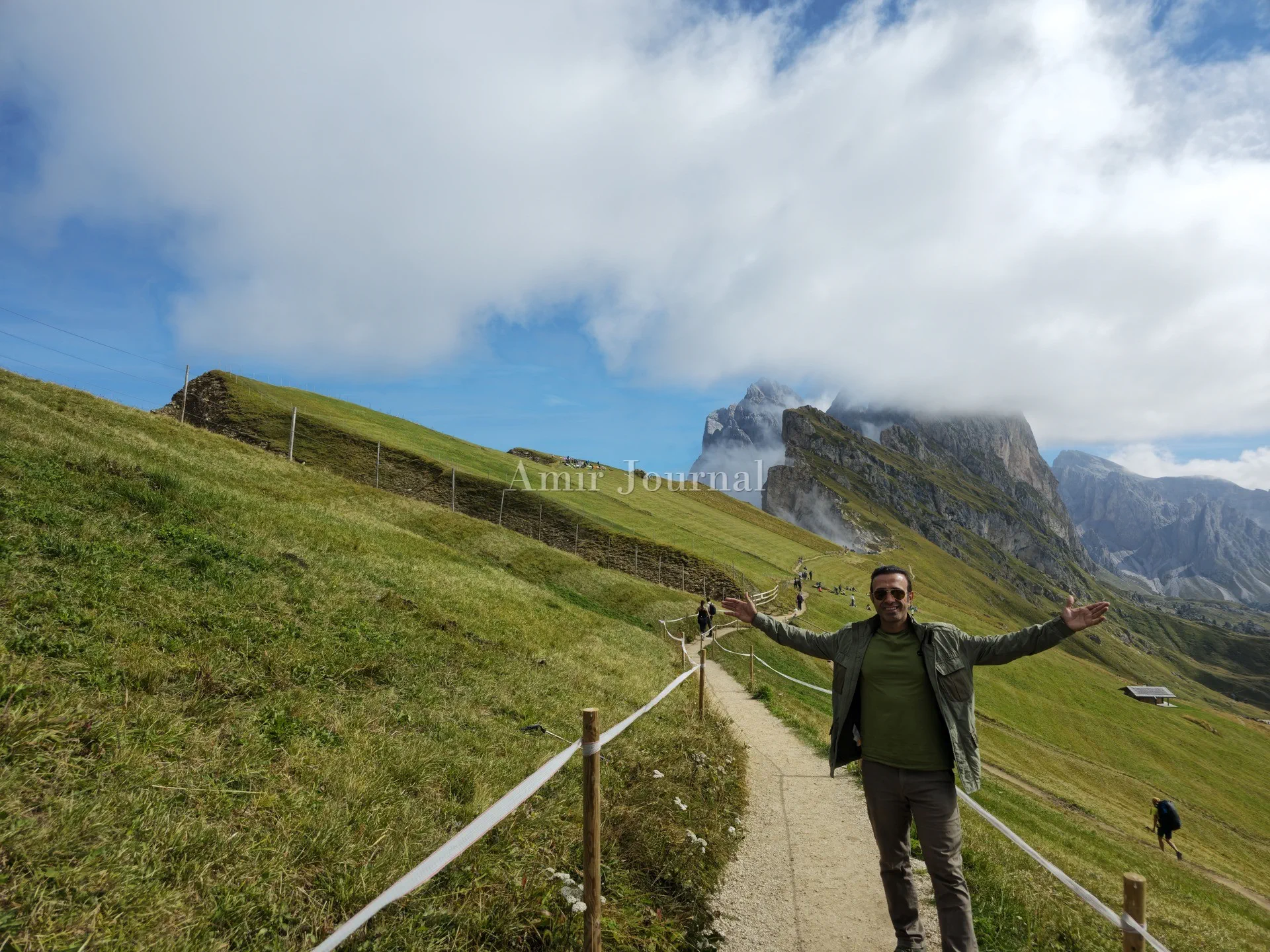
In the villages below, bakers begin work early, artisans shape wood in small workshops, and families gather around meals influenced by both Alpine and Italian traditions. Church bells mark the hours, while cable cars carry walkers towards the high slopes.
Winter reveals another face of the mountains. Snow covers the meadows, softens the forests, and turns the valleys into wide fields of white. Skiers move across the slopes, footsteps follow quiet trails, and warm light appears in the windows of the rifugi as evening approaches.
Each season adds a different colour to the same story. Spring brings rushing streams and awakening meadows. Summer fills the valleys with flowers. Autumn turns the forests gold, while winter creates a world of snow, rock, and silence.
The Dolomites stay with us through these details: cowbells travelling across a meadow, the warmth of a meal inside a mountain hut, the reflection of a peak on a quiet lake, and the first pink light appearing on the cliffs.
Here, the rhythm of nature gradually becomes our own. Our steps grow slower, our attention deepens, and the noise of everyday life gives way to wind, light, and open space.
As evening settles across the valley, the forests darken and the final sunlight touches the highest peaks. For a moment, the mountains glow like a painting still being completed.
Long after the path fades behind us, the Dolomites continue to rise quietly within the imagination.