
Stonehenge is more than an ancient stone circle. Surrounded by the peaceful countryside of Salisbury Plain, grazing sheep and cattle, and backed by remarkable engineering and astronomical precision, it offers one of England's most fascinating journeys into prehistoric history.
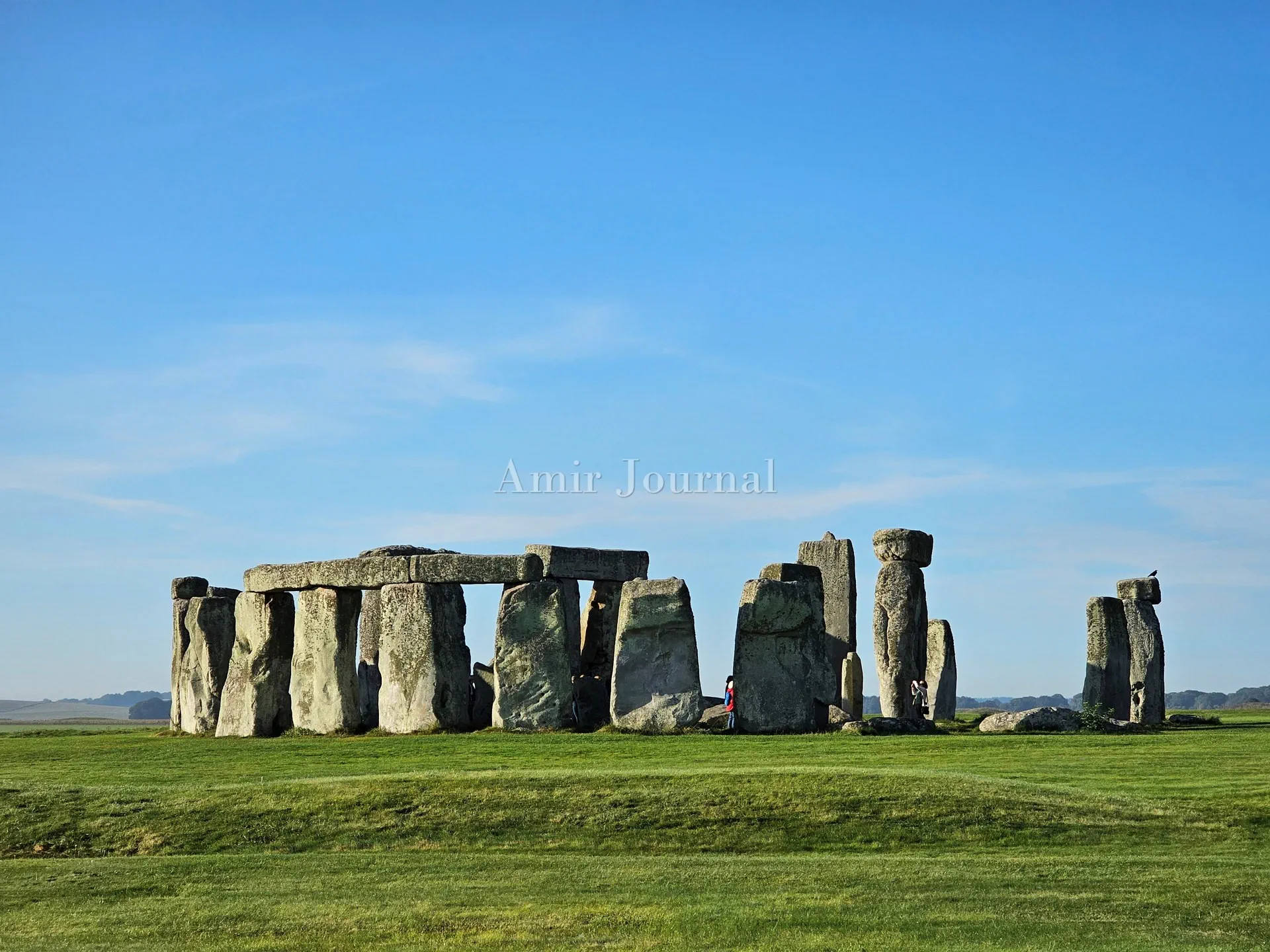
Stonehenge rises from the open landscape of Salisbury Plain, where ancient engineering, astronomical knowledge and the quiet rhythm of the English countryside have shared the same horizon for over 5,000 years.
Some monuments tell their story through inscriptions and written records. Stonehenge speaks through stone, landscape, and sky.
At the heart of Salisbury Plain, its immense stones rise above sweeping grasslands where sheep and cattle graze beneath a constantly changing English sky. The setting feels spacious and peaceful, yet every stone carries the weight of human effort, shared belief, and more than five thousand years of history.
Standing here invites a powerful thought: people once gathered on this open plain, studied the movement of the sun, transported stones across extraordinary distances, and created a monument whose presence still reaches us today.
The Story
The earliest stage of Stonehenge began around 3000 BC, when Neolithic communities created a circular bank and ditch. Generations continued shaping the site, and around 2500 BC, the great stone settings began to rise.
The largest blocks, known as sarsens, weigh as much as 25 tonnes. Geological research links most of them to West Woods on the Marlborough Downs, around 25 kilometres away. Many of the smaller bluestones came from the Preseli Hills in Wales, travelling more than 220 kilometres to Salisbury Plain.
An even more remarkable discovery emerged in 2024. Analysis of the central Altar Stone traced its geological signature to the Orcadian Basin of northeast Scotland, at least 750 kilometres from Stonehenge. This journey points towards an ancient Britain connected through movement, exchange, and highly organised communities.
Moving and raising these stones required patience, coordination, technical skill, and collective purpose. Ropes, timber sledges, prepared routes, and possible waterways may all have played a part. Each stone represents countless hands working towards a vision that extended across generations.
The monument’s relationship with the sun adds another layer to its identity. Its central axis aligns with the summer-solstice sunrise and the winter-solstice sunset. At these turning points of the year, sunlight follows the arrangement of the stones, revealing how closely Neolithic communities observed the seasons and the heavens.
Stonehenge also belonged to a much wider ceremonial landscape. The Avenue linked it with the River Avon, while nearby Durrington Walls contained houses and evidence of large communal feasts. Burial mounds, processional routes, timber monuments, and settlements show a landscape filled with movement, ceremony, and shared meals. Stonehenge stood at the centre of a living human world.
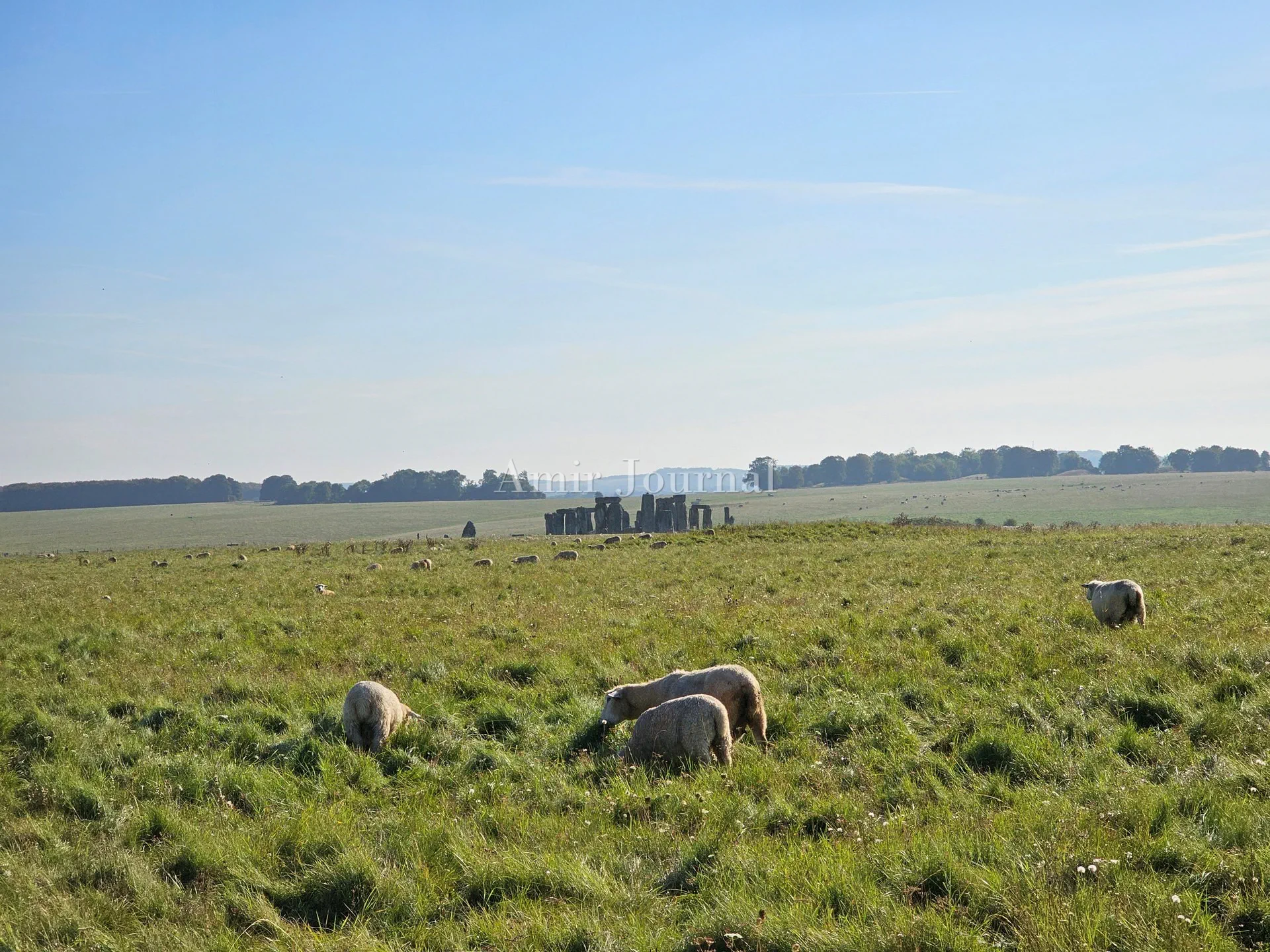
That sense of life continues as we approach the monument today. The stones appear gradually across the plain, their dark silhouettes shifting beneath passing clouds. Wind moves through the grass, birds cross the open sky, and grazing animals bring a gentle rhythm to the landscape.
Walking around the circle reveals its scale. Some stones stand more than seven metres high, while horizontal lintels rest above them with extraordinary precision. From each angle, the monument changes: sometimes a solid wall of stone, sometimes a series of openings framing the horizon.
The countryside adds warmth to the experience. Sheep gather quietly near the fields, cattle move through the grass, and farms continue the long relationship between people, animals, and Salisbury Plain. These everyday scenes allow ancient history and contemporary rural life to share the same view.
Modern archaeology keeps deepening the story. Ground surveys, excavations, chemical analysis, and digital mapping have uncovered ceremonial avenues, settlements, and burial sites across the surrounding landscape. Each discovery offers another glimpse into the people who travelled here, raised families, prepared feasts, honoured their ancestors, and watched the seasons turn.
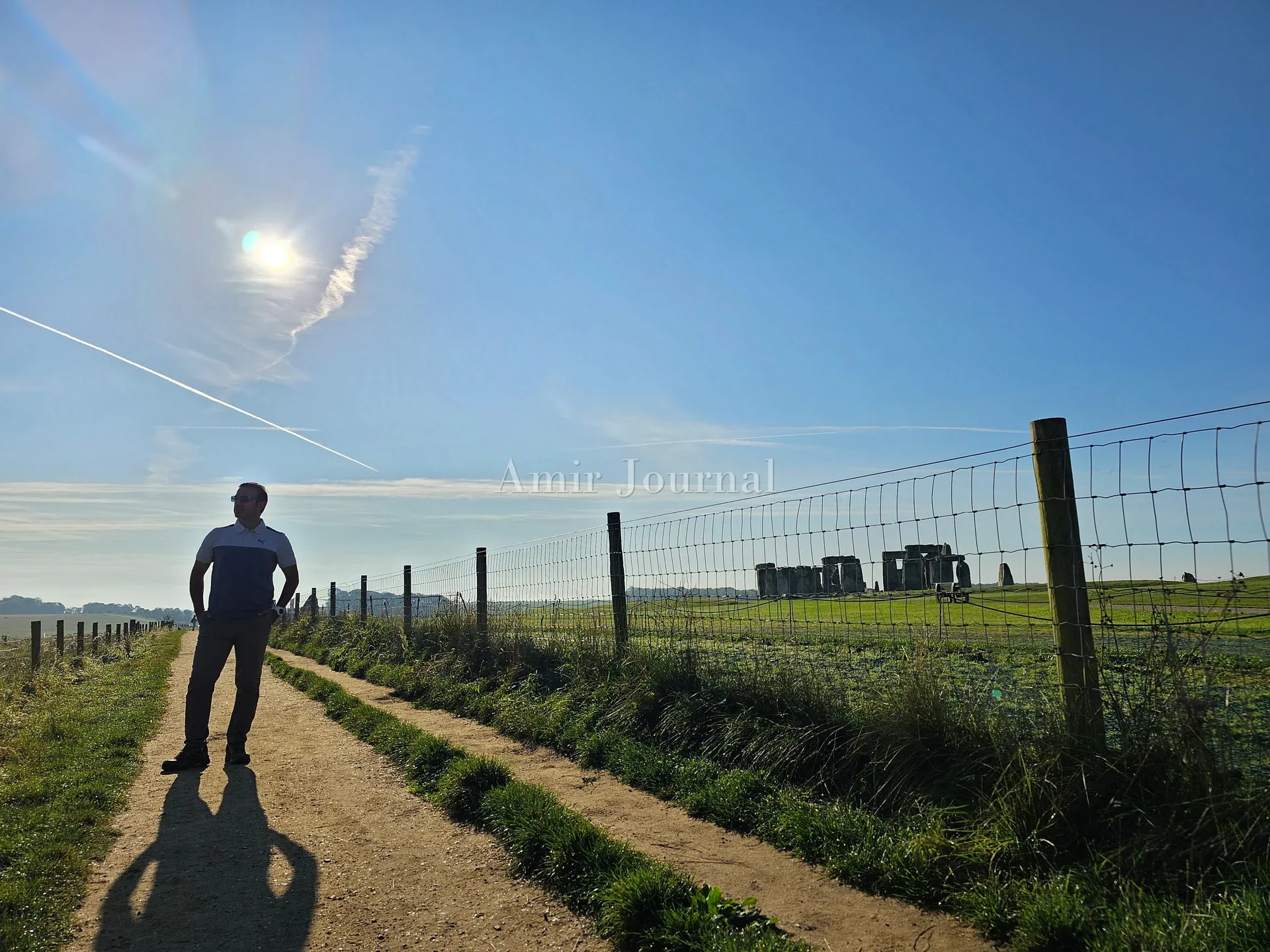
Recognised with Avebury and its associated monuments as a UNESCO World Heritage Site since 1986, Stonehenge remains one of the world’s most important prehistoric landscapes. Its enduring power comes from the meeting of human ambition and nature: heavy stones lifted towards an open sky, earthly labour aligned with celestial light.
As we leave, the monument grows smaller across the grass, while its questions travel with us. The names of its builders have faded into time, yet their knowledge, cooperation, and imagination remain visible in every carefully placed stone.
Across Salisbury Plain, the wind continues its ancient journey—and Stonehenge keeps watching the sky.