
Experience Oktoberfest in Munich, where Bavarian tradition, lively beer tents, brass bands, and millions of visitors create the world's most famous folk festival. Discover the history, atmosphere, and culture behind this iconic celebration.
Oktoberfest
Up Close — The World’s Largest Celebration
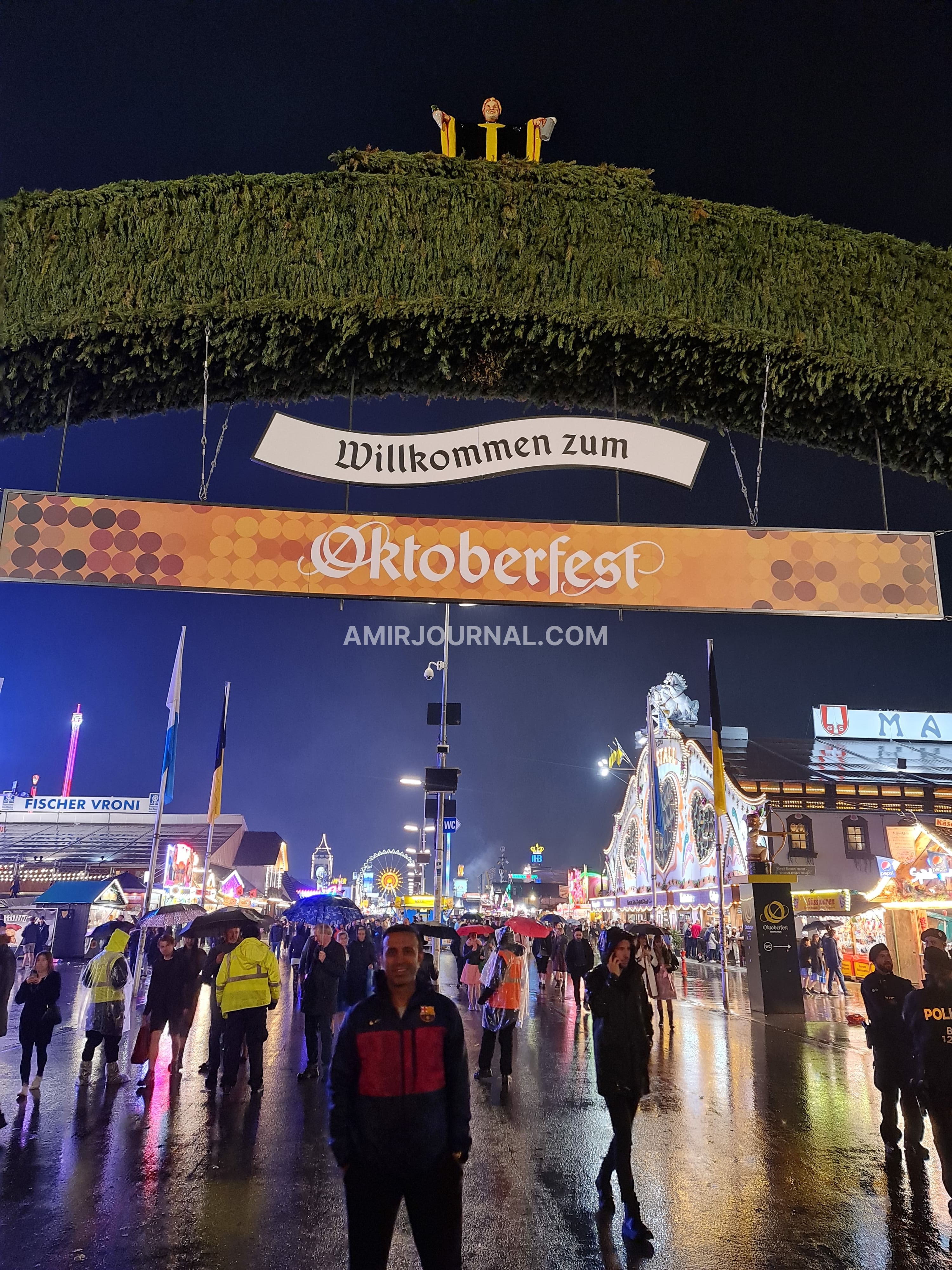
The music arrives before the festival grounds come fully into view. Brass instruments rise above the laughter, blending with the rhythm of thousands of footsteps crossing the Theresienwiese.
Then the scene opens.
Colourful rides turn above Munich’s skyline. The scent of roasted almonds, grilled sausages, and freshly baked pretzels drifts between decorated entrances. Men in leather Lederhosen and women in colourful Dirndls move through the crowd, while the great festival tents fill with people from different cultures and languages.
For a few weeks each year, this open space becomes a temporary city with its own streets, music, traditions, and rhythm. Oktoberfest is recognised as the world’s largest folk festival, yet its deepest identity belongs to Munich and the Bavarian way of life.
The Story
The tradition began in October 1810 with the wedding of Bavarian Crown Prince Ludwig and Princess Therese of Saxe-Hildburghausen. Five days of public celebration ended with a horse race on a meadow outside Munich’s city gates.
The field was named Theresienwiese, or “Therese’s Meadow,” in honour of the bride. Munich residents later shortened the name to Wiesn, the affectionate Bavarian name still used for Oktoberfest today.
The celebration returned in the following years and gradually expanded beyond its royal origins. Agricultural exhibitions, fairground attractions, food stalls, music, and beer tents became part of the experience. Across more than two centuries, a royal wedding celebration developed into one of the world’s most recognisable cultural events.
The festival begins with ceremony. Decorated horse-drawn carriages carry the landlords and representatives of Munich’s historic breweries through the city. At noon, the mayor of Munich taps the first beer barrel and declares:
“O’zapft is!” — “It is tapped!”
From that moment, beer service officially begins across the festival.
In 2025, around 6.5 million visitors entered the Theresienwiese during sixteen festival days. The crowd included Munich residents, Bavarian families, international travellers, groups of colleagues, young people, and senior citizens. Around 6.5 million litres of beer were served alongside roast chicken, sausages, pretzels, fish, and other Bavarian favourites.
Yet the true character of Oktoberfest appears in its details.
Traditional clothing is among the first things to draw the eye. Leather Lederhosen, embroidered waistcoats, colourful Dirndls, aprons, and local hats fill the festival grounds. These garments connect regional history with contemporary colours and designs.
For many Bavarians, wearing traditional dress expresses pride, belonging, and a connection between generations. Children arrive dressed like their parents and grandparents, while international visitors take part in a tradition that Munich continues to share with the world.
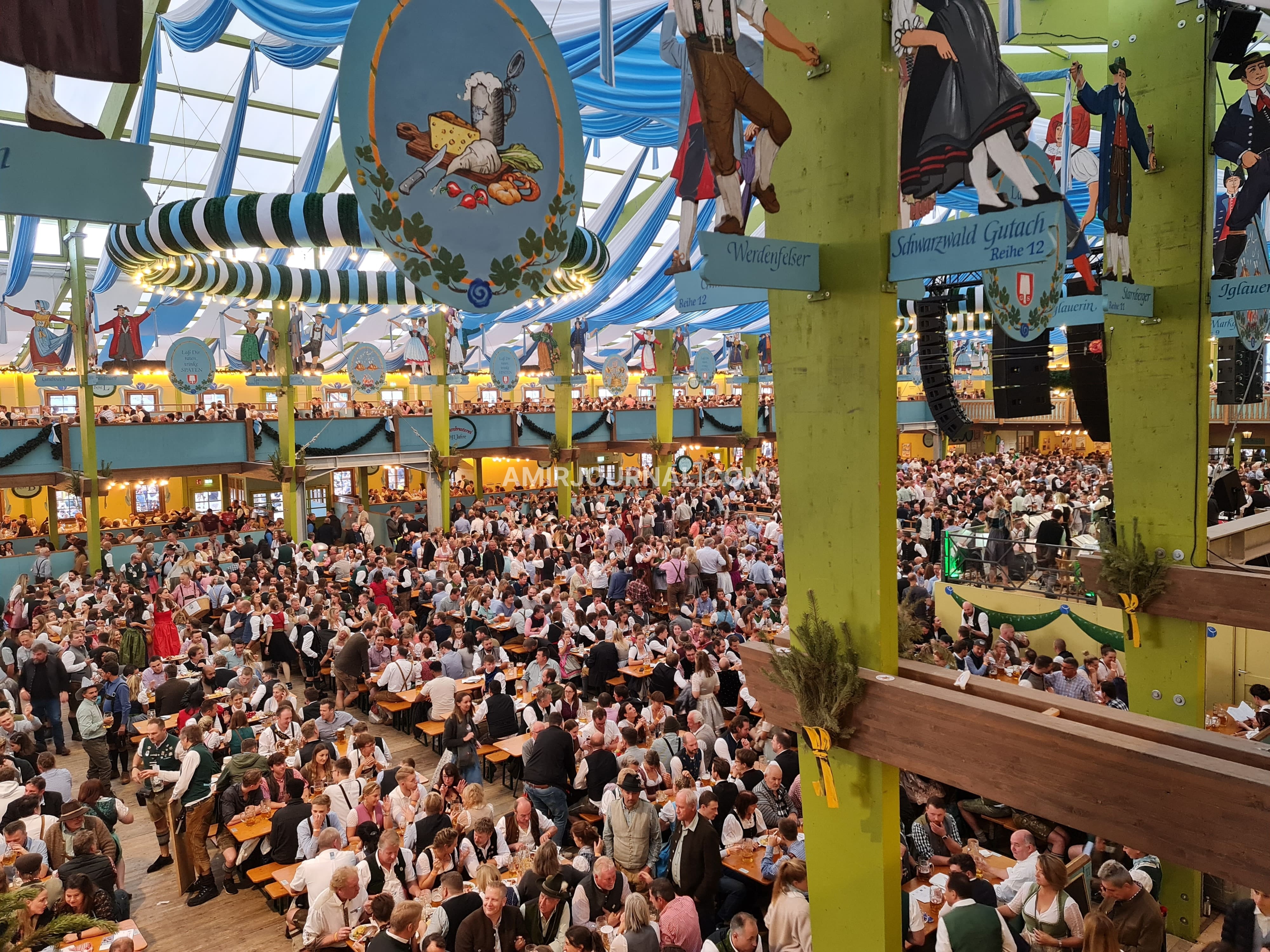
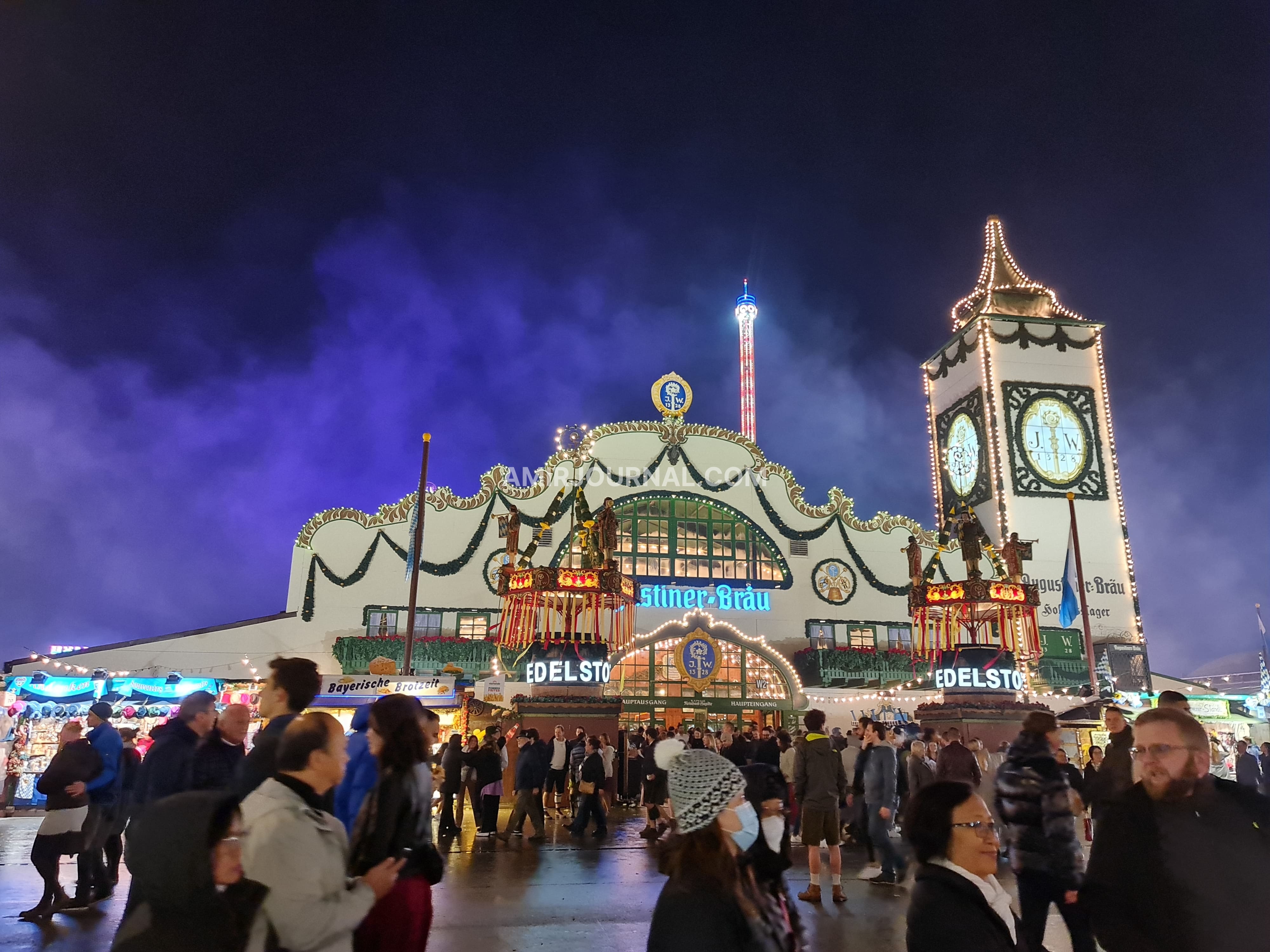
The great beer tents rise like temporary palaces. Each has its own colours, decorations, music, and atmosphere, along with a connection to one of Munich’s six historic breweries. Inside, thousands of guests sit at long wooden tables beneath painted ceilings, garlands, and hanging lights.
A brass band begins a familiar song. Conversations soften, glasses rise, and voices from different countries join the melody. Strangers seated beside one another soon begin sharing food, stories, and laughter. The long tables transform the experience into a collective celebration.
Servers move through the narrow aisles carrying several heavy one-litre Maß glasses at once. Plates of roast chicken and giant pretzels pass between the tables. The music shifts from traditional Bavarian melodies to songs recognised across generations, and the entire tent responds together.
Behind this energy lies an extraordinary system of coordination. Marked routes guide the crowd, while police officers, security teams, firefighters, medical staff, cleaners, transport workers, cooks, musicians, and thousands of seasonal employees keep this temporary city moving.
The celebration feels spontaneous, while its rhythm comes from months of preparation. Beer deliveries follow schedules, kitchens prepare thousands of meals, tables change between reservations, and trains carry crowds across Munich.
This organisation creates space for joy.
Beyond the tents, Oktoberfest reveals itself as a celebration for every generation. Families arrive during the day, children reach for carousel horses, grandparents walk beneath the lights, and younger visitors gather around modern rides.
The historic Oide Wiesn preserves the atmosphere of an earlier Oktoberfest through traditional music, folk costumes, classic attractions, and family-friendly spaces.
The Traditional Costume and Marksmen’s Parade adds another layer of Bavarian identity. Participants from Bavaria and other parts of Europe walk through Munich in historic dress, accompanied by musicians, decorated floats, mountain riflemen, and magnificent horse-drawn carriages from the city’s breweries.
The parade’s roots reach back to 1835, when a grand procession honoured the twenty-fifth wedding anniversary of Ludwig and Therese.
As evening approaches, the festival changes. The sky deepens above the Bavaria statue, thousands of lights brighten the rides, and music flows from the tents onto the pathways. The sweetness of roasted almonds and the warmth of the food stalls fill the air as the crowd moves beneath illuminated signs.
From a distance, Oktoberfest appears immense. Up close, its meaning becomes more intimate. It lives in a family returning to the same tent each year, a song remembered from childhood, a carefully preserved Dirndl, and a table where people from different cultures raise their glasses together.
Oktoberfest has endured because Munich renews the tradition with every generation. Heritage, hospitality, collective joy, and careful organisation come together on the Theresienwiese, creating a celebration that feels deeply Bavarian and warmly universal.
As the music softens and the lights shimmer across the festival grounds, one image remains:
For a brief season, Munich gathers the world around one long table and turns joy into a shared language.