
Follow Germany's remarkable transformation from the devastation of World War II through the Cold War, the Berlin Wall, Checkpoint Charlie, the Reichstag, the Nuremberg Trials, and reunification in 1990.
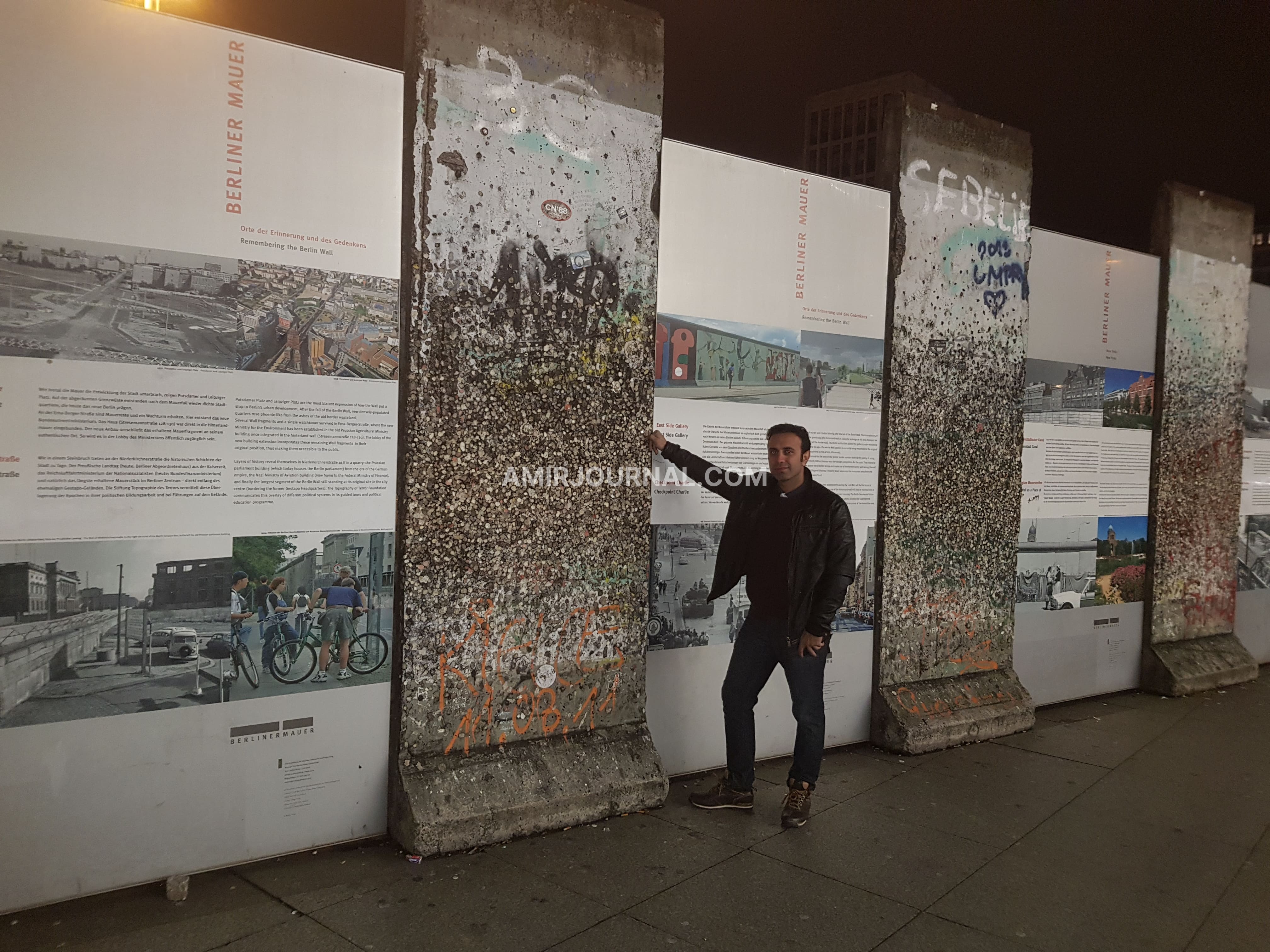
Berlin Wall
From the Eagle’s Nest and Nuremberg to the Berlin Wall and Reichstag
High above the Bavarian Alps, the Eagle’s Nest stands among silent peaks and drifting clouds. Farther north, Courtroom 600 in Nuremberg preserves the memory of Nazi leaders facing international justice. In Berlin, fragments of a concrete wall recall decades of division, while the Reichstag’s glass dome rises as a symbol of democracy and reunification.
Together, these places trace Germany’s passage from dictatorship and war to accountability, freedom, and democratic renewal.
The Story
The story begins in 1933, when Adolf Hitler and the Nazi Party established a dictatorship built upon racial ideology, repression, militarisation, and expansion. The regime persecuted political opponents, Jews, Roma and Sinti, people with disabilities, and other communities.
These policies led to the Holocaust, in which six million European Jews were murdered, alongside millions of other victims of Nazi persecution and war.
Germany’s invasion of Poland on 1 September 1939 began the Second World War in Europe. The conflict spread across the continent and became global. By 1945, cities lay in ruins, millions had died, and Germany’s defeat brought the Nazi dictatorship to an end.
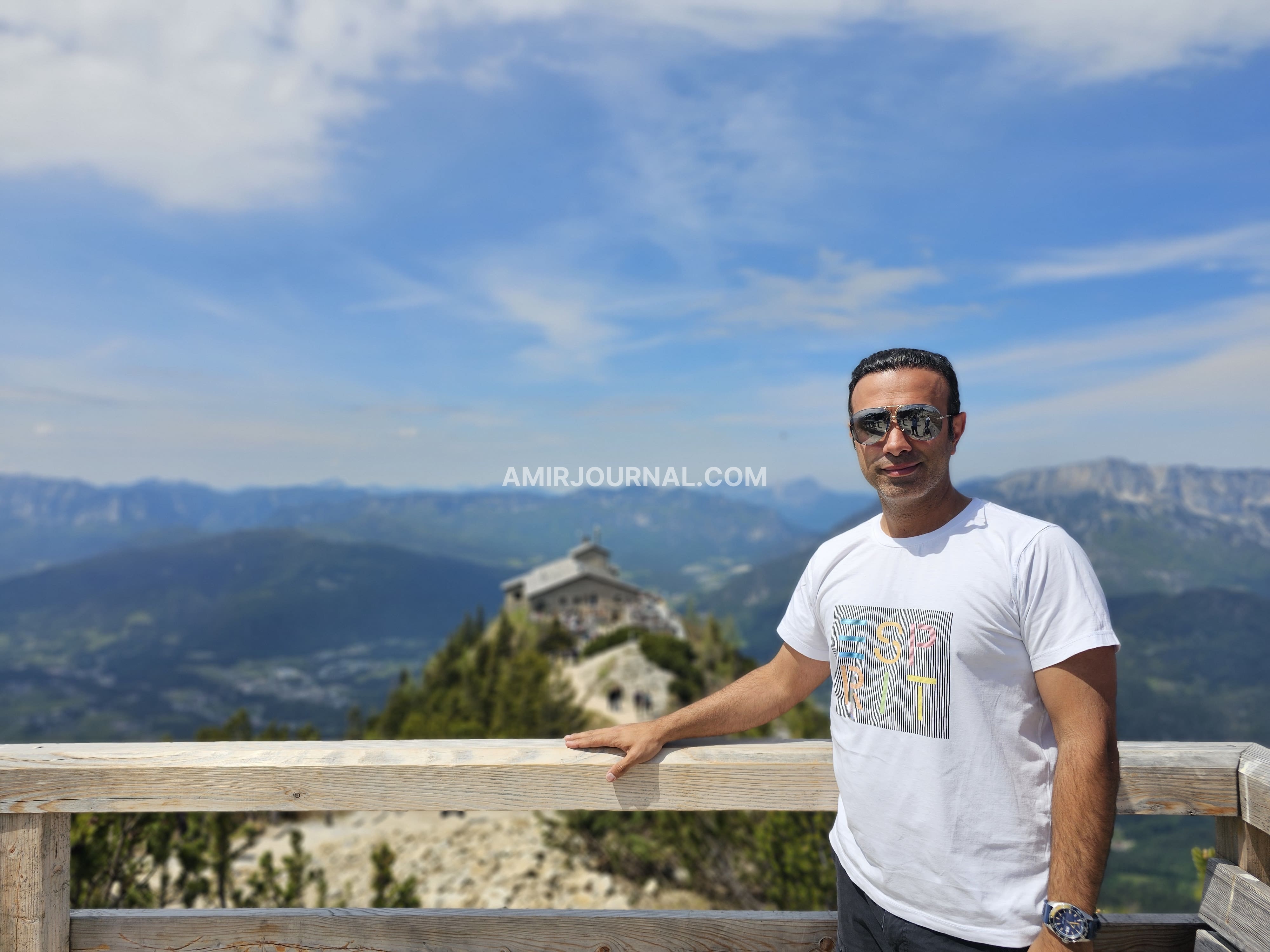
In the Bavarian Alps, the Kehlsteinhaus, widely known as the Eagle’s Nest, preserves one setting connected to this period. Built in 1938 as part of the Nazi leadership complex at Obersalzberg, it was presented to Hitler for his fiftieth birthday and used for selected official occasions.
The journey follows a steep mountain road before entering a tunnel carved into the rock. A brass-lined elevator rises through the mountain and opens onto panoramic views of alpine peaks and valleys.
The beauty of the landscape creates a powerful contrast with the ideology and crimes of the regime that built the site. Historical education is centred at the nearby Obersalzberg Documentation Center, whose exhibition Idyll and Atrocity examines dictatorship, persecution, war, and mass murder.
From the mountains, the journey continues to Nuremberg, a city once used for enormous Nazi propaganda rallies. After the war, it became the setting for a new form of international justice.
Between 1945 and 1946, leading Nazi figures stood trial before the International Military Tribunal in Courtroom 600. Prosecutors presented documents, photographs, films, and testimony describing aggressive war, forced labour, deportation, persecution, and mass murder.
The Nuremberg Trials established that political and military leaders could face personal responsibility under international law. Their principles influenced later definitions of war crimes, crimes against humanity, and genocide.
After Germany surrendered on 8 May 1945, the country and Berlin were divided into American, British, French, and Soviet occupation zones. In 1949, two German states emerged: the Federal Republic of Germany in the West and the German Democratic Republic in the East.
On 13 August 1961, East German authorities sealed the border and began constructing the Berlin Wall. It gradually became a 155-kilometre system of concrete barriers, fences, watchtowers, and patrol roads surrounding West Berlin. Its purpose was to prevent people from leaving East Germany.
At Bernauer Strasse, the border passed directly through a residential neighbourhood. Buildings stood in East Berlin while the pavement outside belonged to the West. During the first days, residents escaped through windows before the buildings were emptied and demolished.
Between 1961 and 1989, at least 140 people died in connection with the East German border regime at the Wall. Behind this figure are the stories of students, workers, parents, and young people seeking freedom and a different future.
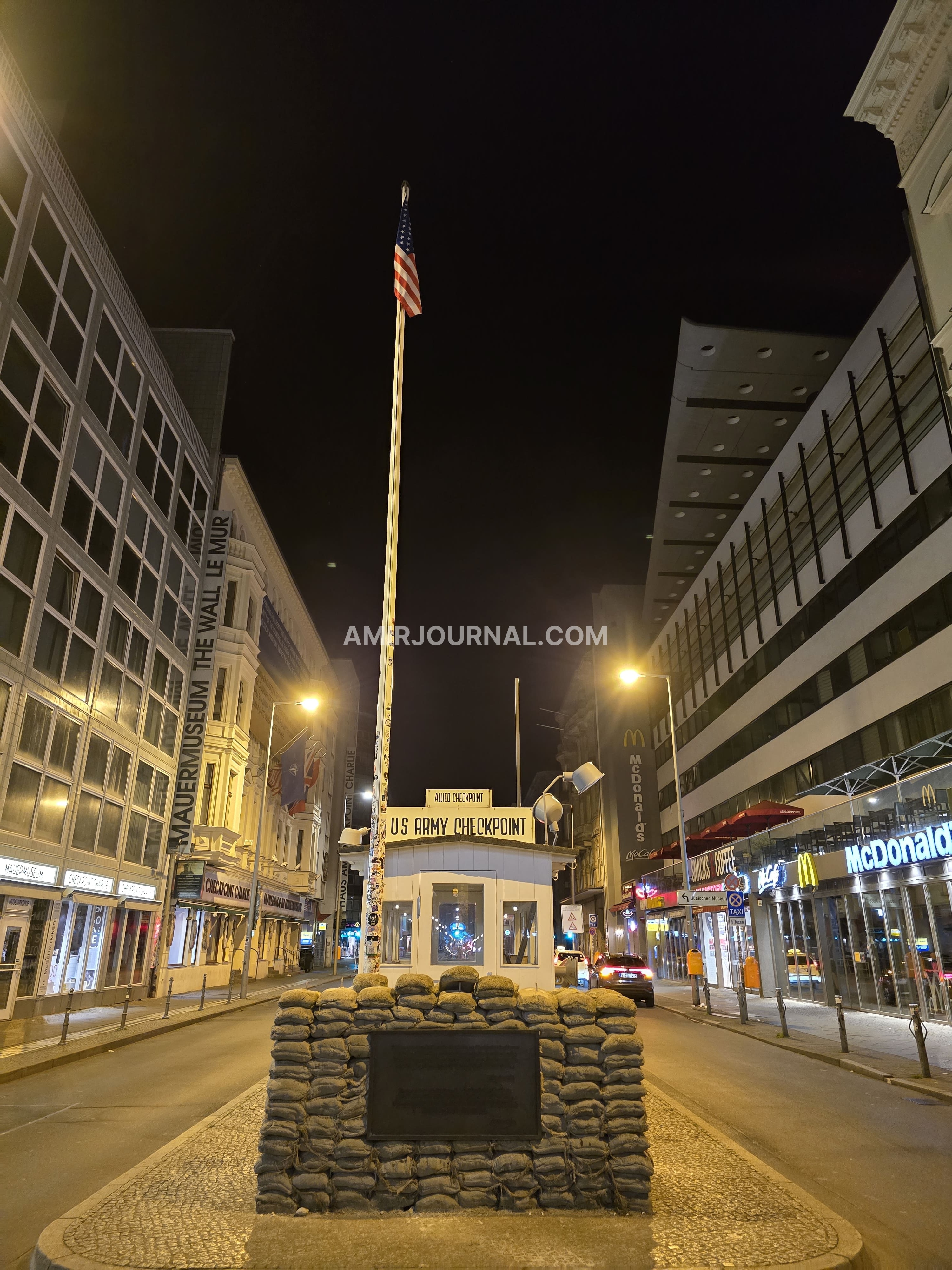
At Checkpoint Charlie, diplomats, foreign visitors, and Allied personnel crossed between the American and Soviet sectors. In October 1961, American and Soviet tanks faced one another at close range, bringing the tension of the Cold War directly into Berlin’s streets.
Today, shops, traffic, and visitors surround the former crossing. Historic photographs reveal a different landscape of barriers, armed guards, identity checks, and two political systems meeting across a narrow street.
For decades, the Brandenburg Gate stood beside the Wall inside the border zone. Then, on the evening of 9 November 1989, an unclear announcement concerning new travel regulations brought thousands of East Berliners to the border crossings.
The gates opened. Families reunited, strangers embraced, and crowds climbed onto the Wall beneath television lights. After more than twenty-eight years of division, Berlin’s most famous barrier became the stage for a shared celebration.
On 3 October 1990, German reunification became official.
The restored Reichstag Building now expresses the democratic identity of the reunited country. Its glass dome rises above the parliamentary chamber, allowing visitors to look into the home of the German Bundestag. Historic architecture meets transparency, public access, and democratic responsibility.
Walking through the dome, Berlin spreads below in every direction. The Brandenburg Gate, the Holocaust Memorial, and traces of the former Wall all lie nearby. Light passes through the glass and reaches the parliamentary chamber beneath, transforming a building shaped by empire, war, and division into a symbol of renewal.
Modern Germany has built its identity around democracy, federalism, European cooperation, historical education, and public remembrance. Memorials stand in the centre of cities, former camps serve as places of learning, and museums preserve the experiences of dictatorship, war, and division.
As evening settles over Berlin, the cobblestone line marking the former Wall fades into the soft light, while people continue crossing it freely in every direction.
History remains beneath their footsteps, and freedom moves quietly above it.