
Hidden beneath the shadow of Mount Vesuvius, Herculaneum is one of the world's most fascinating archaeological sites. Buried during the catastrophic eruption of 79 AD, the ancient Roman city remained frozen in time for nearly two thousand years. Today, its remarkably preserved streets, homes, frescoes, and everyday objects offer a rare glimpse into the lives of ordinary people from the ancient world. More than a collection of ruins, Herculaneum is a powerful reminder of the fragility of civilization, the passage of time, and the enduring connection between past and present.
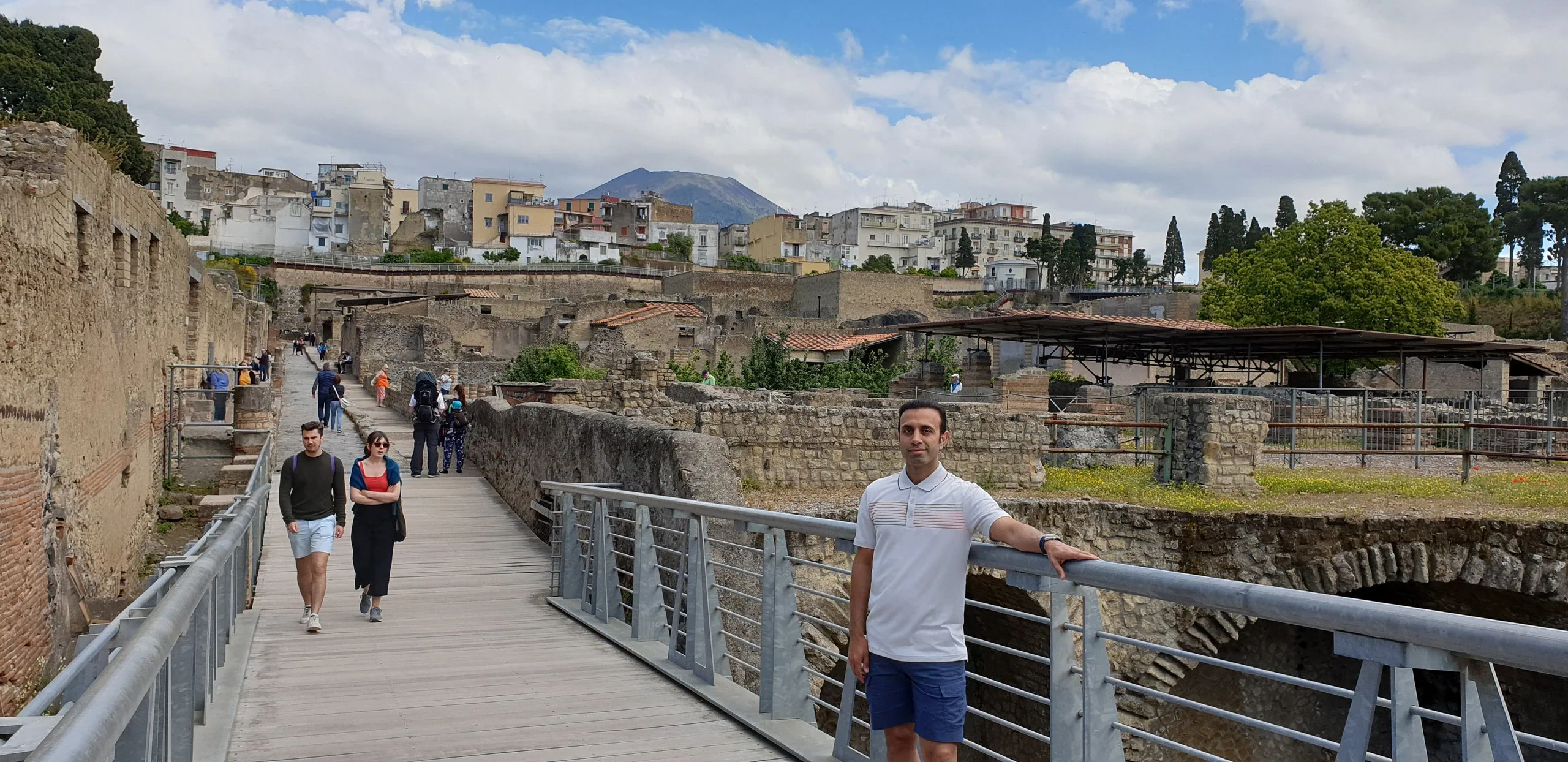
Herculaneum Where history still lives
Near Naples, beneath the calm outline of Mount Vesuvius, lies a town that brings us unusually close to the lives of ancient people. Herculaneum holds more than temples, villas, and archaeological treasures; it preserves the small details of a community whose residents worked, shared meals, visited public baths, raised families, and imagined their future.
As we descend from the modern town into the ancient streets below, the distance of almost two thousand years begins to feel surprisingly small. Roofs, doorways, wooden objects, shop counters, and painted rooms still carry traces of ordinary life. Herculaneum offers a rare encounter with history at a human scale.
The Story
During the first century, Herculaneum was a prosperous Roman town overlooking the Bay of Naples. Its seaside setting attracted wealthy families who built elegant homes with courtyards, mosaics, fountains, and views towards the water. Alongside these residences stood shops, taverns, workshops, public baths, religious buildings, and spaces where residents exercised and socialised.
Life moved through its streets in familiar rhythms. Merchants stored wine and food in large containers, craftspeople worked behind open shopfronts, families gathered in decorated dining rooms, and neighbours met in the public baths to exchange news. Wax tablets, inscriptions, and graffiti have even preserved the names and legal affairs of some residents, giving individual voices to the ancient community.
Then, in 79 AD, Vesuvius erupted.
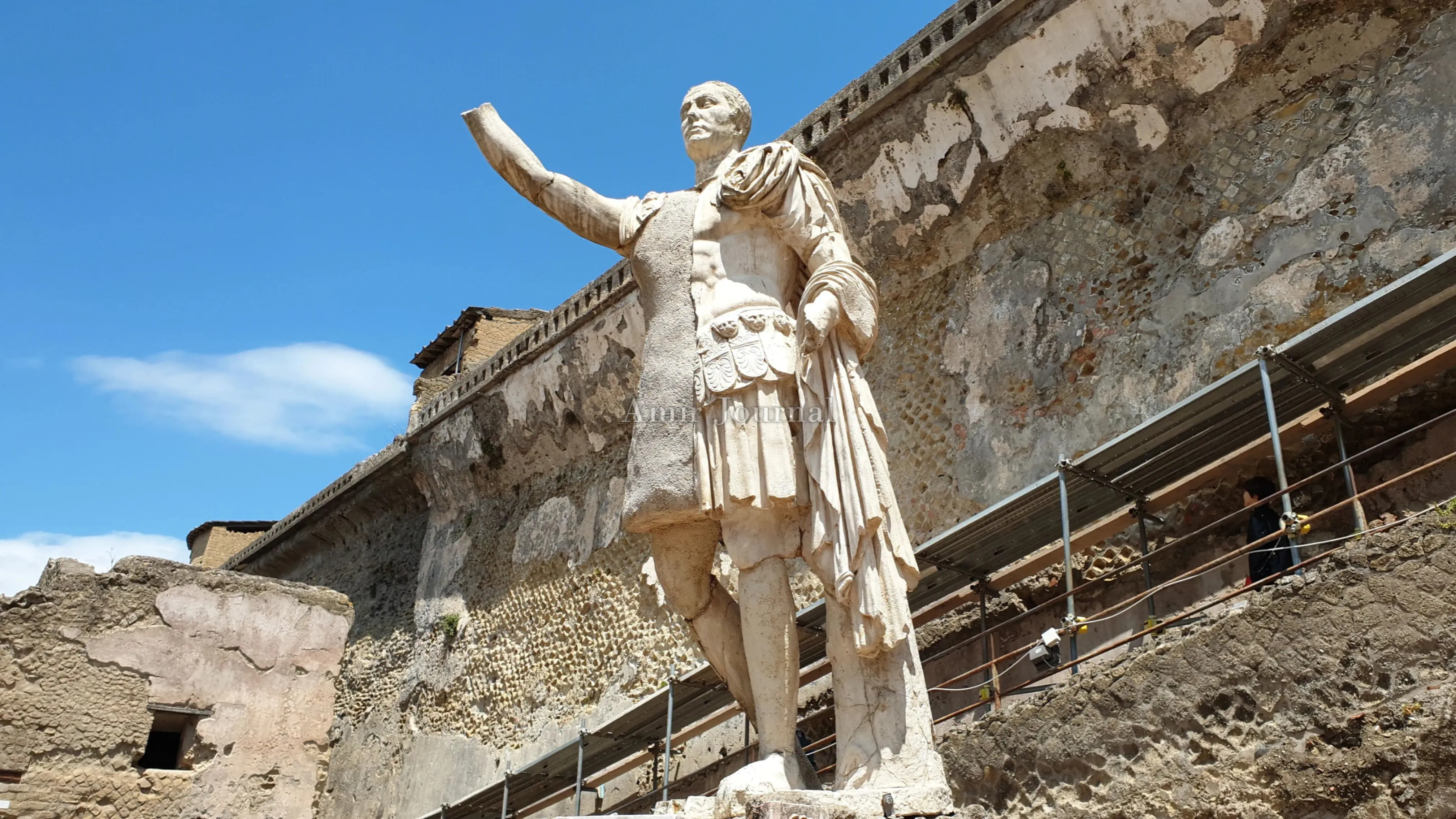

Burning volcanic surges travelled towards Herculaneum at temperatures exceeding 400°C. The city was rapidly covered by deep layers of volcanic material, sealing buildings and objects within an oxygen-poor environment. Wood, food, rope, fabric, furniture, doors, staircases, and even a small boat became carbonised and survived across the centuries. This exceptional preservation gives Herculaneum its remarkable ability to reveal the texture of Roman daily life.
Upper floors remained standing, colourful frescoes stayed on the walls, and mosaics continued to decorate the rooms where families had once lived. The volcanic material eventually reached a depth of around twenty metres in places, creating a silent protective layer over the ancient town.
Herculaneum remained hidden for centuries as a new community developed above it. Exploration began during the eighteenth century, and organised excavation started in 1738. Tunnels entered buried buildings, statues and artworks gradually emerged, and an ancient Roman town began returning to human memory.
One of the greatest discoveries was the Villa of the Papyri, a luxurious seaside residence containing more than 1,800 carbonised papyrus scrolls, many carrying Greek philosophical texts. The villa provides an extraordinary connection to the intellectual world of antiquity and to the ideas once read and discussed by its residents.
That sense of connection grows stronger as we walk into Herculaneum today.
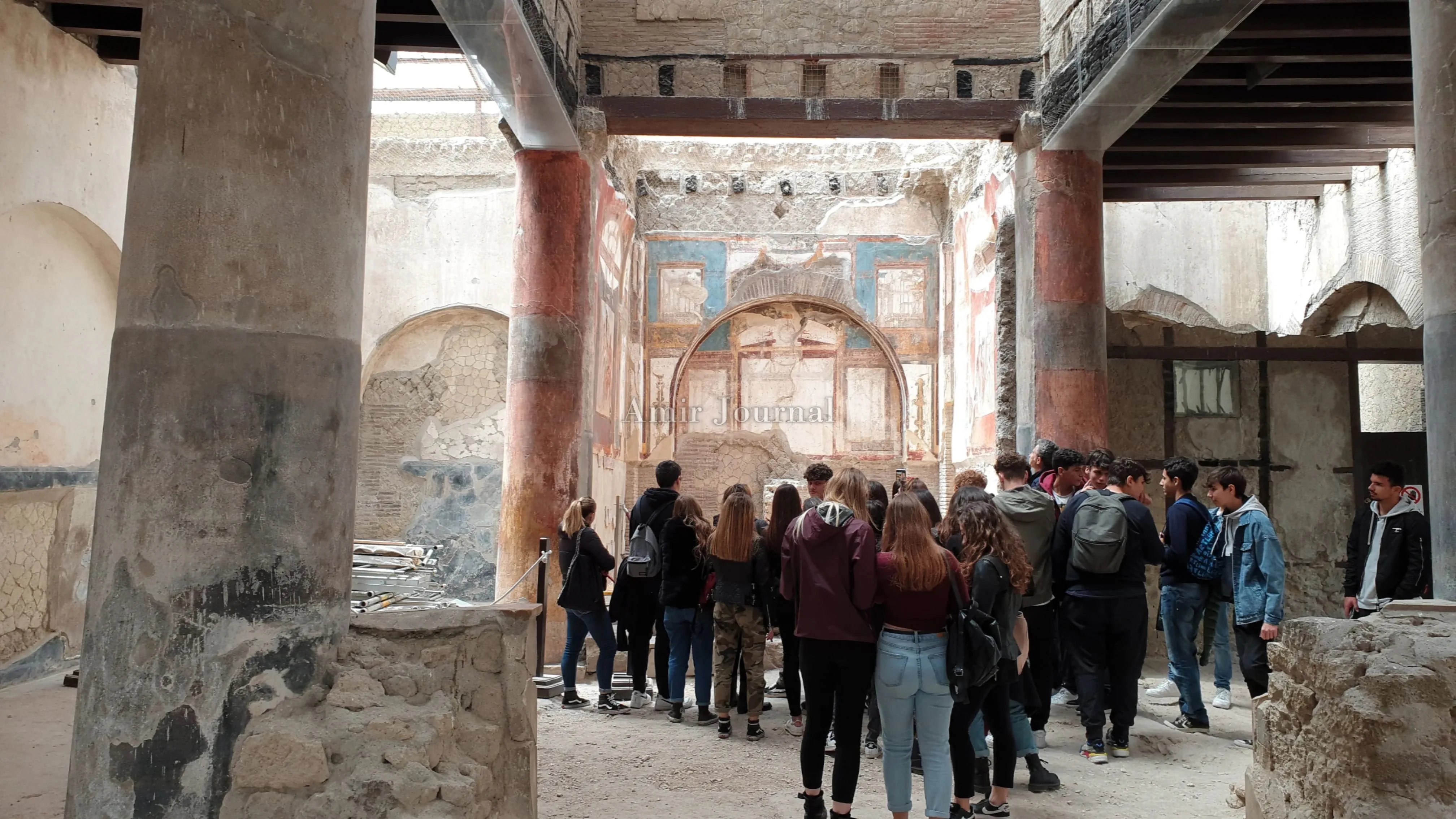

From the entrance, the ancient town appears below the level of the modern streets, its houses and courtyards resting beneath the shadow of Vesuvius. The descent feels like moving through layers of time. Sounds from the present gradually soften, while footsteps begin to echo across the old stone roads.
Inside the houses, daylight passes through open doorways and touches walls painted in deep red, yellow, and black. Mosaic floors reveal delicate patterns, courtyards open towards the sky, and the remains of wooden screens and furniture help restore the original shape of domestic spaces.
In these rooms, Roman life becomes easier to imagine. Families received guests, servants completed daily tasks, and meals were shared beneath painted walls. A shop counter still faces the street. Large storage jars remain fixed in place. Public baths preserve separate rooms for warm and cool bathing, recalling a culture where bathing also created opportunities for conversation and social connection.
The town’s architecture reveals different layers of society. Elegant waterfront homes expressed wealth through marble, gardens, and art, while smaller houses and workshops reflected the working rhythm of the wider community. Herculaneum becomes a portrait of a complete society shaped by family life, commerce, status, belief, and leisure.
A quiet detail often carries greater emotional power than a monumental building: a blackened wooden door, a loaf of bread, a rope, a writing tablet, or a household shelf. Each object once belonged to somebody. Each one formed part of a routine that its owner expected to continue the following day.
The journey becomes especially moving near the ancient shoreline. Inside the vaulted boat shelters, archaeologists discovered the remains of around 300 people who had gathered near the sea during the eruption, many carrying jewellery, coins, and personal belongings. Their presence transforms the event from a distant historical date into the final experience of real families and individuals.
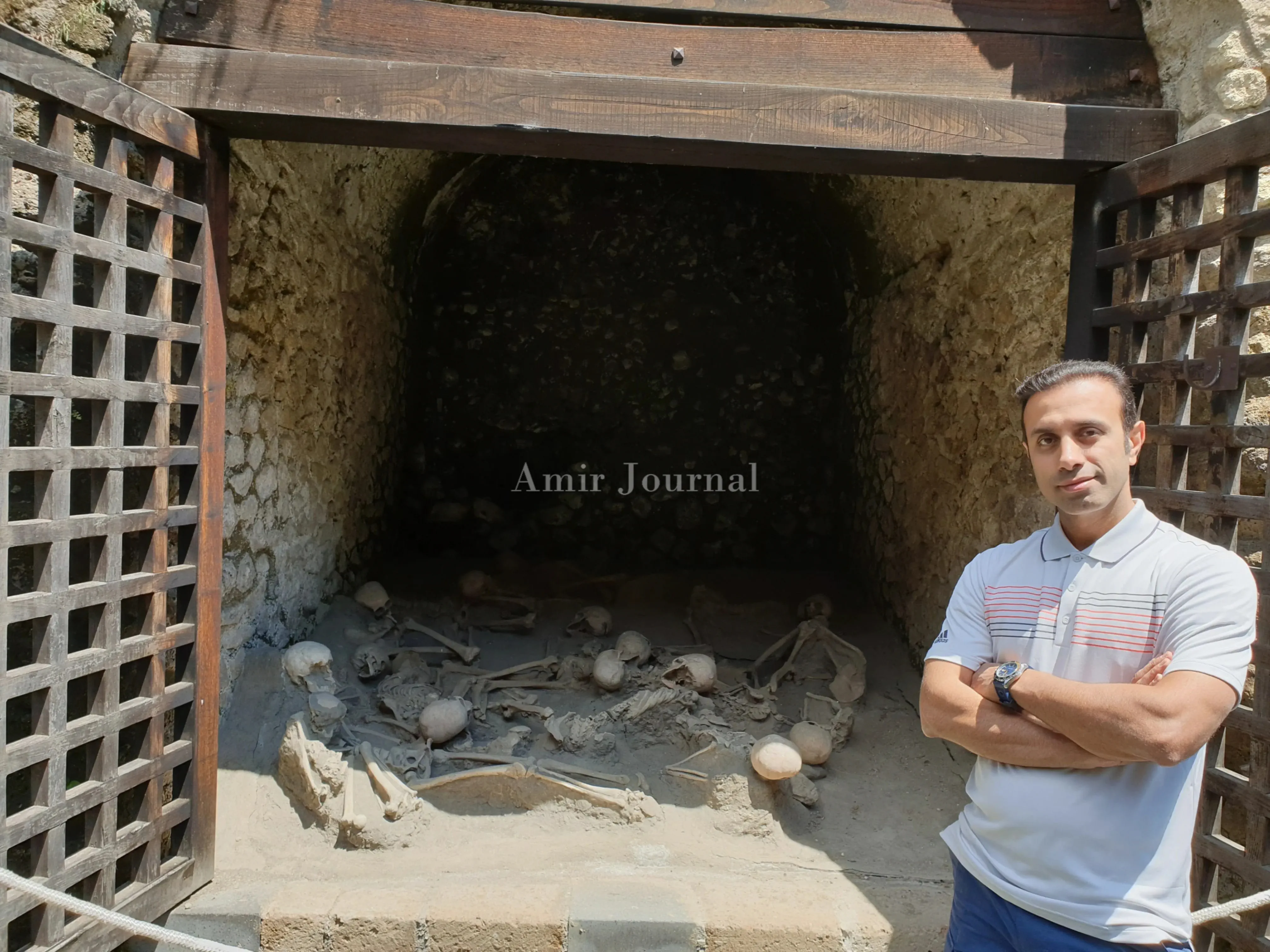

Looking across this area towards Vesuvius creates a powerful contrast. The mountain appears peaceful above the modern landscape, while the ancient city below preserves the memory of its sudden force. Nature, history, and human vulnerability come together within a single view.
Herculaneum also carries a story of rediscovery and care. Archaeologists, historians, scientists, architects, and conservators continue to study and protect its fragile remains. Their work allows carbonised wood, ancient buildings, paintings, and personal objects to speak again, connecting a Roman community with people living thousands of years later.
As we return through the streets, the boundary between past and present feels increasingly delicate. The residents of Herculaneum experienced friendship, ambition, work, family, uncertainty, and hope. Their world belonged to another age, while the emotions preserved through their homes and possessions still feel familiar.
Perhaps this is the deepest power of Herculaneum. It encourages us to consider how everyday objects carry our stories and how the smallest traces of a life can become meaningful across time. A cup, a doorway, a handwritten note, or a place at the family table may eventually reveal more about humanity than the grandest monument.
Before leaving, one final look towards Vesuvius brings a quiet question to mind: if time paused around us today, which details would tell future generations who we were?
Beneath the silent gaze of Vesuvius, Herculaneum still holds the dreams of people who believed tomorrow was waiting.