
Discover Edinburgh through its medieval streets, ancient castle, ghost stories, legendary writers, scientific innovation, and timeless Scottish traditions in a journey through one of Europe's most captivating cities.
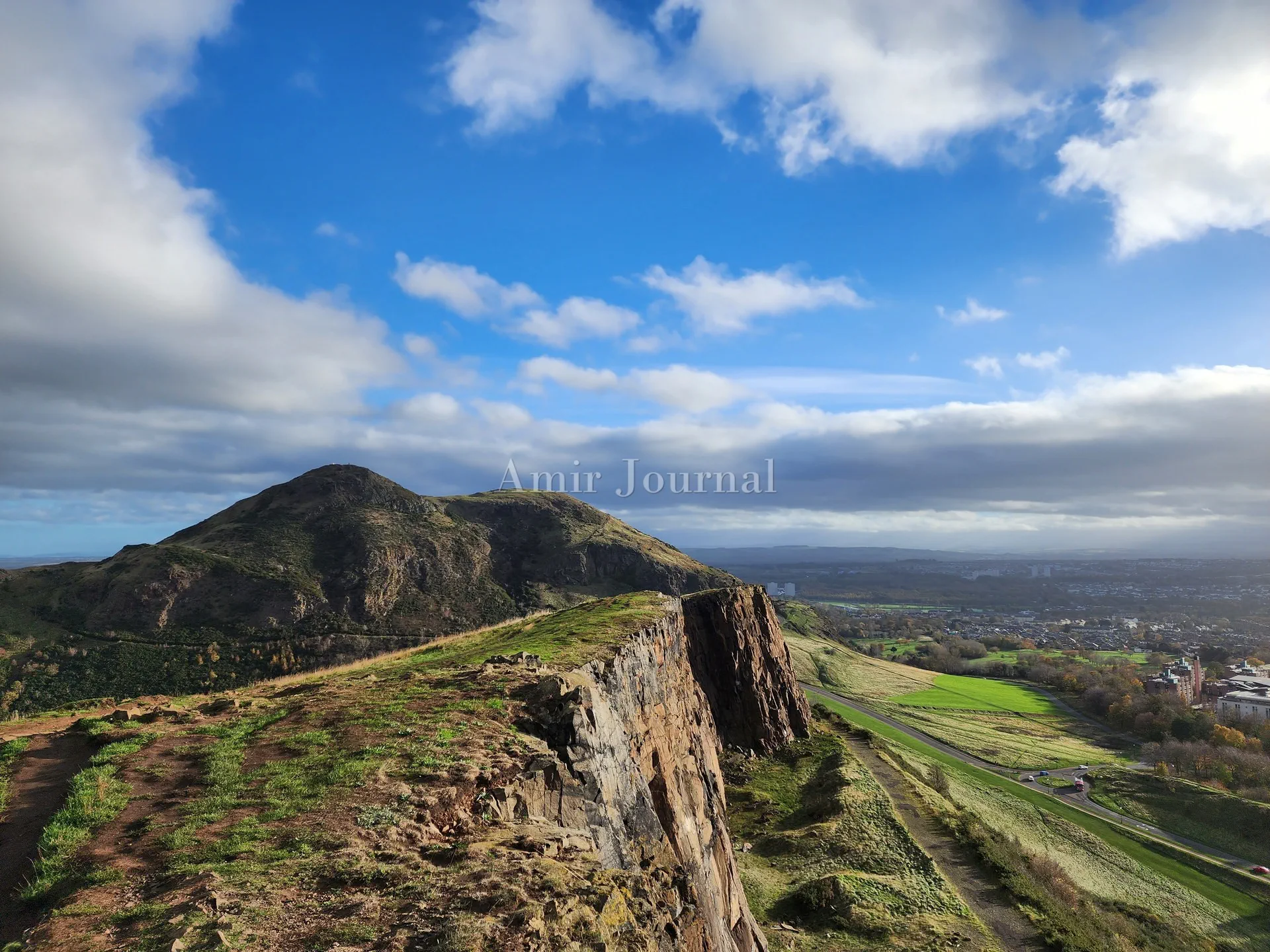
Standing atop Arthur's Seat, Edinburgh unfolds beneath your feet while the rugged Salisbury Crags stretch across the ancient volcanic landscape
Some cities reveal themselves through famous landmarks. Edinburgh reveals itself through atmosphere.
From the moment we arrive, the city feels shaped by another age. Ancient volcanic hills rise above stone streets, church spires form a dramatic skyline, and the waters of the Firth of Forth lead towards the North Sea.
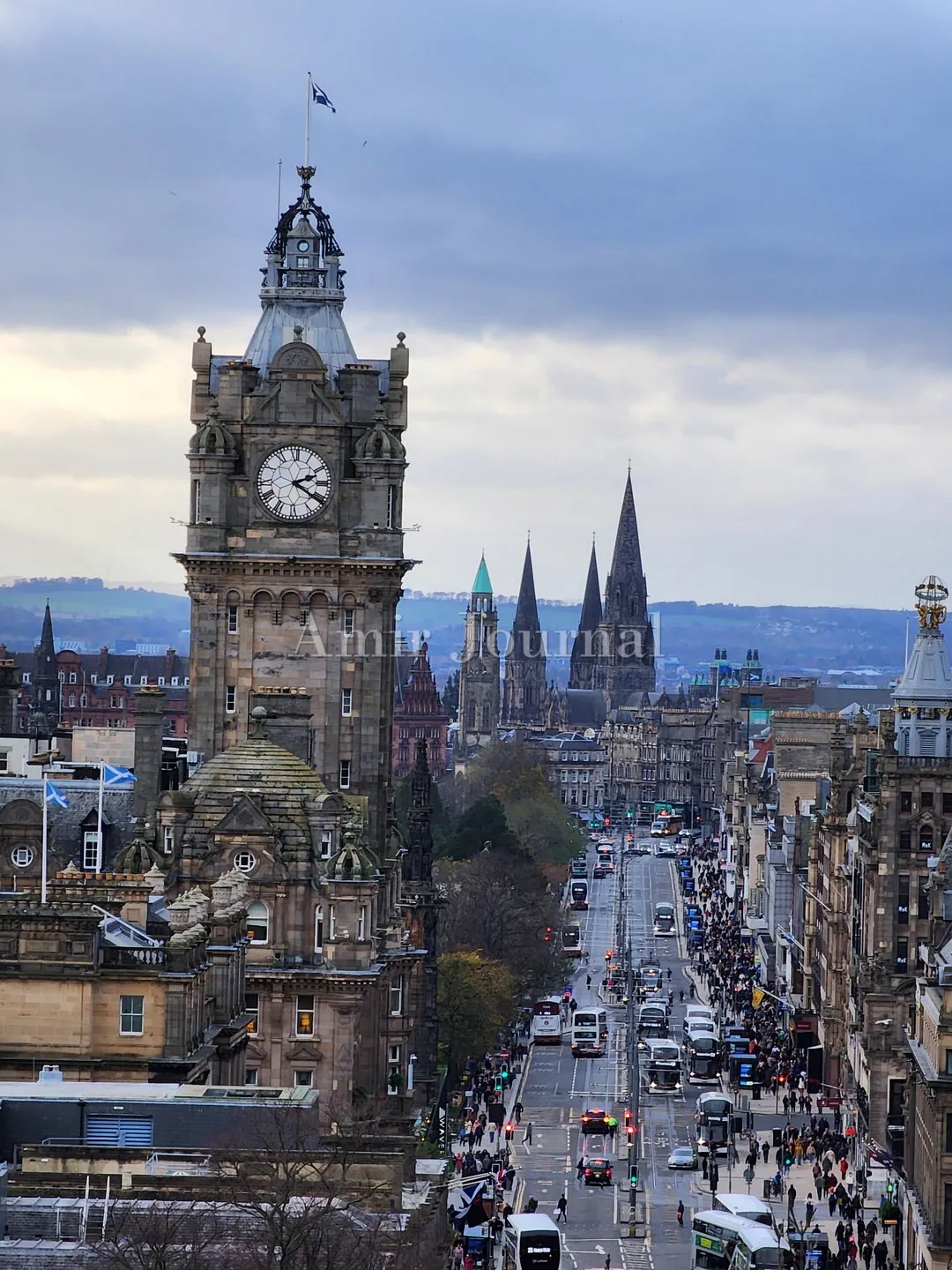
From Calton Hill, Edinburgh unfolds in layers. Arthur’s Seat and Salisbury Crags rise above Holyrood Park, the Old Town gathers around its medieval ridge, and the Balmoral Hotel’s clock tower marks the meeting point between historic streets and modern city life. Wind moves quickly across the hill, clouds reshape the light, and the entire city appears to carry a story.
The Story
Edinburgh has served as Scotland’s capital since the fifteenth century, though its history stretches much further into the past. Its character grew from the landscape itself: volcanic rock provided natural high ground for defence, while routes leading towards the coast supported trade, travel, and political power.
At the summit of Castle Rock stands Edinburgh Castle, a fortress shaped by royal ceremonies, military campaigns, sieges, and struggles for the Scottish crown. The stronghold became one of the most contested places in Britain, watching over the city as Edinburgh developed beneath it.
From the castle, the Royal Mile descends towards the Palace of Holyroodhouse. Kings, queens, soldiers, merchants, clergy, writers, and ordinary residents have travelled along this historic route for centuries. Tall stone tenements rise beside narrow closes, while hidden courtyards lead away from the main street into quieter corners of the Old Town.
These narrow spaces reflect the way medieval Edinburgh grew. The city expanded vertically within the protection of its walls, creating densely populated buildings where families, craftspeople, traders, and animals shared limited space. Markets filled the streets, church bells marked the hours, and news travelled through taverns and public gatherings.
Storytelling became one of Scotland’s greatest ways of preserving memory. During long evenings, tales of clans, battles, supernatural creatures, loyalty, and courage passed from one generation to another. Spoken stories carried history across landscapes and connected communities through a shared imagination.
This tradition remains alive at the Scottish Storytelling Centre on the Royal Mile. Opened in 2006 as the world’s first purpose-built centre for live storytelling, it hosts performances, music, theatre, workshops, and the Scottish International Storytelling Festival. Here, an ancient cultural practice continues through living voices and shared encounters.
Edinburgh’s literary identity also grew through writers who carried Scotland’s stories far beyond its borders. Sir Walter Scott transformed history, conflict, and national identity into novels such as Waverley, Rob Roy, and Ivanhoe. His work helped renew global interest in Scottish history and culture during the nineteenth century.
The Gothic Scott Monument rises above Princes Street Gardens as a tribute to his influence. Its dark spires resemble a structure from one of Edinburgh’s legends, while the seated figure of Scott rests beneath them with his dog, Maida, beside him.
The city’s relationship with literature continued through Robert Burns, Robert Louis Stevenson, Arthur Conan Doyle, and generations of later writers. In 2004, Edinburgh became the world’s first UNESCO City of Literature, confirming a creative identity that had developed through centuries of poetry, publishing, storytelling, and debate.
Walking along the Royal Mile brings all these histories into the present. Bagpipes echo between stone façades, kilt shops display tartans associated with Scottish clans, and cafés welcome visitors from the wind. Local residents cross paths with performers, students, tour guides, and travellers, giving the historic street a lively everyday rhythm.
The weather becomes part of the experience. A bright afternoon can quickly soften beneath clouds and mist, transforming familiar buildings into silhouettes. Strong winds travel through the closes, carrying distant music and fragments of conversation along the stone streets.
As evening approaches, Edinburgh reveals its darker imagination.
Guides carrying lanterns lead visitors through underground vaults, old graveyards, and preserved streets beneath the Royal Mile. Their stories recall plague, punishment, unexplained events, and lives once lived within the crowded Old Town. Places such as Mary King’s Close preserve more than four centuries of urban history beneath the modern city.
The experience gains its power from the setting: footsteps on stone steps, shadows beneath arched ceilings, and the guide’s voice travelling through chambers hidden below the street. History and folklore move together here, allowing Edinburgh’s past to feel close enough to touch.
Beyond its legends, Edinburgh also represents Scotland’s contribution to knowledge and innovation. During the Scottish Enlightenment, thinkers gathered in its universities, societies, drawing rooms, and taverns to exchange ideas about philosophy, medicine, economics, and science.
At the National Museum of Scotland, this spirit unfolds through galleries devoted to engineering, industry, natural history, and national culture. The development of steam power recalls the work of Scottish engineer James Watt, whose improvements increased the efficiency of steam engines and helped accelerate the Industrial Revolution. Factories, mines, ships, and transport systems changed through ideas that influenced the modern world.
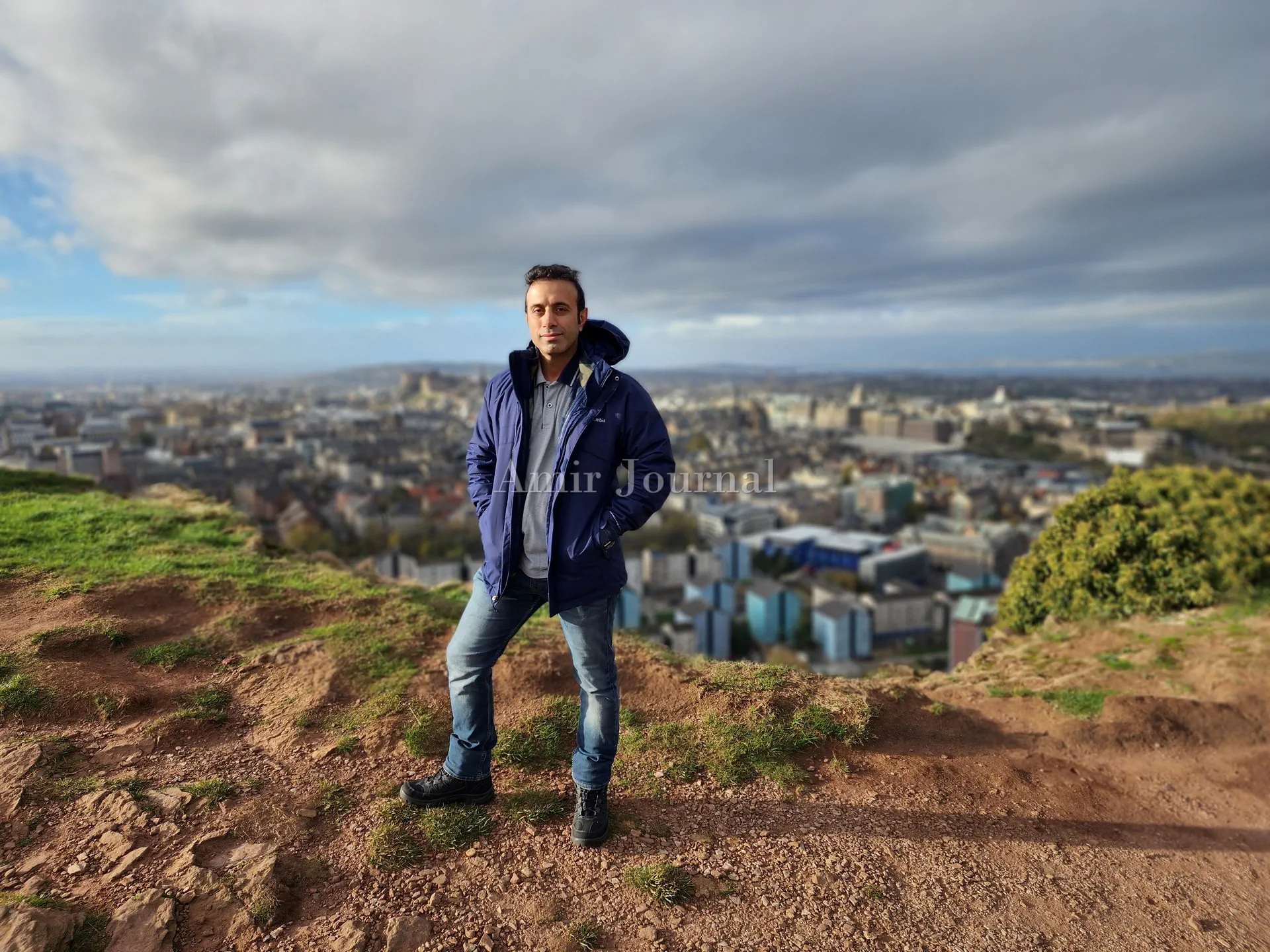
Everyday Edinburgh carries these layers with ease. Street musicians perform beneath medieval buildings, friends meet in welcoming pubs, and students fill cafés beside monuments to writers and philosophers. Princes Street Gardens offers a green pause beneath the castle, while the Ross Fountain frames the ancient skyline through water and gold.
Nearby, the memorial to Wojtek, the Syrian brown bear adopted by Polish soldiers during the Second World War, adds another remarkable human story. His sculpture quietly recalls companionship, courage, and the unexpected bonds formed during wartime.
As darkness settles, Edinburgh Castle glows above the city. Lights appear in the Old Town windows, music drifts from pubs, and the wind continues moving through streets shaped by centuries of life.
Edinburgh stays with us through these details: the sound of bagpipes beneath stone arches, stories shared in underground chambers, the view from Calton Hill, and the warmth found inside a café on a cold evening.
Long after we leave, Edinburgh continues telling its stories in the quiet corners of the imagination.