
Experience the unforgettable spirit of Anfield, where matchday traditions, passionate supporters, and the powerful sound of “You’ll Never Walk Alone” transform football into a shared emotion. From Liverpool’s thrilling 3–1 comeback against Southampton to the warmth of the Kop, this is a story of belonging, loyalty, and memories that remain long after the final whistle
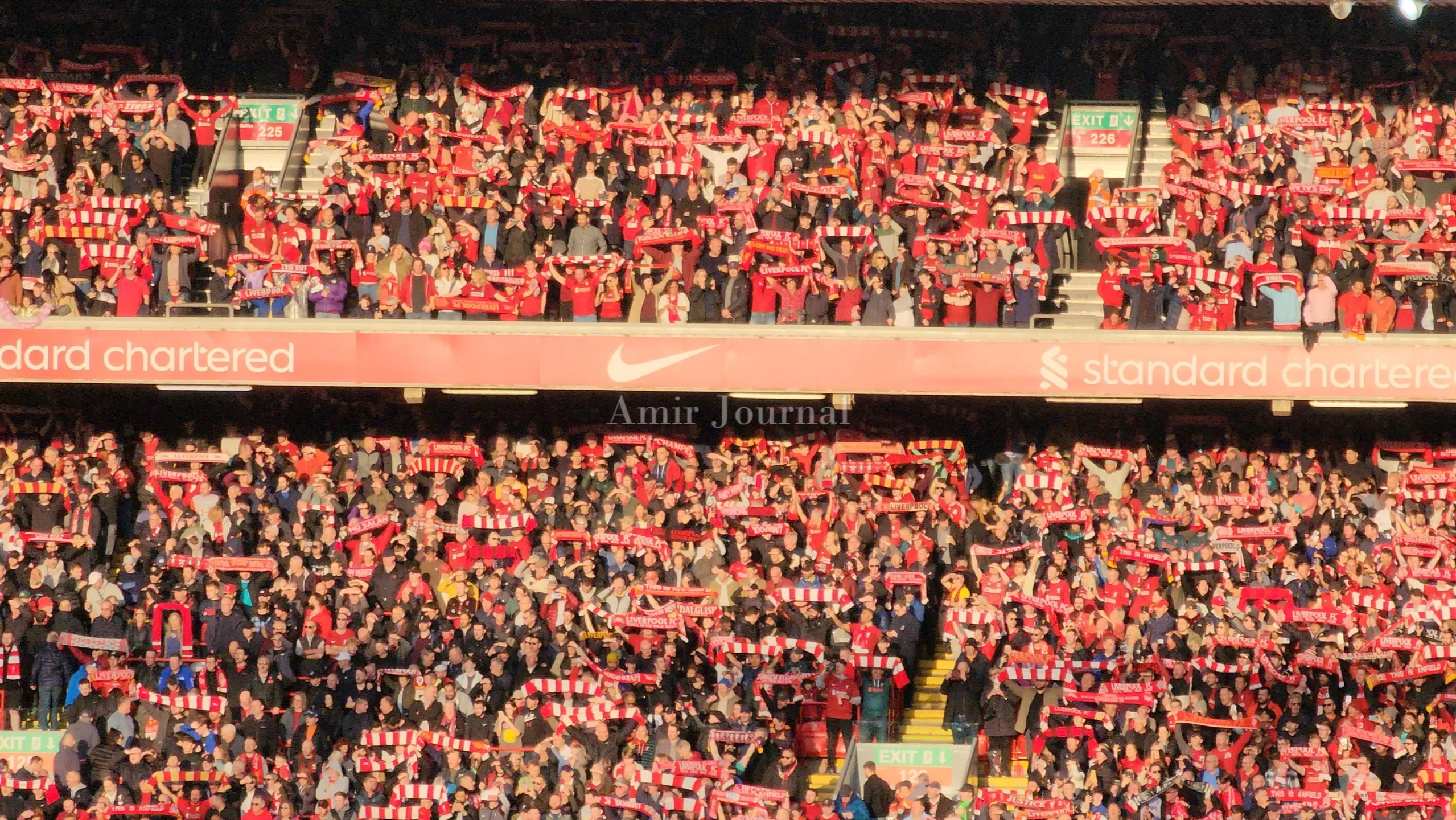
Liverpool supporters in The Kop raise their scarves as "You'll Never Walk Alone" echoes around Anfield, creating one of football's most iconic atmospheres
Some stadiums host football matches. Anfield turns them into memories.
Hours before kick-off, the streets surrounding the stadium begin to fill with movement and colour. Supporters of every generation walk towards the ground in Liverpool’s famous red shirts, carrying scarves above their shoulders and discussing the starting lineup with the confidence of lifelong managers.
Street vendors arrange match programmes, flags, badges, and photographs of club legends. The aroma of food drifts from nearby cafés and stalls, while familiar songs rise from pubs along Walton Breck Road. With each step towards the stadium, the excitement grows stronger.
Anfield already feels alive.
The Story
Anfield opened in 1884, eight years before Liverpool Football Club was founded. Over time, it became closely connected with the identity of the club and the surrounding community. Generations of families have followed the same streets towards the ground, occupied familiar seats, and passed their love of Liverpool from parents to children.
At the heart of this tradition stands the Kop, named after Spion Kop, a hill in South Africa where many soldiers from Liverpool lost their lives during the Second Boer War. The terrace developed into the emotional centre of Anfield, famous for its flags, songs, humour, and powerful influence on the match.
Another defining tradition arrived during the early 1960s, when Gerry and the Pacemakers’ version of “You’ll Never Walk Alone” became popular on the Kop. The song originally came from the 1945 musical Carousel, yet Liverpool supporters transformed it into an expression of belonging, loyalty, and collective strength. It has remained the club’s anthem ever since.
This sense of belonging extends into the neighbourhood. Matchday brings together local residents, returning families, international visitors, street vendors, café owners, and supporters who have travelled across continents. Their different stories converge around one shared destination.
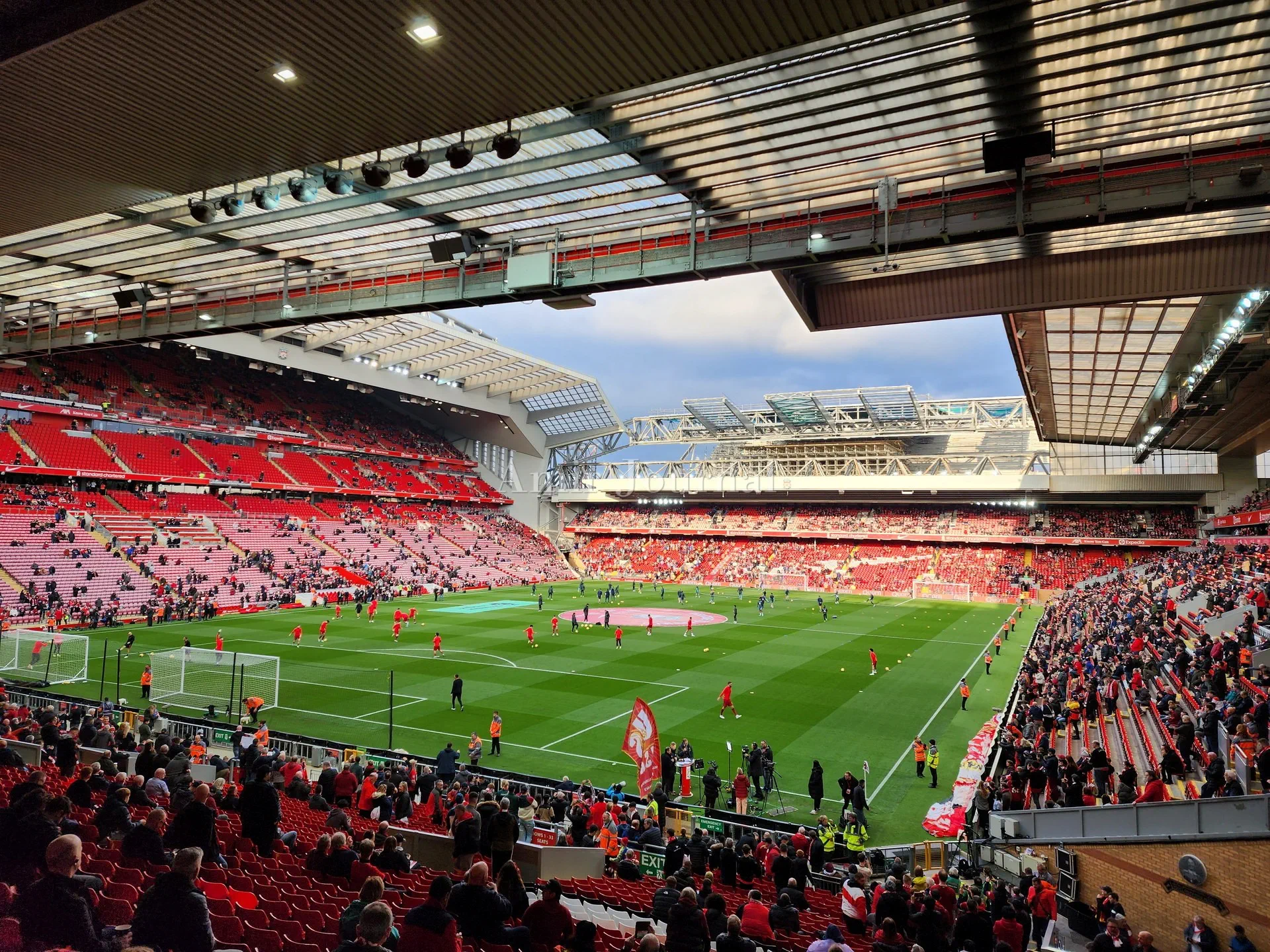
Passing through the turnstiles feels like entering a world shaped entirely by football. The concourses hum with conversation as supporters find their sections, greet familiar faces, and make their way towards the stands.
Then the pitch appears.
Its bright green surface stretches beneath the stadium lights, surrounded by rows of red seats and historic stands. Players begin their warm-up, and every appearance from Mohamed Salah or another Liverpool star brings cheers from around the ground. Balls travel sharply across the grass, goalkeepers test their reactions, and the stadium gradually builds towards kick-off.
A few minutes before the match begins, the atmosphere transforms.
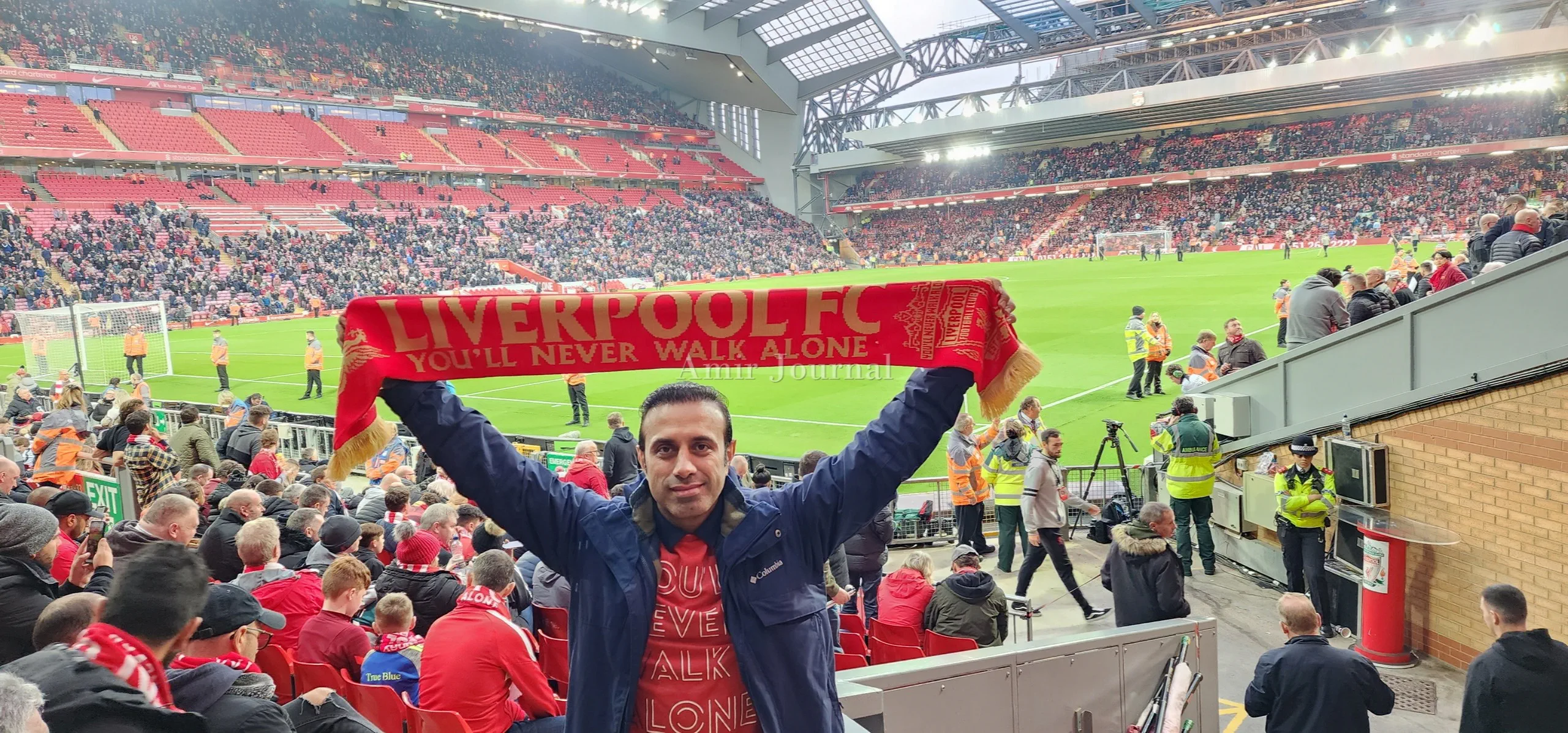
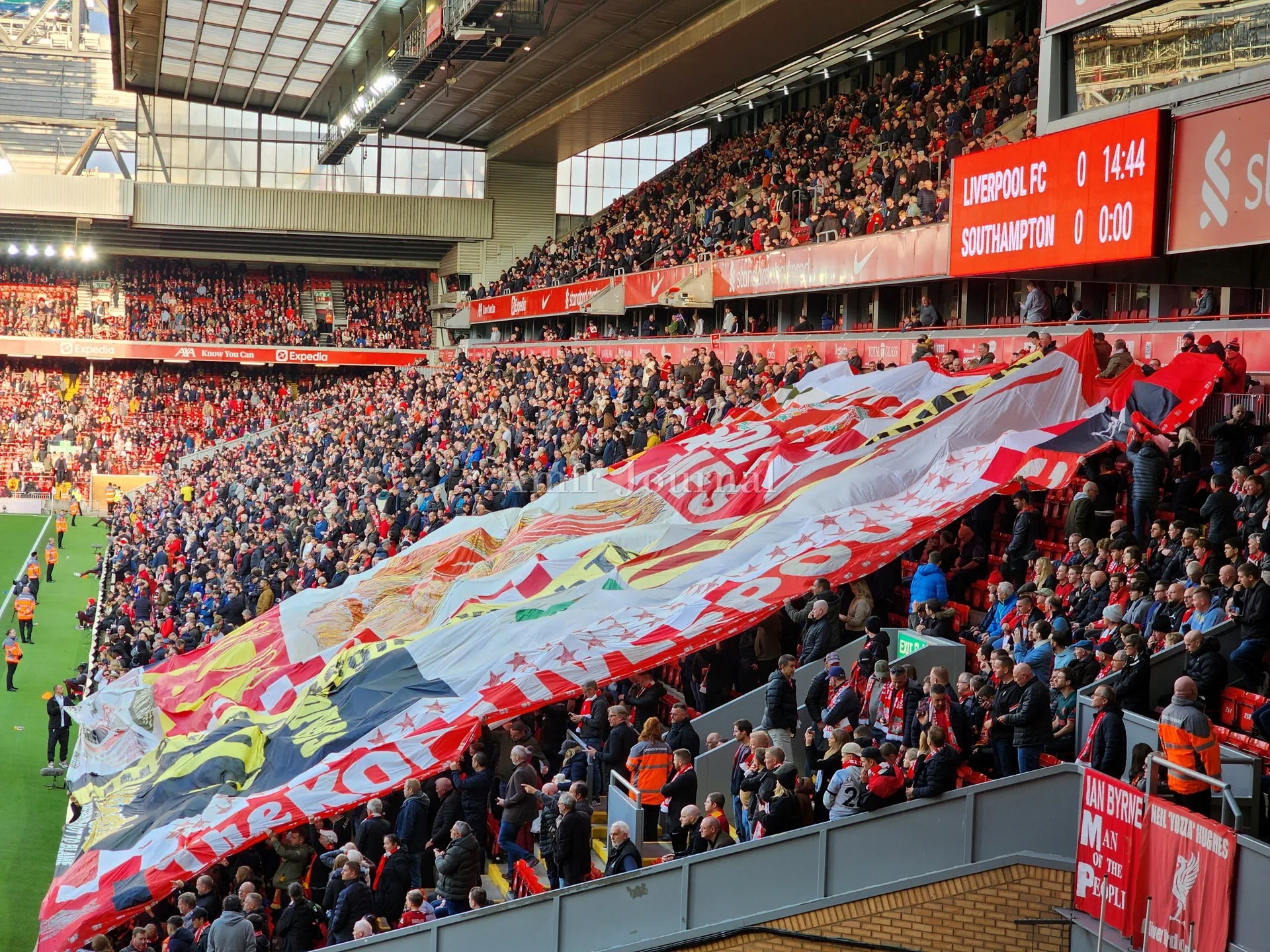
Scarves rise throughout the stands as the opening notes of “You’ll Never Walk Alone” fill Anfield. Thousands of voices join together, creating a sound that travels from the Kop to every corner of the stadium.
For those few minutes, the boundaries between strangers seem to fade. Age, nationality, language, and background give way to one shared voice. Standing among the crowd, I felt less like a visitor and more like part of a tradition carried through generations.
This is the moment when Anfield reveals its true character.
The stadium’s intensity has shaped countless European nights, title races, and dramatic comebacks. Players speak of the energy descending from the stands, while visiting teams feel the pressure of a crowd that responds to every tackle, run, and opportunity. Supporters participate in the match through rhythm and emotion, lifting the players as the momentum begins to change.
That spirit filled Anfield during Liverpool’s 3–1 victory over Southampton.
Southampton entered half-time with a one-goal lead, giving the second half an immediate sense of urgency. Liverpool returned with renewed energy, and Darwin Núñez scored the equaliser in the 51st minute. The roar arrived instantly, sweeping through the stadium like a wave.
Mohamed Salah soon converted a penalty to place Liverpool ahead. Late in the match, he scored another from the spot, completing the comeback and moving into third place on Liverpool’s list of all-time leading goalscorers at that time.
Each goal created an explosion of emotion. Strangers embraced, scarves moved above the crowd, and the stands seemed to shake beneath thousands of celebrating supporters. The match became a shared experience, carried by voices, gestures, and the joyful release that follows a decisive goal.
Yet the most meaningful moments often appeared between the action.
An elderly supporter watched attentively from a familiar seat. A father explained a decision to his child. Friends shared predictions and laughter. Visitors raised their phones for a photograph before returning their attention to the pitch. These small scenes revealed how football becomes part of everyday life in Liverpool—an inheritance, a weekly ritual, and a language shared across generations.
After the final whistle, the experience continued. Supporters applauded the players, gathered for photographs, and looked across the pitch for a final time. Songs remained in the air as the stands slowly emptied and the crowd returned to the surrounding streets.
Years from now, individual passes and moments of play may soften in memory. The emotion will remain vivid: the sight of thousands of scarves held above the crowd, the first view of the pitch, the roar following Liverpool’s comeback, and the feeling of standing inside one of football’s great traditions.
Long after the final whistle, Anfield continues to sing quietly within the heart.